Table of Contents
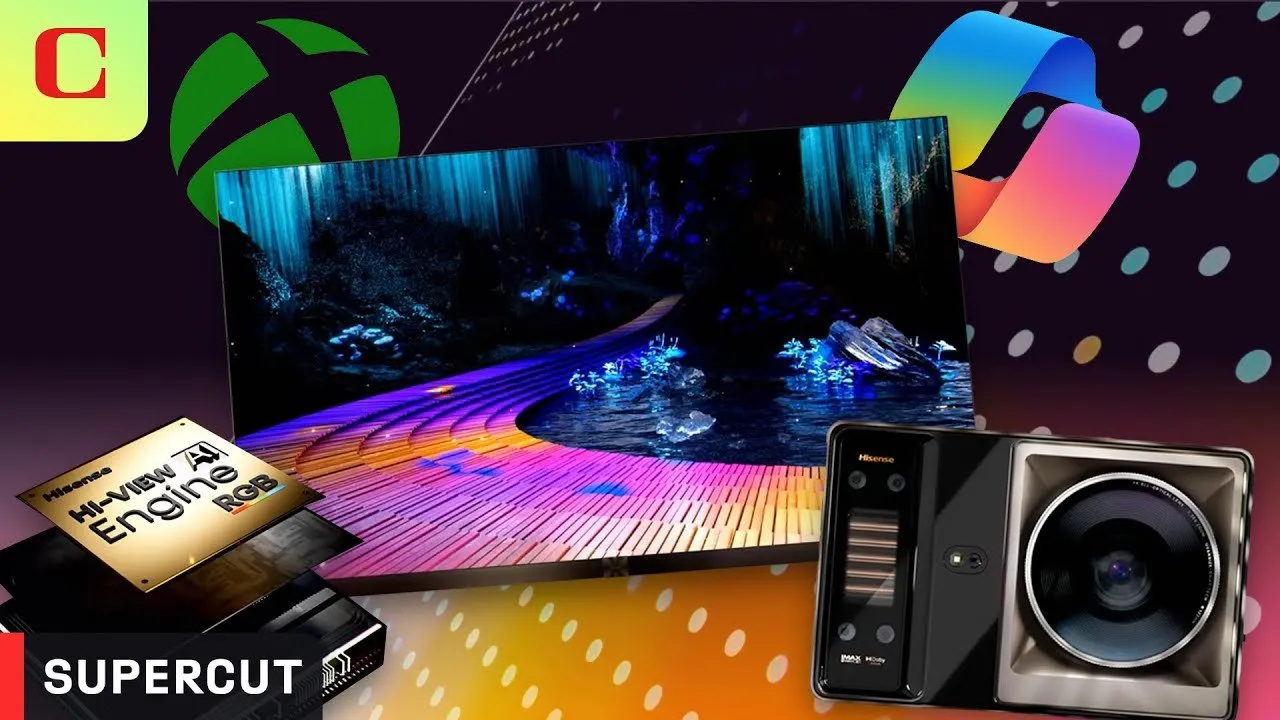
At CES 2026, Hisense unveiled a comprehensive evolution of its display technology and smart home ecosystem, headlined by the introduction of the RGB Mini LED Evo and a significant partnership with Microsoft. The electronics manufacturer showcased a new four-primary color backlight architecture alongside an AI-driven operating system designed to integrate entertainment seamlessly with daily household management.
Key Points
- Display Innovation: Launched the RGB Mini LED Evo, the world’s first display powered by a four-primary color backlight architecture.
- Flagship Hardware: Introduced the 163-inch MX Series Micro LED, a CES 2026 Best of Innovation Award winner, and the XR10 4K laser projector.
- AI Integration: Unveiled the updated Vidaa platform featuring AI-driven personalization and cross-device functionality from TV to kitchen appliances.
- Strategic Partnership: Announced a collaboration with Microsoft to integrate Copilot AI and Xbox Cloud Gaming directly into Hisense devices.
- Market Availability: The flagship UX series, featuring the new RGB Mini LED Evo tech, officially launches this month.
Redefining Color Accuracy with RGB Mini LED Evo
The centerpiece of the presentation was the debut of the RGB Mini LED Evo, a technology Hisense frames as a complete overhaul of traditional display mechanics. This system utilizes a new chromatic precision backlight powered by the proprietary Hisense RGB Mini LED Chip 2.0. Unlike standard displays, this architecture employs four primary colors rather than the traditional three, aiming to deliver unprecedented color purity and brightness.
To manage this complex lighting array, Hisense introduced the High-View AI Engine RGB. This processor executes advanced optical mixing calculations to synchronize color and brightness across the backlight. The system also features a new AI Customization Mode, allowing users to achieve studio-grade calibration at home automatically.
"The RGB mini LED Evo is more than a TV. It's a pro-grade reference monitor. This level of precision changes everything. You won't just see the grass and the jerseys. You will feel like you are standing on the pitch."
This technology will be integrated across the company's premium lineup, including the popular Series 7 and 8, the premium Series 9, and the flagship UX Series.
Hardware Expansion: Micro LED and Laser Projection
Beyond traditional consumer televisions, Hisense expanded its large-format offerings. The company presented the XR10, a flagship laser projector capable of delivering a 300-inch screen experience. Powered by a 6,000-lumen 4K Trichromatic laser, the device is designed to elevate home cinema sight and sound standards.
Simultaneously, Hisense demonstrated its leadership in ultra-premium displays with the MX Series. This 163-inch true Micro LED screen utilizes the same four-primary color technology found in their consumer lines. The innovation behind the MX Series has already been recognized by the industry, securing the CES 2026 Best of Innovation Award.
The Connected Home and Microsoft Partnership
Hisense also detailed the evolution of its operating system, Vidaa, positioning it as a "life assistant" rather than a simple content interface. The updated platform focuses on AI-driven personalization, offering distinctive dashboards for different family members. New functionality includes cross-device content mobility, such as transferring a cooking show from the living room TV to a smart fridge, which then displays the recipe while a connected oven notifies the user when dinner is ready.
In a move to strengthen its software ecosystem, Hisense announced a major collaboration with Microsoft. This partnership integrates Microsoft Copilot into Hisense devices, enhancing the AI assistant capabilities. Additionally, the collaboration brings Xbox Cloud Gaming to the platform, enabling users to stream console-quality games directly to their TVs without the need for a physical console.
The flagship UX series equipped with the RGB Mini LED Evo technology is scheduled to launch later this month, signaling Hisense's immediate move to capture the high-end display market for the 2026 fiscal year.