Table of Contents
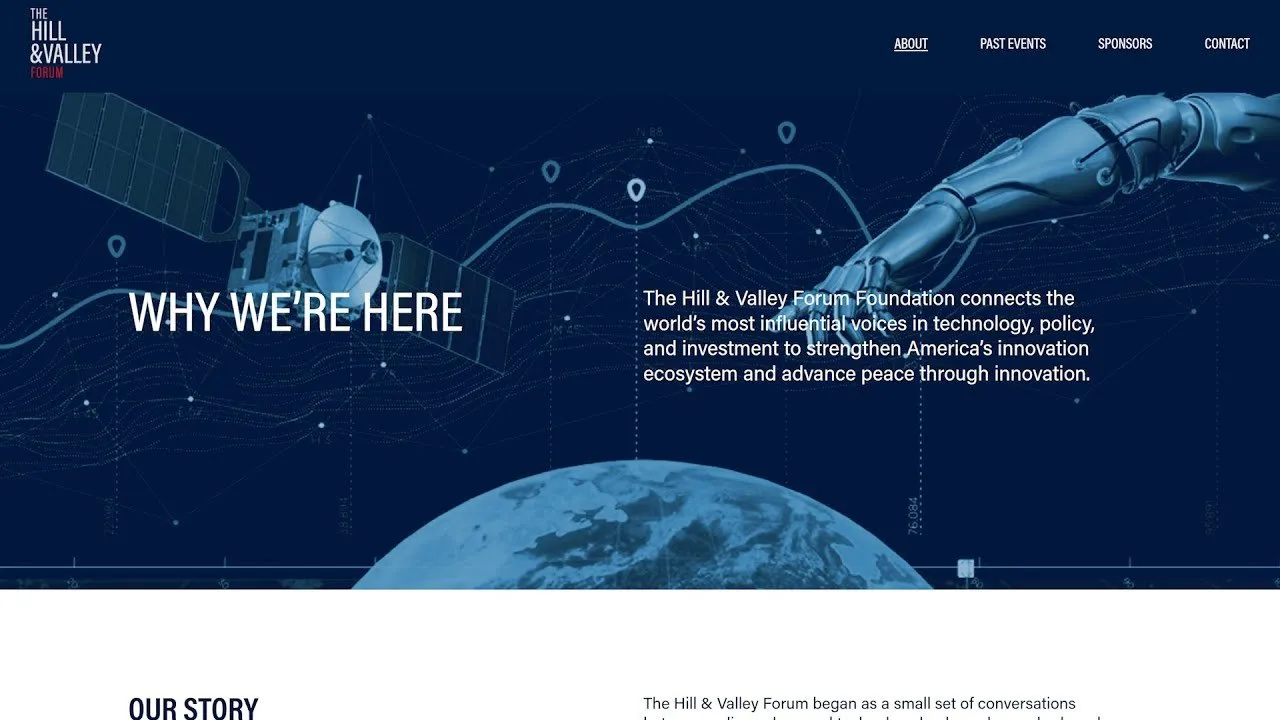
The fifth annual Hill & Valley Forum is set to convene in 2026, marking a significant evolution in the relationship between Silicon Valley’s technology sector and Washington’s political apparatus. Occurring alongside the United States' 250th anniversary, this year's gathering expands its focus beyond technological innovation to emphasize industrial leadership and global alliances, aiming to solidify supply chains and regulatory frameworks in an increasingly competitive geopolitical landscape.
Key Points
- Strategic Expansion: The 2026 forum shifts focus to "Alliance Leadership," featuring participation from NATO leaders and international partners to build global technological bridges.
- Policy Deliverables: Unlike previous years, the forum will release specific policy papers addressing rare earths, biotech competition with China, and re-industrialization.
- Bipartisan Unity: Organizers emphasize a "nonpartisan" approach, uniting competitors like OpenAI and Anthropic under the common goal of U.S. economic and national security.
- Space Manufacturing Milestone: Varda Space Industries confirmed the successful landing of its fourth vehicle, citing streamlined federal regulations as a key accelerator for commercial space operations.
From Dinner Parties to Industrial Policy
Established in 2022 as a private dinner series, the Hill & Valley Forum has matured into one of the largest convergences of legislative and technology leaders. While the initial years focused on breaking down the cultural silos between "the Hill" (Washington D.C.) and "the Valley" (San Francisco), the 2026 agenda reflects a deeper integration of these spheres.
According to forum organizers, the event has moved past theoretical discussions to actionable outcomes. This year, the forum intends to release a suite of policy papers targeting critical industrial areas. These documents will outline strategies for securing supply chains in rare earth minerals and maintaining a competitive edge in biotechnology against global rivals, particularly China.
The forum’s organizers highlighted the shift in intentionality for the 2026 event:
"It takes a lot of intentionality. Rather than just having discussions this year, you're going to see us actually release a set of different policy papers across different industrial areas... to understand the different perspectives and come align on something that actually is a material product that we're trying to use to shift how a particular industry works."
The Consolidation of Tech and Government
The tone of the relationship between the technology sector and the federal government has undergone a radical transformation over the last decade. Organizers pointed to the 2016-2017 era—specifically the controversy surrounding Project Maven—as a low point where Silicon Valley was reluctant to engage with defense contracts. By 2026, that divide has largely evaporated.
The current administration features numerous officials with deep roots in technology and venture capital, facilitating a more fluid exchange of ideas. The forum aims to institutionalize these ties, ensuring that the collaboration between private innovation and public policy remains robust regardless of future political shifts.
"We want to create the stage for there to be open debate and have a rare opportunity for there to be unity... Everyone believes across the aisle in the importance of making sure that the U.S. has technological, industrial, and economic leadership. And that is important for national security as well."
Regulatory Wins for the Space Economy
Highlighting the practical benefits of improved government relations, Delian Asparouhov provided an update on Varda Space Industries. The company recently celebrated a major milestone with the return of its fifth vehicle, which re-entered the atmosphere and landed in South Australia. This marks Varda’s fourth successful landing of its 300-kilogram manufacturing satellites, which process pharmaceuticals in microgravity.
Asparouhov attributed the increased cadence of missions—with a sixth vehicle scheduled for launch in six weeks—to a streamlined regulatory environment. He noted that the centralization of space policy has removed significant bureaucratic friction, allowing companies to focus on operations rather than compliance navigation.
"It is enabled by some of the groups... that have made it so that the regulations around space are starting to become more centralized, more streamlined. We used to have to go to almost six different agencies... versus the administration's new space policy starting to understand, okay, space companies can't have to go after that many different agencies."
Looking Ahead
As the Hill & Valley Forum prepares to open its doors, the event signals a permanent shift in how American industrial strategy is formulated. With confirmed attendance from major AI firms, defense contractors, and international dignitaries, the focus is now on executing a unified strategy for re-industrialization. The release of the slated policy papers will likely serve as a blueprint for upcoming legislative efforts, testing the strength of this newly forged alliance between private capital and public interest.