
Table of Contents
Finding an options trading strategy that balances simplicity with a high probability of success is a constant pursuit for traders. Many strategies rely heavily on predicting the exact moment a stock will turn, often leading to losses when the market remains irrational longer than the trader remains solvent. However, by combining robust technical indicators with specific options mechanics, it is possible to build a system that allows for a margin of error.
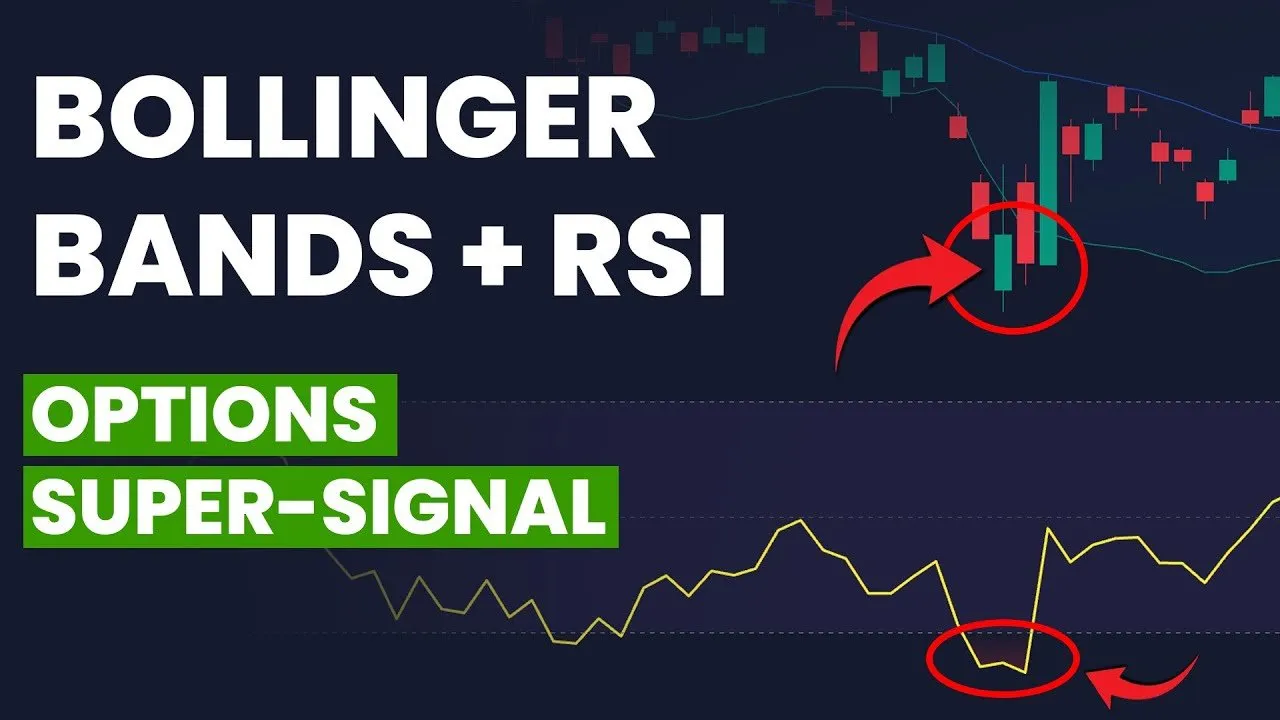
This strategy focuses on the NASDAQ 100 (using the QQQ ETF) and leverages the concept of mean reversion. By pairing Bollinger Bands with the Relative Strength Index (RSI), traders can identify extreme market conditions. The "secret sauce," however, isn't just the entry signal—it is the use of high-probability credit spreads that can generate profit even if the market doesn't reverse immediately.
Key Takeaways
- Mean Reversion Logic: The strategy relies on the statistical tendency of asset prices to return to their average after hitting extreme overbought or oversold levels.
- Dual Indicator Confirmation: A trade is only entered when price pierces the Bollinger Bands and the RSI hits extreme levels (above 70 or below 30) simultaneously.
- The 20 Delta Edge: Rather than buying options, this strategy involves selling credit spreads at the 20 Delta mark, statistically giving the trade an approximate 80% probability of success.
- Buffer Against Timing: By structuring trades with a wide margin of error, the position can remain profitable even if the stock continues to trend slightly against the prediction before reversing.
The Technical Foundation: Bollinger Bands and RSI
To execute this strategy effectively, one must first understand the technical landscape. The strategy operates on a daily chart of the QQQ, utilizing two distinct indicators to confirm that price action has reached an unsustainable extreme.
Bollinger Bands
Bollinger Bands consist of a central simple moving average (SMA) flanked by two bands set at standard deviations above and below that average. In times of high volatility, the bands widen; in low volatility, they contract. The upper and lower bands act as dynamic support and resistance levels. When price touches or pierces the upper band, the asset is statistically overextended to the upside. Conversely, touching the lower band suggests an oversold condition. Prices have a "magnetic" tendency to eventually revert to the central SMA.
The RSI Filter
While Bollinger Bands identify price extremes relative to volatility, the Relative Strength Index (RSI) measures momentum. The RSI oscillates between 0 and 100. Traditionally, a reading above 70 indicates an overbought market ripe for a pullback, while a reading below 30 indicates an oversold market ready for a bounce.
Using these indicators individually can be risky. A stock can "ride the bands" for days, or remain overbought on the RSI while prices continue to climb. The power of this strategy lies in requiring both conditions to be met simultaneously before considering a trade.
Structuring the Trade: The 20 Delta Credit Spread
Identifying the reversal point is only half the battle. If a trader simply shorted the QQQ the moment it hit the upper Bollinger Band, they might be stopped out if the rally continued for another two days. To mitigate this timing risk, this strategy utilizes credit spreads expiring approximately 30 days later.
"The location of the credit spreads at 20 deltas is the key to why this strategy has such a high probability of winning... It gives that trade that extra margin of error, which is so crucial because there will be cases where the signal does not reflect what's going to happen immediately."
The specific mechanic used here is the Delta. In options trading, Delta approximates the probability of an option expiring in the money. An option with a 20 Delta has roughly a 20% chance of expiring with value—and conversely, an 80% chance of expiring worthless. Since we are selling these options, we want them to expire worthless so we can keep the full premium collected.
The Bearish Setup (Call Credit Spread)
When the market shows a bearish signal (Price > Upper Band AND RSI > 70), the strategy calls for a Call Credit Spread:
- Identify a call option with a Delta of roughly 0.20 (approx. 30 days to expiration).
- Sell this call option.
- Buy a higher-strike call option (e.g., 10 points higher) to define risk.
Because the sold call is far out-of-the-money (OTM), the stock can rise slightly, move sideways, or fall, and the trade will still likely result in maximum profit.
The Bullish Setup (Put Credit Spread)
When the market shows a bullish signal (Price < Lower Band AND RSI < 30), the strategy calls for a Put Credit Spread:
- Identify a put option with a Delta of roughly -0.20.
- Sell this put option.
- Buy a lower-strike put option to define risk.
This structure allows the trader to profit even if the market acts sluggishly or dips slightly further before the eventual rally occurs.
Anatomy of a Winning Trade
To understand why the 20 Delta requirement is superior to directional stock trading, it is helpful to examine specific trade examples from 2024 where this edge played out.
The Bearish Signal: January 2024
On January 19, 2024, the QQQ pierced the upper Bollinger Band, and the RSI crossed above 70. This generated a bearish signal. However, simply shorting the stock would have been stressful, as the market didn't collapse immediately.
Using the strategy, a trader would have sold the 440 Call (approx. 20 Delta) and bought the 450 Call for protection. At the time, the QQQ was trading at roughly 421. By expiration in February, the QQQ had actually risen to 430.57.
The Result: Despite the market moving against the bearish bias (rising from 421 to 430), the trade was a winner. Because the sold strike was at 440, the options expired worthless, and the trader kept the full credit received (approximately $1,100 profit on a 10-lot trade). The strategy won because the "room for error" was sufficient to handle the continued upside drift.
The Bullish Signal: April 2024
On April 19, 2024, the QQQ dropped to close at 414.65, piercing the lower Bollinger Band. Simultaneously, the RSI dropped below 30. This triggered a bullish entry.
The execution involved selling the 390 Put (20 Delta) and buying the 380 Put for protection. This strike placement was nearly 25 points below the trading price. By the May expiration, the QQQ had rallied significantly to 451.76. Since the closing price was well above the 390 strike, both puts expired worthless, resulting in maximum profit.
Why This Strategy Outperforms Direct Directional Trading
The primary advantage of this approach is that it decouples profitability from perfect timing. In a standard mean reversion trade involving stock, the trader needs the price to reverse almost immediately to avoid drawdown.
By selling 20 Delta options, the trader essentially bets that the stock will not move significantly further into extreme territory. The math supports this bet:
- Probability: A 20 Delta option implies the market has priced in only a 20% chance of the stock reaching that level.
- Theta Decay: As time passes, the value of the sold options erodes, benefiting the seller.
- Directional Tolerance: As seen in the January example, the market can move somewhat against the trader, and the position can still reach maximum profit.
Conclusion
This options strategy offers a systematic approach to trading the NASDAQ 100 by blending technical extremes with statistical probability. By waiting for the dual confirmation of Bollinger Bands and RSI, traders filter out low-quality signals. More importantly, by utilizing 20 Delta credit spreads, traders create a "buffer zone" that allows for profitability even when market timing is imperfect.
While backtests from 2024 and 2025 showed remarkably high accuracy, prudent risk management remains essential. No strategy wins 100% of the time forever, and leverage should always be managed carefully. For those looking to dive deeper into options mechanics, you can learn more about advanced strategies at optionsclass.com.




)