Table of Contents
Hesai Technology has officially confirmed a strategic partnership to supply lidar sensors for Nvidia’s Hyperion platform, marking a critical integration milestone for the autonomous driving industry. The announcement, made during the CES technology conference in Las Vegas, solidifies a long-standing collaboration that allows original equipment manufacturers (OEMs) to adopt a turnkey self-driving solution without needing to rebuild hardware stacks or retrain data models.
Key Points
- Strategic Partnership: Hesai is now an official supplier for Nvidia’s Hyperion autonomous driving platform.
- Global Expansion: The company is constructing a factory in Thailand, slated for production in early 2027, to serve global markets and mitigate geopolitical risks.
- Cost Reduction: Lidar unit costs have plummeted from roughly $50,000 several years ago to approximately $200 today.
- Market Diversification: Beyond EVs, Hesai is expanding into humanoid robotics and autonomous lawnmowers.
Integrating with the Nvidia Ecosystem
While the formal announcement is recent, the collaboration between the Chinese lidar giant and the American chipmaker has been in development for some time. The integration into the Hyperion platform represents a "hard launch" for Hesai, moving from development phases to a standardized offering for automakers.
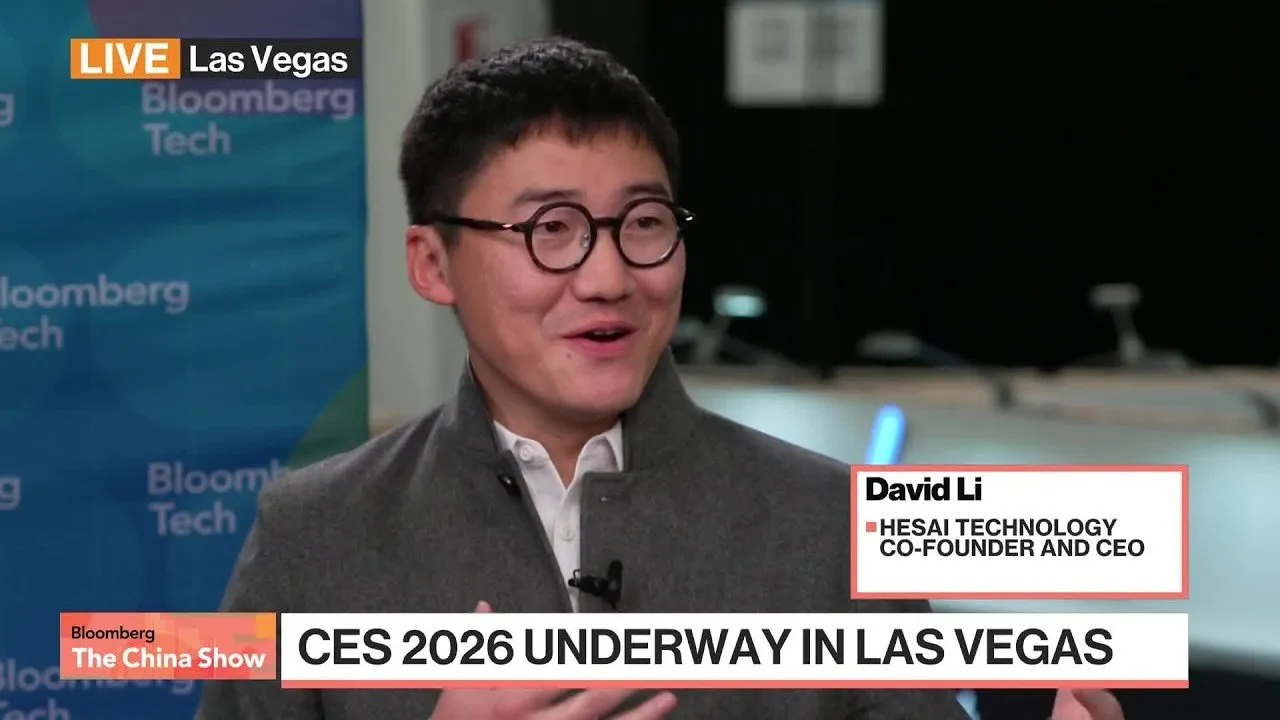
David Li, Co-founder and CEO of Hesai Technology, described the reveal using a candid analogy regarding the company's previous undisclosed work with Nvidia.
"It's almost like I've been secretly dating a supermodel for a long time. Even when I tell people, they don't believe you. Of course, the news is official now. People know that we're officially on the new Hyperion platform."
For automotive OEMs, this partnership significantly lowers the barrier to entry for autonomous driving capabilities. Previously, manufacturers had to piece together disparate hardware, software, and training data. By utilizing Nvidia’s proven ecosystem with Hesai’s sensors already integrated, automakers can streamline development and reduce implementation risks.
Navigating Geopolitics and Global Markets
Despite holding a dominant position in the domestic Chinese market, Hesai is aggressively targeting global opportunities. Li noted that while the Chinese automotive market accounts for 25 to 28 million vehicles annually, the global market exceeds 80 million, with international OEMs often prioritizing higher-end, advanced components.
To address ongoing trade tensions and regulatory concerns from Washington, Hesai is diversifying its manufacturing footprint. The company has announced the construction of a new facility in Thailand.
"We are in the process of building a factory in Thailand... which will be in production early 2027. That is going to be our new manufacturing facility to support the demand from the global OEM side."
Li outlined a bifurcated strategy: "China for China, and Thailand for Global." This approach extends to compliance, where the company ensures strict adherence to data regulations. Li clarified that Hesai’s sensors utilize firmware for device control rather than software that processes sensitive data, ensuring compliance across different regulatory environments.
Economies of Scale and New Applications
A primary driver of lidar adoption has been the dramatic reduction in hardware costs. According to Li, the price per unit has dropped from $50,000 five to eight years ago to approximately $200 today. This democratization of the technology has shifted the competitive landscape. While other lidar manufacturers struggle with market positioning, Li argues that the real competition comes from automakers attempting to achieve autonomy without lidar.
Hesai contends that the data supports lidar usage, citing a potential 90% reduction in fatal accidents in critical scenarios. With over two million units shipped, the company is now leveraging its manufacturing scale to enter non-automotive sectors.
The reduced price point has opened doors for applications in humanoid robotics and consumer automated devices. In Europe, Hesai sensors are already being deployed in autonomous lawnmowers priced around €800, eliminating the need for buried boundary wires. By standardizing technology across these verticals, Hesai aims to maintain high margins while expanding its total addressable market beyond the automotive sector.