Table of Contents
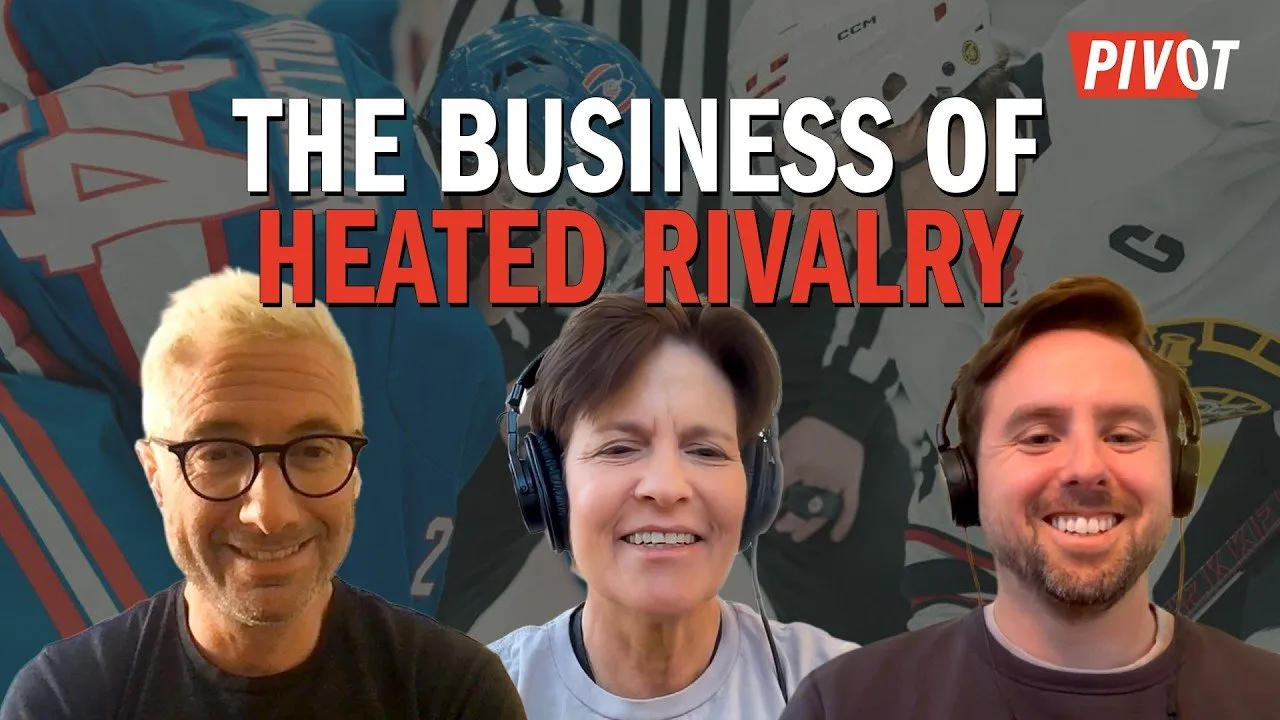
In a media landscape often dominated by grim prestige dramas and sprawling superhero franchises, the surprise explosion of Heated Rivalry serves as a fascinating case study in counter-programming. During a special bonus episode of Pivot, host Cara Swisher sat down with the show’s creator, Jacob Tierney, and executive producer, Brendan Brady, to dissect how a niche Canadian production about rival hockey players became a global cultural phenomenon. Beyond the on-screen chemistry, the conversation revealed a compelling business story about intellectual property, efficient production models, and the untapped power of the romance genre.
Key Takeaways
- The Power of "Queer Joy": The show’s success lies in prioritizing fantasy and happiness over the trauma narratives typically assigned to LGBTQ+ media.
- Strategic IP Ownership: Unlike the U.S. studio model, the Canadian funding system allowed the producers to retain ownership of the underlying intellectual property, leading to lucrative merchandising opportunities.
- Efficient Production Models: By block-shooting the entire season like a film and rejecting "tortured genius" directing styles, the team delivered high-quality television on a budget of under $3 million CAD per episode.
- Respecting the Romance Genre: The creators attributed their success to treating the female-driven audience of the original novels with respect rather than dismissal.
Redefining Queer Narratives Through Romance
One of the most significant factors in the show's viral success is its tonal departure from traditional queer media. Tierney and Brady emphasized that for decades, gay narratives have been inextricably linked with tragedy—the idea that one cannot possess both a fulfilling sex life and a happy ending. Heated Rivalry disrupts this by leaning heavily into the "soft power" of romance novels.
I think that what the show did in an unpreachy, un-trying-to-teach-you-a-lesson way is just present queer joy. And I think that that's its soft power.
The producers argue that the mainstream industry often overlooks the massive economic potential of the romance genre, primarily because it is written by and consumed by women. By adapting the source material faithfully—without sanitizing the sex or forcing a "female entry point" character into the narrative—the show tapped into a pre-existing, voracious audience that had been historically underserved.
Brady noted that during the pitch process, they faced skepticism from executives who believed women wouldn't watch a show about two men without a female protagonist. This fundamental misunderstanding of the female gaze and the romance demographic proved to be a costly error for the studios that passed on the project.
The Canadian Advantage: Funding and IP Ownership
While the creative direction sparked the show's popularity, the business structure behind Heated Rivalry offers a blueprint for independent sustainability. Swisher and the producers discussed the stark differences between the American and Canadian production models, specifically regarding how shows are financed.
The "Patchwork" Funding Model
In the United States, a studio typically funds the entire budget in exchange for total ownership. In Canada, producers utilize a piecemeal approach:
- Broadcast License Fees: A network (in this case, Crave) puts up 20–30% of the budget.
- Government Tax Credits: Federal and provincial credits cover another 20–30%.
- Distribution Advances & Equity: The remaining gap is filled by international distribution deals and producer investment.
Tierney and Brady revealed that they personally reinvested almost all of their producer fees to close the final 10% gap in the budget. This gamble was driven by a crucial incentive unique to this model: they kept the rights.
We knew that if this goes really well, we're going to benefit for the next 25 years off of this. And that is the difference.
By retaining the intellectual property, the team has been able to launch a robust merchandise line and control the brand's future, a level of autonomy that is increasingly rare for creators in the U.S. streaming ecosystem.
"Anti-Fascist" Directing and Production Efficiency
The visual polish of Heated Rivalry belies its modest budget. Produced for just under $3 million CAD per episode—a fraction of the $6–10 million USD standard for comparable American dramas—the show relied on efficiency and a humane approach to on-set management.
Tierney describes his directing style as "anti-fascist," a philosophy that rejects the industry's often toxic obsession with perfectionism and total control. Rather than demanding 25 takes to fit a rigid vision, Tierney prioritizes collaboration and trusts his actors' instincts. He cited a pivotal scene in episode six where actor Hudson Williams made a surprising choice that Tierney initially doubted but ultimately used, proving that a director's rigid plan is often inferior to organic collaboration.
The Block Shooting Strategy
To maximize their budget, the team wrote all six episodes before production began and shot the series out of order, treating it as one long six-hour movie. This allowed them to:
- Complete principal photography in just 36 days.
- Keep work days to 10 hours, avoiding the exhausted burnout common on 16-hour sets.
- Save money on overtime and location moves.
This approach requires significant preparation and a deviation from the traditional TV model where writing often happens concurrently with filming, but the producers argue it is the only sustainable path forward for mid-budget television.
Navigating the Modern Media Landscape
The conversation also touched on the friction between creative storytelling and the demands of modern streaming algorithms. Swisher referenced Matt Damon's recent comments about how streaming metrics force filmmakers to front-load action to prevent viewers from clicking away. While Heated Rivalry has avoided direct pressure to simplify its plot, the producers acknowledged the trend toward "visual podcasts"—content designed to be consumed while scrolling on a phone.
However, Tierney argues that audience intelligence is underestimated. The show relies heavily on subtext, glances, and what remains unsaid between the protagonists. The success of such a subtle narrative suggests that viewers are hungry for content that demands their full attention.
The Role of Artificial Intelligence
When asked about the looming threat of AI in Hollywood, both producers expressed skepticism about its creative utility. While they see potential for AI in logistics—scheduling, budgeting, and data entry—they believe the "friction" of human collaboration is essential for art.
We underestimate the importance of friction in the creative experience... those moments of friction when you're trying to explain something to someone and they don't get it, that is hard to replicate.
Conclusion
The trajectory of Heated Rivalry from a niche romance adaptation to a global hit underscores a shifting dynamic in the entertainment industry. By leveraging government subsidies to retain ownership, respecting the intelligence of their audience, and adopting a humane production model, Tierney and Brady have carved out a space for "queer joy" that is both critically acclaimed and financially sustainable.
As the industry grapples with consolidation and changing viewer habits, the show stands as proof that mid-budget, character-driven storytelling can still compete with blockbuster franchises—provided the creators are willing to bet on themselves.
![20 Altcoins in 30 Minutes… Most Are Dead [Here’s What’s Not]](/content/images/size/w1304/format/webp/2026/02/20-altcoins-analysis-buy-zones.jpg)