
Table of Contents
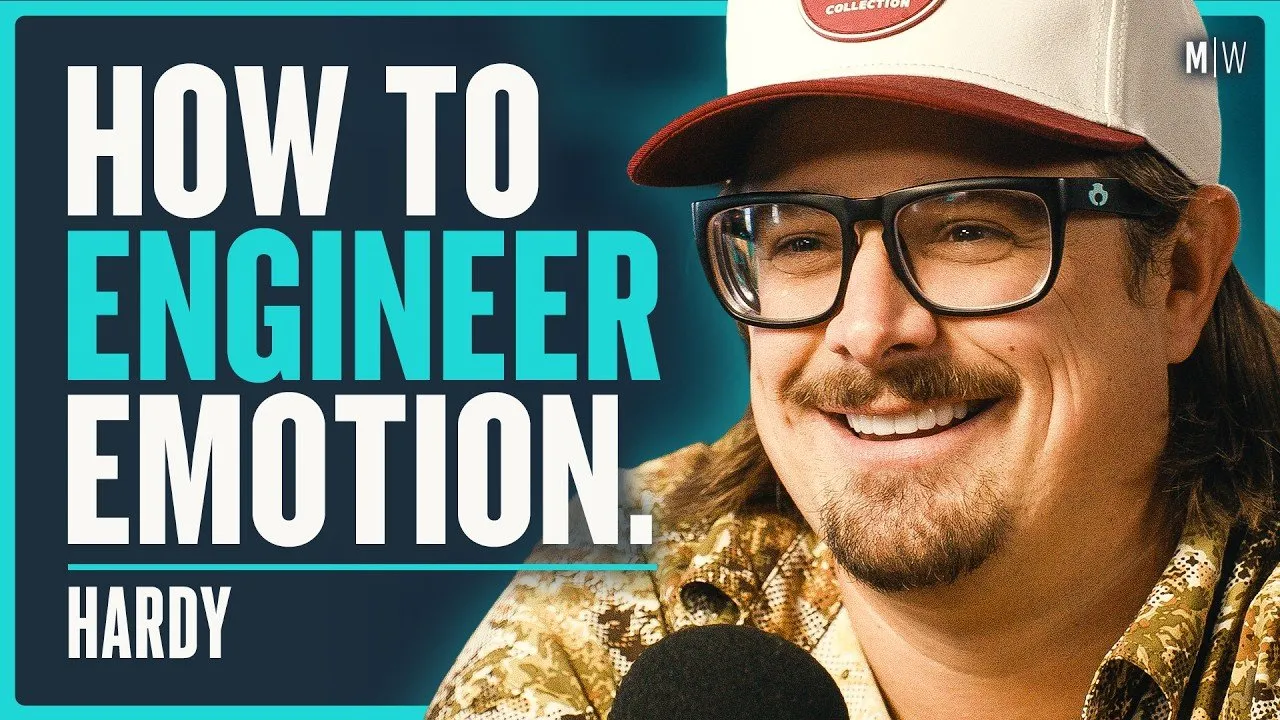
In the high-stakes world of Nashville country music, success is often viewed through the lens of chart-topping hits and sold-out stadium tours. However, for Michael Wilson Hardy—known mononymously as HARDY—the foundation of a lasting career isn't built solely on virtuoso talent, but on a much simpler philosophy: be a "good hang." As one of the industry’s most prolific songwriters turned superstar performers, HARDY offers a unique vantage point into the machinery of Music City, the psychology behind why we love sad songs, and the harrowing personal trauma that reshaped his view on mortality.
From the collaborative writing rooms of Nashville to the terrifying reality of a tour bus accident, HARDY’s journey is a testament to resilience and the complex emotional landscape of modern country music. In a candid conversation, he breaks down the myths of the music industry, the paradox of live performance, and why kindness remains the ultimate currency in a ruthless business.
Key Takeaways
- The "Good Hang" Theory: Talent is essential, but being someone people enjoy working with is the true driver of long-term career longevity.
- The Nashville Engine: Unlike other music scenes, Nashville operates as a collaborative factory where ego is checked at the door in service of the best song.
- The Psychology of Sadness: Dark, emotional songs often resonate more deeply than happy ones because they invite connection and comfort rather than isolation.
- Trauma and Recovery: Surviving a severe tour bus accident forced HARDY to confront PTSD and anxiety, reshaping his artistic focus toward themes of mortality.
- The Performance Paradox: Achieving a "flow state" during live shows often results in amnesia of the event, creating a tension between performing perfectly and being mentally present.
The "Good Hang" Philosophy: Reputation Over Ruthlessness
There is a pervasive myth in the entertainment industry that ruthlessness and ego are prerequisites for success. The stereotype of the "tortured genius" or the "difficult virtuoso" suggests that bad behavior is a necessary byproduct of immense talent. HARDY fundamentally rejects this notion, placing "be nice" ahead of "work hard" in his hierarchy of career values.
In professional environments, particularly in the close quarters of a tour bus or a writing room, social friction can destroy morale faster than a lack of skill. HARDY argues that while talent gets you in the room, your character keeps you there. People remember how you treated them—from the drivers to the venue staff—far longer than they remember a specific guitar riff.
"Famous jerks are not role models. Some talented people are jerks. And this sometimes makes it seem to the inexperienced that being a jerk is part of being talented. It isn't. Being talented is merely how they get away with being a jerk."
This perspective reframes success not as the result of ego, but as a buffer that temporarily protects difficult people from consequences. However, for sustainable success, treating people well is a performance enhancer. It requires less energy to be kind than to maintain a façade of superiority, allowing artists to reserve their energy for creativity.
Inside the Nashville Songwriting Machine
Nashville is often described as a "ten-year town," but HARDY describes it as an engine—a factory for music that is unlike any other creative hub on the planet. The city’s songwriting culture is built on a unique form of camaraderie where competitors stand on each other's shoulders rather than tearing each other down.
The Collaborative Process
At any given moment on a weekday morning, there may be 300 rooms in Nashville filled with songwriters trying to craft the next number-one hit. This volume of output requires a professional, almost blue-collar approach to creativity. It isn't about lighting candles and waiting for a mystical muse; it is about showing up, sharing ideas, and trusting the process.
HARDY notes that the pressure is often alleviated by collaboration. If one writer is exhausted or lacking inspiration, their co-writers pick up the slack. This communal effort turns songwriting into a shared burden rather than a solitary struggle, fostering an environment where "normal people" with extraordinary storytelling abilities can thrive.
Lyrics vs. Riffs
One of the defining characteristics of country music, according to HARDY, is the prioritization of the story over the instrumentation. In genres like metal or rock, a guitar riff can be the lead character. In country, the lyric and the vocal delivery are paramount. This structural difference affords country music more room for intricate storytelling and emotional vulnerability, allowing writers to craft narratives that can "destroy" a listener emotionally—a goal HARDY pursues with pride.
The Gravitational Force of Sad Songs
Why do we gravitate toward heartbreak, death, and tragedy in music? HARDY observes that dark songs often tell the truth in a way that happy songs cannot. There is a specific difficulty in writing a genuinely good happy song without it feeling cheesy or insincere. Conversely, sadness and mortality offer a rich tapestry of relatable human experience.
There is a psychological component to this preference. Happiness can sometimes be isolating; when someone is ecstatic, they don't necessarily need support. Sadness, however, has a pro-social gravitational force. It invites comfort, companionship, and empathy. When listeners hear a song about heartbreak or loss, they feel less alone in their own struggles.
HARDY notes a cultural paradox within the genre regarding emotional expression:
"Country boys feel everything. They just don't talk about it."
Music provides a sanctioned outlet for these suppressed emotions. It allows the stoic listener to access feelings they might otherwise bury under the guise of toughness, making the songwriter's job akin to emotional translation for the silent majority.
Confronting Mortality: The Bus Accident
In October 2022, HARDY’s life and perspective were irrevocably altered by a tour bus accident. Following a show in Bristol, Tennessee, the bus veered off the road at approximately 60 miles per hour, flipping multiple times. HARDY, who was awake in the front lounge, was thrown across the vehicle, sustaining a skull fracture and a cracked vertebrae. Tragically, the accident was caused by the driver suffering a medical emergency due to an undiagnosed brain tumor.
The Aftermath and PTSD
While HARDY physically recovered enough to get married just weeks later, the psychological toll was delayed. For a year, he operated in survival mode, ignoring the trauma to keep his career moving. It wasn't until a year later, triggered by the changing seasons and similar weather conditions, that the trauma resurfaced in the form of debilitating panic attacks.
This experience highlighted the fragility of life and deeply influenced his subsequent songwriting, leading to a record heavily focused on mortality. It also forced him to confront the stigma of mental health.
Healing Through Therapy
HARDY’s recovery required aggressive mental health treatment, including EMDR (Eye Movement Desensitization and Reprocessing) and neuro-electrical therapies. These treatments helped rewire the brain's response to the trauma, allowing him to tour again without crippling anxiety. His journey underscores a critical message for men in the industry: vulnerability is not weakness. Acknowledging mental health struggles is the only path to true recovery, and the more public figures speak on it, the more the shame dissipates.
The Paradox of Performance and Presence
For an artist, the ultimate goal is to enter a "flow state"—that zone where execution is automatic and the rest of the world fades away. However, HARDY identifies a cruel irony in this state: the moments you perform your best are often the moments you remember the least.
This creates a sense of melancholy for the artist. Looking back on massive career milestones, like playing to thousands of people, the memory is often blurry or nonexistent because the brain was operating on autopilot. This leads to a form of "presence guilt," where the artist wonders if they truly soaked in the moment.
Ultimately, HARDY concludes that this is the price of professionalism. The job is to serve the audience and the song, not necessarily to retain a perfect memory of the event. Accepting that life is fleeting—whether due to the nature of memory or the unpredictability of mortality—has taught him to hold onto the small moments and treat his career not as a burden, but as a lucky, fleeting privilege.
Conclusion
HARDY’s evolution from a behind-the-scenes songwriter to a headlining artist is defined by a deep respect for the craft and a hard-won understanding of life's fragility. Whether he is dissecting the mechanics of a Nashville writing room or recounting the terror of a bus crash, his focus remains on the human element—connection, kindness, and honesty. In a genre built on storytelling, HARDY is living out one of the most compelling narratives in modern country music, proving that even in the face of darkness, the best way forward is to work hard, be nice, and keep writing the truth.


)