
Table of Contents
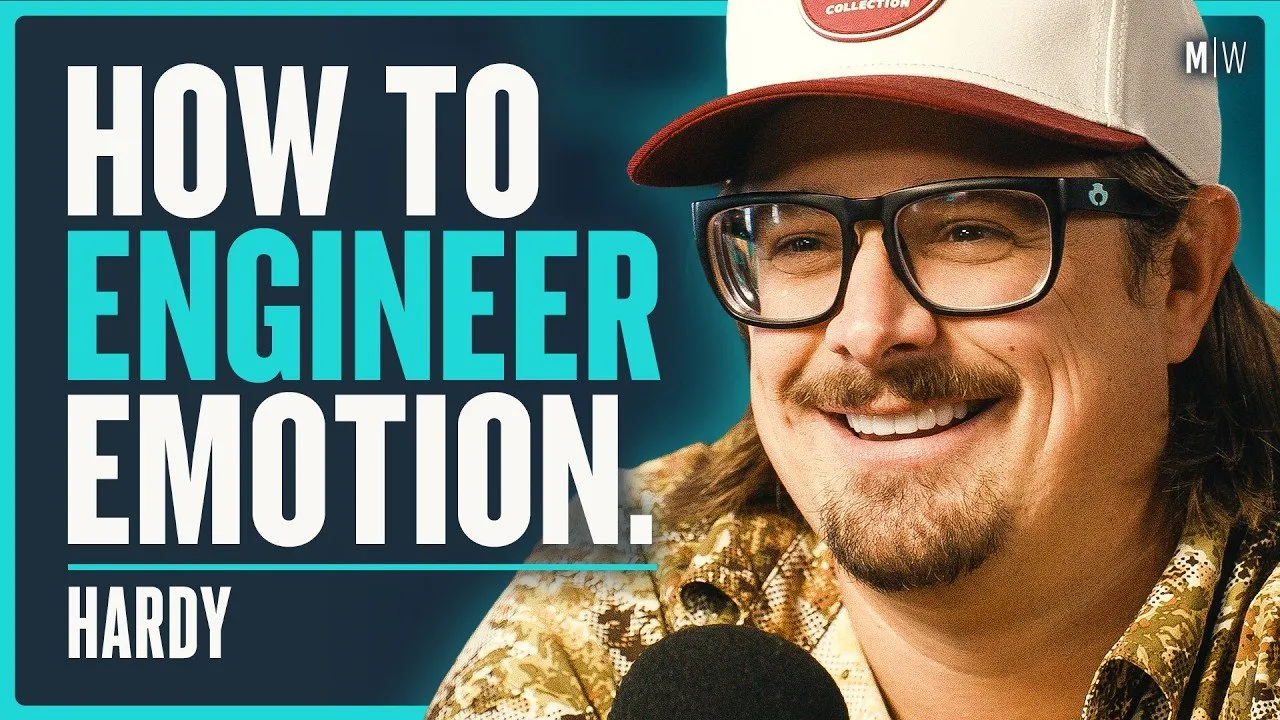
In the hyper-competitive ecosystem of Nashville, where thousands of songwriters vie for the next number-one hit, success is often attributed to ruthless ambition or raw virtuosity. However, for country star HARDY, the secret to longevity in the music industry is surprisingly simple: be a "good hang." Transitioning from a behind-the-scenes hitmaker for artists like Blake Shelton and Morgan Wallen to a headlining act in his own right, HARDY offers a unique perspective on the intersection of creativity, trauma, and the blue-collar work ethic that drives country music.
In a revealing conversation, the artist opened up about the mechanics of the Nashville songwriting machine, the psychological aftermath of a near-fatal tour bus accident, and why sadness often holds a stronger gravitational pull than happiness in songwriting.
Key Takeaways
- Kindness Over Talent: HARDY prioritizes being "nice" over "working hard," arguing that being a person others want in the room is the ultimate career sustainer, while talent merely allows jerks to survive temporarily.
- The Nashville Engine: Unlike the "vibe-based" sessions of Los Angeles, Nashville operates as a disciplined factory where creativity is treated as a 9-to-5 job, often producing hits from mundane conversations.
- The Power of Dark Storytelling: Dark songs are perceived to tell the truth in a way happy songs cannot, tapping into a communal sense of sorrow that fosters connection rather than isolation.
- Trauma and Recovery: A severe bus accident in 2022 fundamentally shifted HARDY’s perspective on mortality, leading to delayed PTSD symptoms that required specialized therapy like EMDR to overcome.
- The Performer's Paradox: Achieving a "flow state" on stage often results in amnesia regarding the performance, creating a tension between executing a perfect show and retaining the memory of it.
The Currency of Kindness in the Music Industry
There is a pervasive myth in the entertainment industry that ruthlessness and ego are prerequisites for success. The narrative suggests that to win, one must be cutthroat. HARDY challenges this notion, placing "be nice" above "work hard" in his hierarchy of career philosophies. While technical skill is essential, the ability to be a "good hang"—someone who lifts the morale of a tour bus after three shows in three days—is the intangible asset that builds careers.
The conversation referenced a concept by investor Paul Graham, which suggests that being a "famous jerk" is a misleading signal. The success exists despite the behavior, not because of it. Talent provides a temporary buffer zone, allowing difficult individuals to survive in the industry, but it rarely guarantees long-term loyalty or happiness.
"Famous jerks are not role models. Some talented people are jerks. And this sometimes makes it seem to the inexperienced that being a jerk is part of being talented. It isn't. Being talented is merely how they get away with being a jerk."
For HARDY, the transactional nature of the music business—where skill X yields result Y—ignores the packaging that talent comes in. In the close quarters of a tour or a writing room, social friction is a career killer. It takes significantly more effort to maintain an ego than to simply be pleasant, and while nice people don't always win, they are the ones who build sustainable ecosystems around their art.
Deconstructing the Nashville Songwriting Engine
Nashville is often described not just as a music scene, but as a factory. The efficiency of this "engine" is distinct from other music hubs like New York or Los Angeles. HARDY, recognized as one of the premier songwriters in the city, describes a culture defined by an unparalleled work ethic and a lack of pretension.
While an LA session might involve setting a mood with candles and sage, a Nashville session is strikingly utilitarian. It involves "normal-looking people"—who might have spent the morning grocery shopping or hunting—walking into a room and treating storytelling like a trade.
The Collaborative Process
The volume of output in Nashville is staggering. On any given morning, there may be 300 rooms filled with writers attempting to craft the next radio hit. This high-volume environment fosters a unique camaraderie. Writers stand on each other's shoulders; if one writer is mentally drained, a collaborator picks up the slack. The lack of ego allows for a seamless transition between ideas, where a casual conversation about deer hunting can pivot instantly into a lyric that will eventually top the charts.
This industrial approach does not dilute the emotional impact of the music. On the contrary, the professionalism of Nashville writers allows them to craft devastatingly emotional narratives, such as HARDY’s "Wait in the Truck," without needing to be in an emotional crisis themselves at the moment of creation. They are architects of emotion, building structures that others can inhabit.
Why Dark Songs Resonate: The Truth in Tragedy
There is a distinct preference in country music for the darker side of the human experience. HARDY notes that dark songs "tell the truth in a way happy songs can't." While happy songs risk feeling superficial or alienating—it is difficult to relate to someone having the "best day ever" when you are not—sadness has a magnetic, pro-social quality.
The discussion highlighted a psychological insight: when people are angry, others retreat; when people are sad, others draw near to offer comfort. Sadness and vulnerability in music create a community for the listener, validating their feelings and reducing isolation.
"I think people feel alone in their sadness in a way that causes them to try and seek companionship or comfort... As opposed to if everything's going great... It's hard to relate to somebody that's having a great day."
From a creative standpoint, HARDY admits that writing about darkness, heartbreak, or mortality is actually easier than writing a compelling happy song. The friction of tragedy provides a narrative arc that happiness often lacks.
The Bus Accident That Changed Everything
In October 2022, HARDY’s life and outlook were altered by a severe tour bus accident near Bristol, Tennessee. The bus, traveling at highway speeds, left the road and flipped multiple times. The crash resulted in significant injuries for the crew and, tragically, the eventual loss of their driver, Ricky, who had suffered a medical episode behind the wheel.
HARDY describes the chaos of the moment with visceral clarity: waking up with glass in his head, the disorientation of the overturned vehicle, and the frantic attempt to find a phone to call 911 while fearing for the lives of his team. Despite sustaining a cracked vertebrae and a concussion, HARDY returned to the road almost immediately to make his wedding date and fulfill touring obligations.
The Delayed Trauma Response
The decision to push through the trauma without immediate processing led to severe delayed consequences. A full year after the accident, HARDY began experiencing debilitating panic attacks, a condition he had never previously faced. The physical trigger of the changing seasons and cooling weather brought the suppressed trauma to the surface.
Recovery required proactive mental health treatment, including EMDR (Eye Movement Desensitization and Reprocessing) and neuro-stimulation therapies. This experience forced a confrontation with mortality that heavily influenced his subsequent songwriting, shifting his focus toward the fragility of life and the importance of appreciating the present moment.
The Paradox of Performance and Memory
The conversation concluded with a reflection on the strange disconnect between performing at the highest level and remembering it. Musicians often chase the "flow state"—a zone of total immersion where self-consciousness disappears. However, this state often results in a form of amnesia.
HARDY and the host discussed the irony that the pinnacle of a performer's career—playing sold-out shows to thousands of fans—are often the moments they remember the least. The brain, flooded with dopamine and adrenaline, focuses entirely on execution rather than memory encoding.
This reality challenges the advice to "be present." For an artist, doing their job well often means not being present in the reflective sense, but rather being a vessel for the performance. HARDY’s journey, from the trauma of the crash to the highs of the stage, underscores a need for grace: accepting that you cannot control every outcome, whether it is a bus accident or the fleeting nature of a live show memory.
Conclusion
HARDY’s trajectory from a behind-the-scenes songwriter to a genre-bending artist is defined by resilience. Whether navigating the social intricacies of the music business, recovering from physical and mental trauma, or wrestling with the philosophical weight of his own lyrics, his approach remains grounded. By prioritizing kindness, embracing the therapeutic power of dark storytelling, and openly addressing the mental tolls of the industry, HARDY exemplifies the modern evolution of the country star: vulnerable, hardworking, and profoundly human.


)