Table of Contents
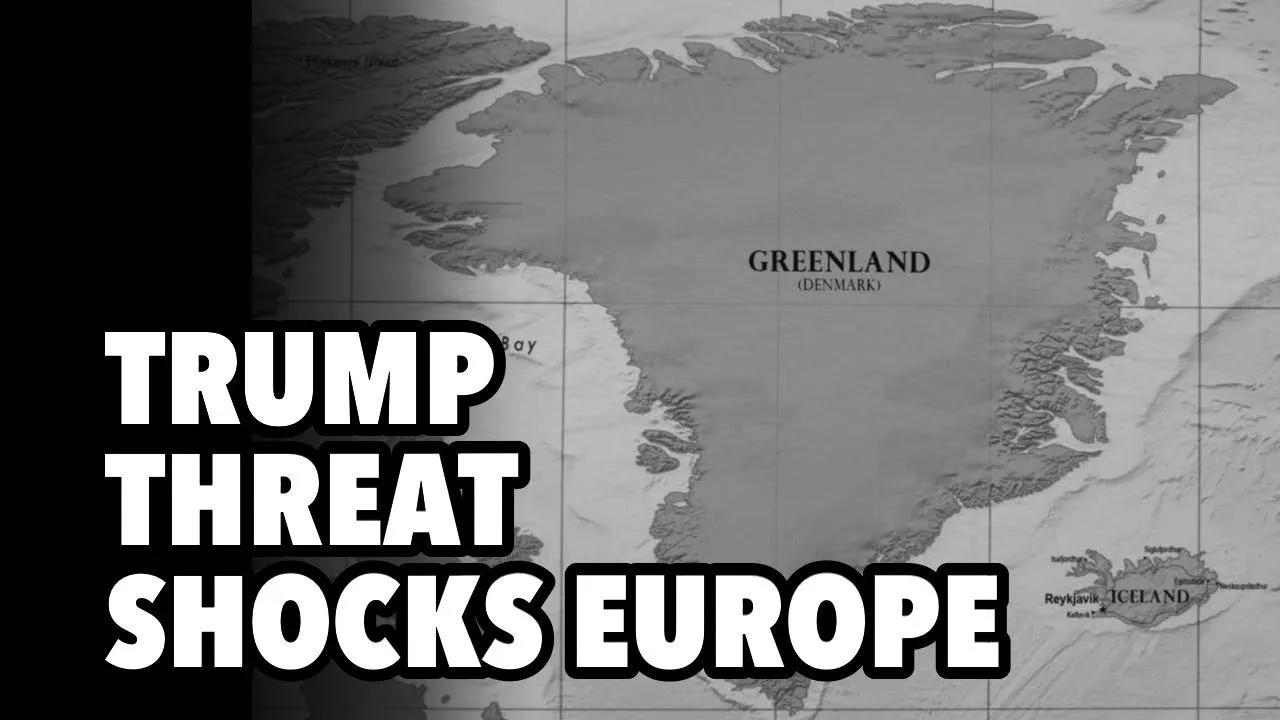
Discussions surrounding the potential acquisition of Greenland by the United States have evolved from speculative headlines into a serious conversation about the future of Western geopolitical strategy. What appears on the surface to be a real estate transaction or a display of executive ego actually signals a profound shift in global power dynamics. As Washington potentially pivots toward a "Fortress America" strategy, the implications for Denmark, the European Union, and the integrity of NATO are becoming increasingly stark. This move suggests a restructuring of the Western alliance system, where traditional partnerships may give way to a more direct assertion of American hegemony in the Western Hemisphere.
Key Takeaways
- The End of Negotiation: The acquisition of Greenland is viewed less as a diplomatic purchase and more as a strategic imperative, with Denmark lacking the leverage to refuse a determined Washington.
- NATO's Fragility: European leaders are expected to pressure Denmark to sell to avoid a crisis that could fracture the NATO alliance or lead to a US withdrawal.
- Strategic Pivot to China: A projected $1.5 trillion military budget increase is driven primarily by the need to confront China in the Pacific, rather than Russia in Europe.
- The Encirclement of Canada: Control over Greenland, combined with existing US territory, effectively surrounds Canada, pressuring Ottawa into complete alignment with US hemispheric goals.
The Ultimatum: Sovereign Sale or Strategic Seizure
The discourse in Washington is crystallizing around an absolute determination to bring Greenland under American control. While the media frames this as a potential "purchase," the reality behind closed doors suggests a much harsher ultimatum. The prevailing view is that Denmark will be presented with a binary choice: negotiate a sale or face a scenario where the United States simply asserts control.
In this equation, the balance of power is overwhelmingly lopsided. Denmark cannot realistically hold onto Greenland if the United States decides it is vital for national security. Consequently, the transaction—if it occurs—will likely be a "forced sale" where the price is dictated by the buyer, not the seller. While this will be deeply humiliating for Copenhagen, political pragmatism will likely prevail.
The "Win-Win" Packaging
To mitigate the diplomatic fallout, both US and European officials will likely attempt to package the transfer as a mutually beneficial deal. Political optics demand that this not look like a seizure of territory from an ally.
"They’ll tell Trump, 'Look, everyone knows you can take it, but let's sell it... that way we can package it as a win for everybody.'"
The narrative will likely focus on the economic benefits for Denmark and the strategic strengthening of NATO. There may even be suggestions that the proceeds from the sale could be redirected toward funding conflicts in Eastern Europe, allowing all parties to claim they are serving the greater good of the alliance. However, the financial compensation is expected to be nominal—perhaps one or two billion dollars—symbolic "marketing money" rather than true market value.
Europe’s Dilemma and the Reality of NATO
Why would European powers like Germany, France, or the UK support such a humiliation of a fellow EU member? The answer lies in their overriding fear of a NATO collapse. The priority for European capitals is to keep the United States anchored in European security architecture at all costs.
If the United States were to unilaterally seize Greenland, it would precipitate a massive crisis within the alliance. To prevent this, European leaders will likely exert enormous pressure on Denmark to agree to a sale. This dynamic exposes a critical reality: the transatlantic relationship has shifted from a partnership of equals to a hierarchy where the US dictates terms and Europe acquiesces to maintain the security umbrella.
This capitulation may have domestic consequences within Europe. A forced sale of sovereign territory exposes the powerlessness of the EU bureaucracy and national governments. To manage the inevitable public anger and humiliation, European governments may resort to increased information control and censorship, suppressing criticism of the deal to maintain the illusion of alliance unity.
Fortress America and the Arctic Barrier
Beyond the political theater, there is a coherent strategic rationale driving the interest in Greenland. This aligns with a "spheres of influence" worldview, specifically the defense of the Western Hemisphere. Geographically, Greenland is a critical barrier protecting North America from threats emerging from the Arctic or the East.
If the United States is indeed retreating into a "Western Hemispheric Fortress," total control of Greenland—severed from European political administration—makes immense strategic sense. It solidifies the North American perimeter and removes the uncertainty of relying on a third party for defense rights.
The $1.5 Trillion Military Build-Up
This territorial expansion coincides with discussions of raising the US military budget to a staggering $1.5 trillion by 2027. Analysts argue that such a massive increase is not intended for the Arctic or Europe, but rather for a looming confrontation in the Pacific.
The specific hardware being prioritized—heavy cruisers, increased naval tonnage, and advanced ballistic missile defense systems—points clearly toward a strategy focused on China. The "China-first" faction of American foreign policy planners views the current moment as critical.
"The Chinese Navy has now overtaken the US Navy in numbers... there is a sense of urgency, a sense that time is short."
While the US maintains a foothold in Europe to contain Russia, the sheer scale of the proposed military investment suggests that the primary objective is to close the industrial and technological gap with Beijing. This involves rebuilding the US shipbuilding industry and modernizing the nuclear triad, tasks that require financial resources far beyond current allocations.
The Encirclement of Canada
A frequently overlooked consequence of a US acquisition of Greenland is the geopolitical encirclement of Canada. With the United States controlling Alaska to the west and potentially Greenland to the east, Canada would be effectively bracketed by American territory.
This geography places immense pressure on Ottawa. Historically, Canada has had opportunities to diversify its foreign relations, including potential economic ties with Russia and China. However, alignment with US and EU foreign policy has largely closed those doors. If the US secures Greenland, Canada’s ability to pursue an independent foreign policy evaporates completely.
Strategists focused on securing the Western Hemisphere against Chinese influence view the absorption of Canadian security policy—and potentially its territory—as the final step in securing the continent. By locking China out of the entire hemisphere, the US aims to create a unified, impenetrable block, with Canada folded completely into the American sphere of influence.
Conclusion
The potential transfer of Greenland is not merely an eccentric ambition of a specific administration but a reflection of a changing world order. It signals a move away from the multilateral cooperation of the post-Cold War era toward a naked assertion of hard power and regional consolidation. For Europe, it is a stark reminder of its dependency; for Canada, a signal of increasing encirclement; and for the United States, a step toward fortifying the Western Hemisphere for a new era of great power competition centered on the Pacific.