
Table of Contents
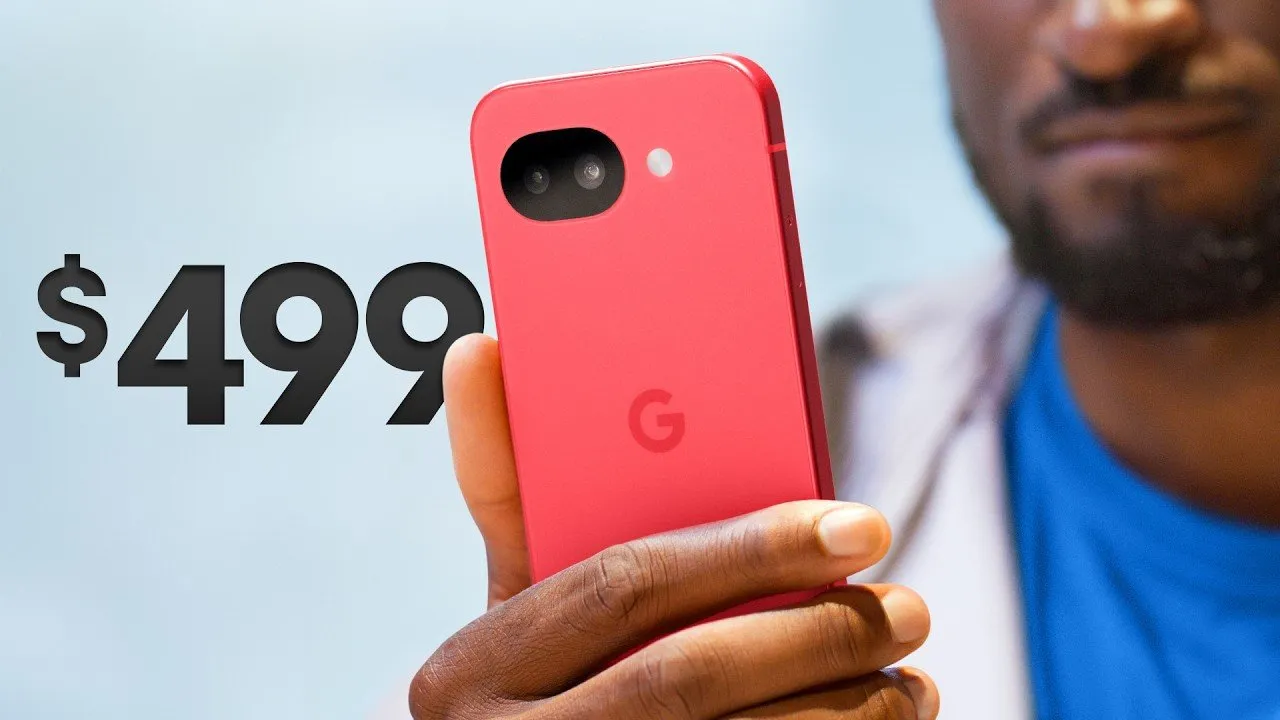
Google has officially unveiled the Pixel 10A, a mid-range smartphone that mirrors its predecessor in nearly every significant metric, from its processor to its physical dimensions. Retaining the $499 starting price, the device focuses on minute refinements rather than generational leaps, solidifying Google’s strategy of prioritizing software capability over hardware innovation for its budget-friendly A-series line.
Key Points
- Identical Core Specs: The Pixel 10A retains the Tensor G4 chip, 6.3-inch display size, and camera sensors found in last year's Pixel 9a.
- Minor Refinements: Updates are limited to a 10% brighter screen (30,000 nits peak), faster 30W wired charging, and a completely flush camera bar.
- Software Focus: The value proposition relies heavily on AI features like "Auto Best Take" and cross-platform compatibility via Quick Share.
- Price Stability: The device launches at $499, maintaining the same entry-level cost as the previous generation.
An Unprecedented Level of Similarity
In a mobile industry known for iterative updates, the Pixel 10A stands out for its reluctance to change. Google has opted to reuse the vast majority of the hardware from the Pixel 9a. The device features the same aluminum sides, plastic back, and IP68 water and dust resistance. Internally, the phone continues to run on the Tensor G4 chipset paired with 8GB of RAM and 128GB of base storage.
The display specifications remain largely static, featuring a 60-120Hz refresh rate that still defaults to 60Hz out of the box. Even the battery capacity remains unchanged at 5,100 mAh. Critics have noted that this release feels less like a new product and more like a repackaging of existing inventory.
"This one is actually truly effectively basically the same phone. And I don't think I've ever seen that before... It feels like the same phone with a new name on it."
Technical Nuances: What Actually Changed?
While the chassis and core processing power remain identical, Google has introduced a concise list of technical adjustments to differentiate the 10A from the 9a. The most visible change is the camera bar; the dual-camera system is now completely flush with the back of the device, eliminating the wobble found in previous models. The device also introduces new colorways: Fog, Obsidian, Berry, and Lavender.
Functional upgrades include:
- Display Brightness: Peak brightness has increased to 30,000 nits, protected by Gorilla Glass 7i.
- Charging Speeds: Wired charging has improved from 23W to 30W, while wireless charging sees a modest bump from 7.5W to 10W.
- Connectivity: The inclusion of Satellite SOS allows users in supported regions to contact emergency services without cellular signal.
Software as the Selling Point
With hardware taking a backseat, Google is leaning entirely into its "software-defined" product philosophy. The Pixel 10A includes a suite of exclusive features designed to lock users into the Google ecosystem. This includes "Auto Best Take," which merges multiple group photos to ensure all subjects look their best, and "Camera Coach," an assistive feature for photography composition.
Furthermore, the device emphasizes ecosystem interoperability. The "Quick Share" feature now natively supports file transfer between Android devices and Apple products, bridging a long-standing gap in cross-platform functionality. Google promises seven years of software and security updates, ensuring the device remains viable long after the hardware has aged.
Market Implications and The Annual Cycle
The release of the Pixel 10A highlights a growing trend in the smartphone market: the plateau of hardware innovation and the persistence of the annual release cycle. By launching a device with the previous year's processor—rather than upgrading to the current flagship chip as the A-series has done in the past—Google is signaling that for the average consumer, software features outweigh raw performance metrics.
Industry observers suggest that while enthusiasts may find the lack of upgrades disappointing—specifically the absence of magnetic accessories (similar to MagSafe) or a storage bump to 256GB—the device is not targeted at annual upgraders. Instead, it serves as the default option for consumers entering the market after holding onto their previous phones for three to four years.
The Pixel 10A is available now, positioning itself as a safe, utility-focused option for budget-conscious buyers who prioritize camera software and battery life over bleeding-edge specifications.




%20Seen%20This%20Before)