Table of Contents
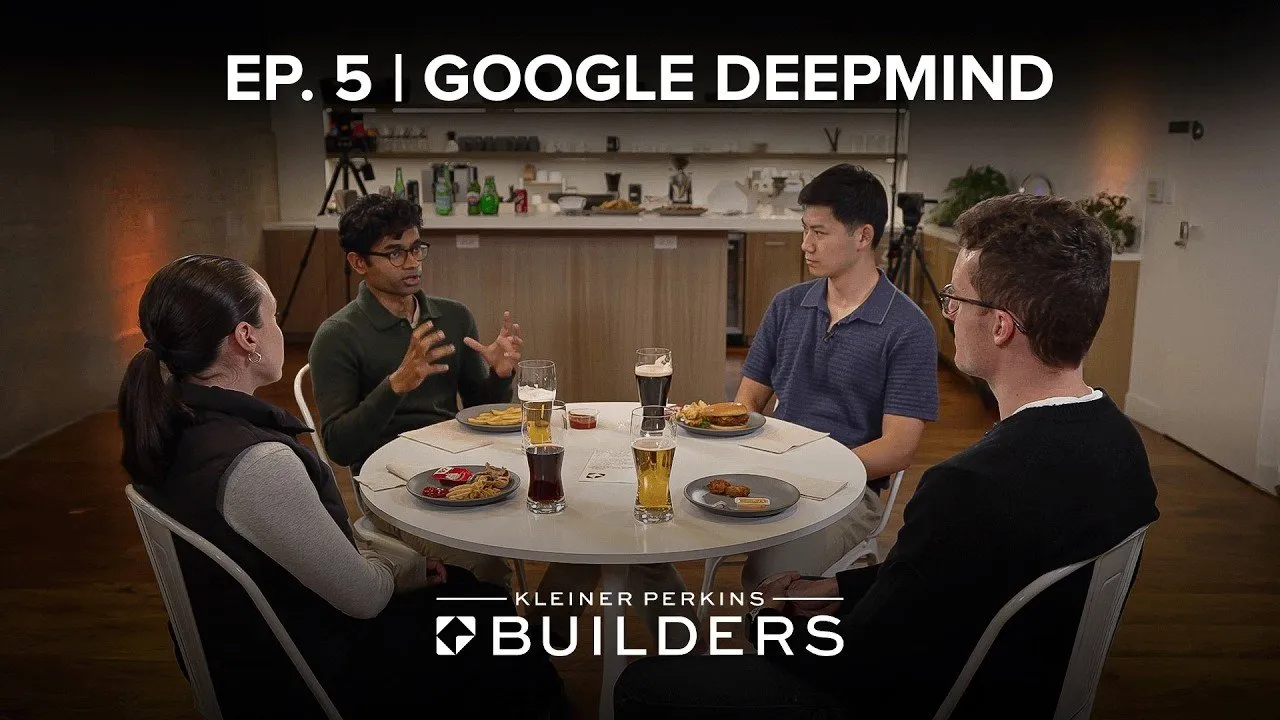
The landscape of software development is undergoing a seismic shift. As artificial intelligence moves from simple autocomplete features to autonomous agents capable of complex codebase migrations, the tools we use to build the future are being rewritten in real-time. Kevin Hou and Varun Mohan, the minds behind the agent-first product Anti-gravity at Google DeepMind, are at the forefront of this evolution. In a recent conversation, they shared insights into the relentless pace of innovation, the philosophy of "agent-first" development, and why the next decade of technology will be defined by those who stop boxing in their models.
Key Takeaways
- The Shift to Agent-First: Software development is evolving from simple chat interfaces to parallelized, autonomous agents that can manage entire codebases without human intervention.
- Avoiding Over-Engineering: Rigid, complex infrastructure often hinders LLM performance; instead, developers should prioritize simplicity to let models "breathe" and leverage their expanding capabilities.
- The Death of the IDE: As agentic interfaces improve, the traditional Integrated Development Environment (IDE) is becoming less critical, with more work shifting to specialized CLI tools and agent-manager interfaces.
- Cultural Intensity: Success in the age of AI requires not just technical talent, but a culture of extreme focus, where leadership is deeply "in the weeds" of the product and its underlying technology.
The Evolution from Autocomplete to Autonomous Agents
The journey from basic code suggestions to full-scale autonomous systems has been dizzying. For developers like Hou and Mohan, who previously built tools like Windsurf, the progression feels like a series of "step-change" paradigm shifts. What was considered science fiction just eighteen months ago—such as an agent performing a complex, multi-step codebase migration—is now the standard expectation.
Learning from Robotics
Both founders credit their background in autonomous vehicles (AV) at Nuro for shaping their current approach to AI. In the AV industry, the cost of a "bug" could be life-altering, forcing a culture of intense rigor and caution. Transitioning to Large Language Models (LLMs) felt like a release from that extreme physical risk, yet the lessons in architectural agility remained. They learned that hand-tuned systems are rapidly rendered obsolete by machine learning; consequently, any software built around a model should be viewed as a depreciating asset.
The idea of building for the future of where the technology is going to rapidly sort of compound and simplify a lot of assumptions was kind of ingrained in us from AV.
Designing for the "Agent-First" Era
One of the most critical principles for modern builders is the concept of "scaling with intelligence." As models become more capable, the infrastructure built around them must evolve. Developers often make the mistake of creating rigid, complex "harnesses" that trap the model, inadvertently preventing it from utilizing its full potential.
Simplifying the Interface
Hou and Mohan argue that the best product interface is often the simplest one. Rather than building bloated dashboards, they advocate for a "one box" approach—a central interface that acts as the command center for various agents, VMs, and data sources. This philosophy mirrors the early days of Google search: providing a simple, unified entry point for a world of complex, underlying data.
The Future of the Developer Experience
As agents gain the ability to debug themselves and write features with minimal guidance, the role of the human engineer is shifting. The "10x engineer" of the future will not necessarily be the one writing the most code, but the one who can best structure their environment to empower AI agents.
Is the IDE Obsolete?
The team suggests that the traditional IDE is losing its dominance. While the IDE remains a helpful tool for specific debugging tasks, a large and growing fraction of development can already be handled through CLI tools and agent managers. If an engineering leader cannot get their team’s codebase to a point where an agent can operate on it independently, they risk falling behind the current industry curve.
If you cannot get your agent to debug itself, to create features without you holding its hand, if you have to go into the editor and if you're typing, you will get left behind.
The Culture of DeepMind: Focus and Intensity
Joining Google DeepMind has allowed the team to integrate product development more closely with foundational research. This creates a powerful, bilateral feedback loop: the product team identifies user needs that inform research, while the research team provides new capabilities that unlock entirely new product features.
Leading with Technical Depth
A recurring theme in their experience at Google is the "founder DNA" present in leadership. Figures like Sergey Brin are described as being deeply involved in the technical weeds of the product. This level of engagement provides a stark contrast to the performative, "always online" leadership style often seen in modern tech, suggesting that genuine breakthroughs require deep, focused, and patient commitment over the long term.
He is in the weeds on on every part of what is critical at GDM right now and I think that is very unique.
Conclusion
The transition toward agent-first development is not merely a change in tools; it is a fundamental shift in how we conceive of software production. As the barrier to generating code drops, the competitive advantage will no longer lie in raw coding speed, but in the ability to build trust, navigate regulated environments, and architect systems that allow agents to thrive. By remaining lean, staying in the weeds of their own products, and avoiding the trap of over-engineering, teams like those at Google DeepMind are setting the stage for a future where AGI isn't just a goal—it's an active participant in the creative process.
![Warning TRUMP: This Is Very Dangerous [It’s Starting]](/content/images/size/w1304/format/webp/2026/04/trump-middle-east-market-volatility-oil-prices.jpg)