Table of Contents
The narrative surrounding Bitcoin often frames it as "digital gold"—a non-sovereign store of value that should, in theory, act as a safe haven during times of fiscal irresponsibility or geopolitical turmoil. However, recent market behavior tells a different story. While gold has surged to new all-time highs amid global uncertainty, Bitcoin has struggled to maintain its momentum, behaving far more like a high-beta tech stock than a precious metal.
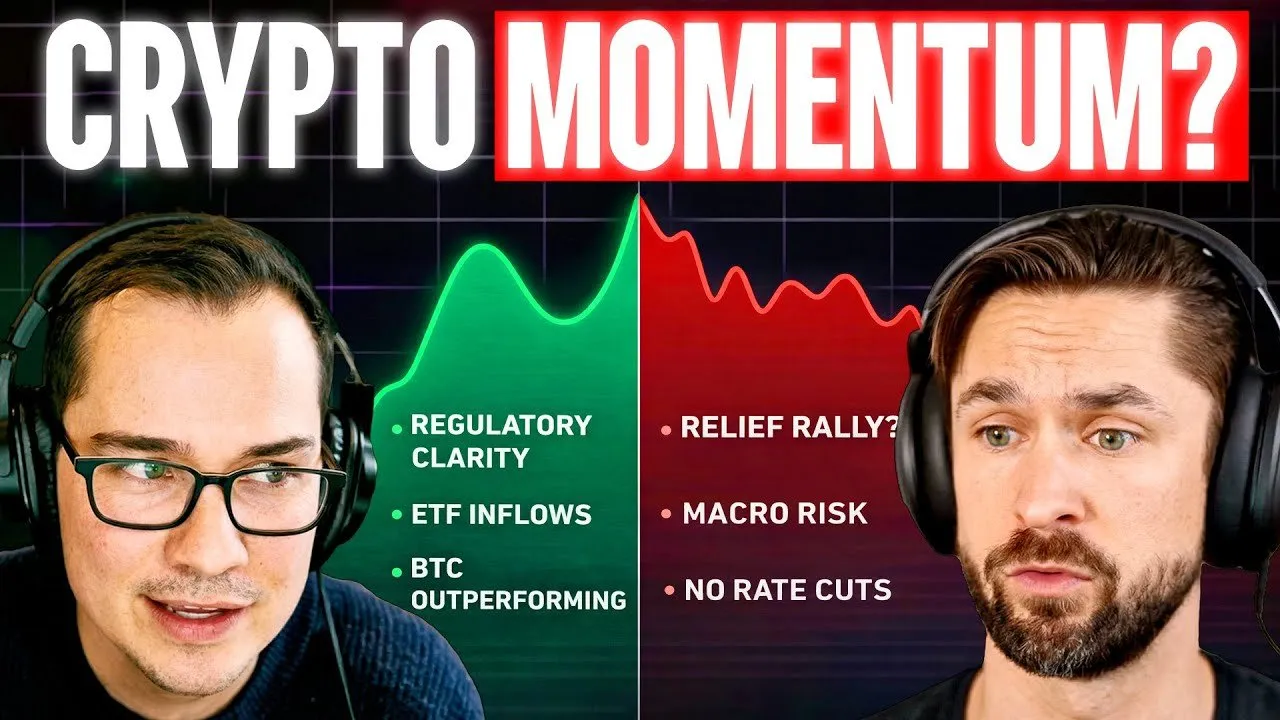
In a recent discussion on Bits and Bips, host Steve Ehrlich sat down with Steve Sosnick, Chief Strategist at Interactive Brokers, to dissect this divergence. From the shifting demographics of crypto investors to the critical importance of Federal Reserve independence, the conversation illuminated why Bitcoin has yet to earn the "safe haven" crown and what it might take for the asset class to mature.
Key Takeaways
- Bitcoin is currently trading as a risk asset, showing high correlation with the NASDAQ rather than decoupling like gold during market stress.
- Institutional adoption has altered market structure; the success of spot ETFs has introduced traditional investors who treat crypto like standard equities, selling during downturns.
- Stablecoins may be the true rival to gold for investors in distressed economies seeking capital preservation without Bitcoin’s inherent volatility.
- Geopolitical headlines drive short-term volatility, but markets care most about policies that directly impact earnings, such as tariffs and interest rates.
- Federal Reserve independence remains a market cornerstone, with historical precedents warning against political interference in monetary policy.
The Identity Crisis: Risk Asset vs. Safe Haven
For years, proponents argued that Bitcoin would serve as an uncorrelated hedge against fiat currency debasement. Yet, as gold prices climb in response to global yields and safe-haven demand, Bitcoin has largely stalled or corrected. According to Sosnick, the market has delivered a clear verdict on Bitcoin's current classification.
"I would say since inauguration, Bitcoin specifically has become a risk asset, whether you like it or not. Bitcoin's done very well in periods of monetary accommodation, but I think at some level was in many ways it's a victim of its own success."
The divergence is telling. When risk "hits the fan," capital has historically flown into gold, U.S. Treasuries, and the Swiss Franc. Recently, however, when risk sentiment sours, Bitcoin tends to sell off alongside speculative growth stocks. This correlation undermines the "digital gold" thesis in the short term, suggesting that for now, Bitcoin requires liquidity and optimism to thrive, rather than fear and uncertainty.
The "Normie" Effect and ETF Impact
Paradoxically, the monumental success of spot Bitcoin ETFs—such as BlackRock’s IBIT—has contributed to this correlation. The approval of these products democratized access to the asset class, allowing average investors to hold Bitcoin in retirement accounts alongside Apple and NVIDIA stock.
While this is a triumph for adoption, it changes the psychology of the holder base. "Crypto natives" are often ideologically driven hodlers who weather 80% drawdowns. Traditional investors ("normies"), however, are prone to standard portfolio rebalancing. When the equity portion of their portfolio drops, or when they need liquidity, they are just as likely to sell their Bitcoin ETF shares as they are their tech stocks. This institutionalization has tightly coupled Bitcoin’s price action to the broader S&P 500 and NASDAQ indices.
Gold, Volatility, and the Stablecoin Alternative
Gold has a multi-millennium head start on Bitcoin, possessing a stability profile that central banks and sovereign funds trust. For Bitcoin to truly compete as a store of wealth, it must address its volatility. A store of value cannot reliably serve its function if it experiences double-digit drawdowns in a matter of days.
Sosnick points out that while gold’s volatility is akin to a currency, Bitcoin’s volatility remains akin to a leveraged risk asset. This distinction matters immensely depending on why an investor is buying.
The Case for Stablecoins in Distressed Economies
If the goal is purely to escape a failing local currency—such as in Turkey or Argentina—Bitcoin is not the only option. In fact, it may not be the best option for those who cannot afford speculative risk. Stablecoins, assuming they are fully backed by hard assets like T-bills, offer the fungibility and transferability of crypto without the price swings.
"If four months ago I was trying to move money out of Istanbul, would I be much better off if I'd put it in a stable coin or would it be much better off if I put it in Bitcoin? And the answer should be obvious."
For capital flight, the priority is often capital preservation in dollar terms, not speculative appreciation. In this specific "safe haven" use case, stablecoins are arguably stealing market share that might have otherwise gone to Bitcoin.
Geopolitics, Tariffs, and Market Whiplash
The conversation also touched on the fluid geopolitical landscape, specifically breaking news regarding potential deals over Greenland and the postponement of tariffs. Markets reacted swiftly to these headlines, with risk assets—including Bitcoin—bouncing on the news that tariffs might be delayed.
This reaction underscores a vital market reality: investors can largely ignore abstract geopolitical posturing (like the status of Greenland) because it rarely impacts corporate earnings. However, tariffs directly affect the bottom line of the S&P 500. Consequently, the threat of tariffs introduces volatility, and their withdrawal acts as a release valve, pushing prices higher.
While Bitcoin rallied on this news, it further cements the asset's status as a barometer for global liquidity and risk appetite rather than a hedge against political instability. The "Trump Put"—or the expectation that policy will pivot to support markets—remains a powerful psychological driver across all asset classes.
The Paramount Importance of Fed Independence
Beyond crypto markets, the integrity of the U.S. dollar relies heavily on the perceived independence of the Federal Reserve. Recent political maneuvers and Supreme Court hearings regarding the potential firing of Fed governors have raised alarms. History provides a stark warning against political interference in monetary policy.
Sosnick referenced the era of Arthur Burns, the Fed Chair under Richard Nixon. Burns succumbed to political pressure to keep interest rates low to aid Nixon’s reelection, a decision that fueled the catastrophic inflation of the 1970s. This is known as the "Arthur Burns mistake."
"There's stable prices, there's maximum sustainable employment, and then there's don't be Arthur Burns."
The market consensus is clear: to maintain the dollar's dominance and combat inflation effectively, the central bank must remain insulated from the whims of the executive branch. Any erosion of this independence could have profound implications for bond yields, the dollar, and by extension, alternative stores of value like Gold and Bitcoin.
Conclusion
Bitcoin has undoubtedly cemented its place in the global financial landscape, but its role is evolving. It has transitioned from a niche cypherpunk experiment to a mainstream risk asset held in pension funds and brokerage accounts. While this brings legitimacy, it also brings correlation.
For Bitcoin to eventually "catch up" to gold as a trusted safe haven, it must mature to a point where its volatility dampens and it can stand firm when traditional equities falter. Until then, investors should view it through the lens of a risk asset—one that offers tremendous upside but currently lacks the defensive characteristics of the yellow metal.
For more disclosures, please see Unchained.com/bits-and-bips.