Table of Contents
The intersection of macroeconomics and cryptocurrency has recently produced a whirlwind of volatility, challenging narratives regarding safe-haven assets and digital gold alike. From a sharp correction in precious metals driven by exchange margin hikes to the ongoing structural debates surrounding the Federal Reserve’s future leadership, markets are currently digesting a complex array of signals.
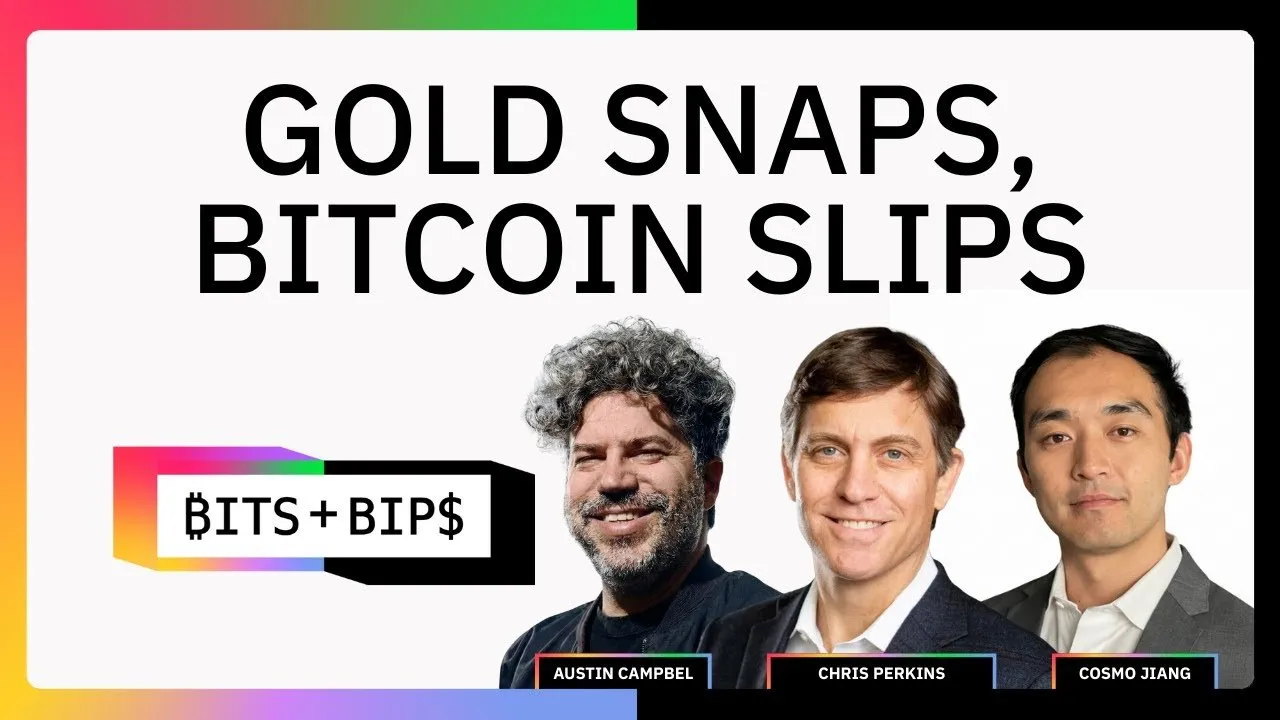
In this analysis based on insights from Austin Campbell, Chris Perkins, and Pantera’s Cosmo Zhang, we explore the mechanics behind the recent gold crash, the implications of Kevin Warsh’s nomination for Fed Chair, and the structural health of the crypto market following the lingering effects of the October 10th flash crash.
Key Takeaways
- Leverage flushes precious metals: Gold and silver experienced significant corrections, exacerbated by CME Group raising margin requirements, which forced deleveraging in a retail-heavy market.
- The "Fed Accord" theory: The nomination of Kevin Warsh suggests a shift toward a smaller, more focused Federal Reserve that may work in closer coordination with the Treasury, potentially altering the landscape for dollar dominance and stablecoins.
- Regulatory paths diverge: Experts are split on whether new legislation is necessary for crypto adoption or if competent rulemaking by existing agencies (SEC/CFTC) offers a more durable, immediate solution.
- DATs and market efficiency: Digital Asset Trusts (DATs) trading below Net Asset Value (NAV) present opportunities for shareholder activism, consolidation, and potential arbitrage as the market matures.
- Structural lessons from 10/10: The October 10th crypto crash highlighted critical deficiencies in offshore clearing and insurance models, underscoring the need for robust market structure to regain retail trust.
The Commodities Correction and the "Retail Hot Ball of Money"
Recent price action in precious metals has served as a stark reminder of the mechanics of leverage. After peaking near $2,800, spot gold fell significantly, while silver saw its worst single-day percentage drop since 1980. While narratives regarding geopolitical risk and central bank decoupling drove the initial rally, the correction was largely mechanical.
Notably, the CME Group raised margin requirements—from 6% to 8% for gold and 11% to 15% for silver. In derivatives markets, clearinghouses act as the ultimate arbiters of risk. When they raise margins to manage systemic volatility, they effectively force traders to deleverage, accelerating liquidations.
"The clearinghouses are like the sun. They're the most powerful parts of market structure... They can essentially wake up and say, 'hey, I want to do this,' and everyone's going to do it."
This correction also highlights a behavioral trend described as the "retail hot ball of money." Retail capital, including funds rotating out of crypto, chased the precious metals rally late in the cycle. History suggests that when retail participation spikes aggressively at the tail end of a rally, a sharp pullback often follows.
The Rise of On-Chain Commodities Markets
An emerging trend amidst this volatility is the migration of traditional asset trading to permissionless blockchains. Platforms like Hyperliquid have seen exploding volumes for gold and silver perpetuals, offering a glimpse into the future of 24/7 markets. unlike traditional futures markets which close on weekends, on-chain markets allow for continuous price discovery and risk management.
This represents a significant "crossing the chasm" moment. As funds realize they can manage exposure to macro assets on weekends via DeFi protocols—avoiding the "jump risk" of Monday morning opens—liquidity is likely to continue shifting toward these transparent, always-on ledgers.
The Warsh Nomination and a Shifting Federal Reserve
Donald Trump’s nomination of Kevin Warsh to succeed Jerome Powell has triggered a reassessment of the Federal Reserve's independence and trajectory. While markets initially reacted with uncertainty regarding Warsh’s hawkish history, the move may signal a deeper ideological alignment between the Fed and the Treasury.
The nomination appears to aim for a "smaller Fed"—an agency that retreats from aggressive quantitative easing (QE) and focuses on a narrower mandate. This potential "Treasury Accord" could shift the balance of power, with the Treasury taking a more dominant role in economic steering, particularly regarding debt issuance and the strategic export of the US dollar via stablecoins.
While critics argue Warsh’s history creates uncertainty, proponents suggest that in an era of fiscal dominance—where debt-to-GDP exceeds 100%—having an ideologically flexible Fed Chair who understands capital markets may be a pragmatic necessity rather than a political liability.
Regulatory Clarity: Legislation vs. Rulemaking
The path toward regulatory clarity for digital assets in the US remains a subject of intense debate. One perspective holds that the incoming administration, seeking a "crypto win," will push hard to pass market structure bills. This would enshrine clarity into law, accelerating institutional adoption by removing the threat of future regulatory U-turns.
However, an alternative view suggests that legislation might not be the most efficient path forward. With a competent leadership team at the SEC and CFTC, the industry could see rapid progress through standard rulemaking and enforcement adjustments.
"If you give a competent SEC and CFTC time to write rules and you see those rules happen in the wild... some of the things that are currently grinding the gears of Congress might just go away."
Under this thesis, competent regulators can dismantle the "regulation by enforcement" era more quickly than Congress can pass complex bills. Furthermore, rules established by agencies are difficult to undo without improved reasoning, offering a layer of durability similar to legislation.
The Banking Misconception on Stablecoins
A major hurdle in legislative progress remains the banking lobby’s resistance to stablecoins, stemming from a fear of deposit flight. This fear, however, is largely misplaced. When a stablecoin is minted, deposits do not vanish; they transfer from the user's bank to the stablecoin issuer's bank.
Consequently, the banking sector broadly benefits from stablecoins, which serve as massive gatherers of deposits and buyers of short-term treasuries. Education remains the primary barrier to resolving this friction between traditional finance and the crypto sector.
Navigating the DAT Discount
With Bitcoin and Ethereum facing downward pressure, Digital Asset Trusts (DATs)—investment vehicles holding crypto assets—have come under scrutiny, with many trading at discounts to their Net Asset Value (NAV). It is crucial to distinguish between the volatility of the underlying asset and the structure of the trust itself.
When DATs trade below NAV, it indicates market skepticism regarding the management’s ability to generate value. For investors and managers, there are three primary paths forward in this environment:
- Wait and Hold: For trusts with long-term conviction and no immediate liquidity crises, simply waiting for market sentiment to shift is a viable, albeit passive, strategy.
- Shareholder Activism and M&A: As discounts deepen, governance mechanisms will likely kick in. We can expect a wave of consolidation where stronger trusts acquire discounted ones, or activists force management to close the gap through buybacks.
- "Cracking" the Trust: If a vehicle consistently destroys value (trading significantly below NAV), the rational market response is to liquidate the structure to release the underlying assets, allowing investors to capture the arbitrage between the discounted share price and the actual token value.
"If you find a management team that is not interested in doing the right thing, they will trade at a large discount... shareholders are going to look out for what's best for shareholders."
Structural Lessons from the October 10th Crash
The industry continues to debate the causes of the October 10th (10/10) flash crash, with various parties blaming specific exchanges, collateral types (such as Ethena’s USDe), or macro factors. However, the root cause appears to be a broader failure in market structure—specifically the lack of robust clearing and insurance models in offshore venues.
In traditional finance, clearinghouses utilize "guarantee funds" funded by members to absorb shocks and prevent cascading auto-liquidations. The crypto derivatives market, largely pushed offshore by US regulations, often lacks these backstops. This results in "auto-deleveraging" (ADL) events where winning traders are forced out of positions to cover the system's losses.
To restore retail confidence and prevent future shocks of this magnitude, exchanges must evolve from simple matching engines into venues with mature risk management waterfalls. This includes properly capitalized insurance funds and transparent liquidation protocols that prioritize market stability over aggressive revenue generation.
Conclusion
While the convergence of macro volatility and crypto market corrections can be unsettling, the long-term outlook remains constructive. The "indigestion" caused by retail leverage flushes and structural failures like the 10/10 crash is painful but necessary for the market's maturation.
With a potentially more favorable regulatory environment on the horizon and the continued integration of real-world assets into 24/7 blockchain markets, the infrastructure for the next cycle is being built on firmer ground. As the industry resolves its structural debts—both technical and regulatory—the focus can return to the technological innovation driving the asset class forward.
![URGENT: This Next Market Rotation Will Go Parabolic! [& It’ll Be Quick]](/content/images/size/w1304/format/webp/2026/03/market-rotation-parabolic-shift-forecast.jpg)