Table of Contents
We are witnessing an industrial revolution for services. For decades, software development followed a rigid assembly line: product managers defined the "what," designers visualized the "how," and engineers wrote the code to make it real. That deterministic era is ending. With the rise of agentic AI, the barriers between conception and creation are dissolving, allowing technical and non-technical builders alike to conjure applications into existence through natural language.
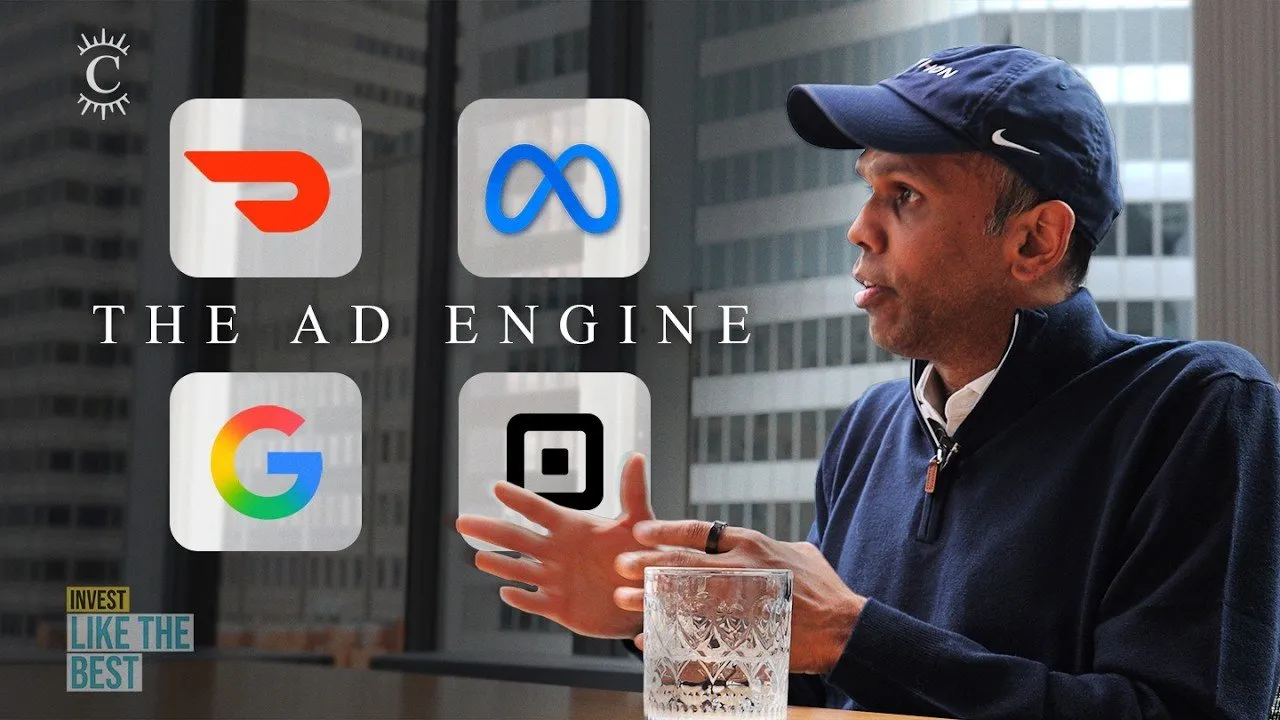
However, infinite productivity brings infinite noise. When the marginal cost of creating software approaches zero, the scarcity shifts from creation to curation. Drawing from the experiences of Gokul Rajaram—who helped architect the revenue engines for Google, Facebook, and Square—it becomes clear that the defining skill of the next decade will not be writing code, but exercising judgment.
Key Takeaways
- Judgment is the new future-proof skill: In an era of "AI slop" and infinite code generation, the ability to discern what matters—and what is actually high-quality—replaces raw production speed as the primary value driver.
- The collapse of the product trio: The distinct roles of PM, Designer, and Engineer are merging. Modern product leaders must be "doers" who manage armies of AI agents rather than just human teams.
- Systems of Record vs. Agents: Incumbent software giants (like Salesforce) are closing their APIs to prevent AI startups from turning them into "dumb databases," forcing new entrants to build full-stack solutions.
- The "Product Editor" mindset: Great leadership, exemplified by Jack Dorsey, isn't about adding features; it is about ruthlessly editing them down to remove friction.
- Three paths to ad revenue: To succeed in advertising, a company must own the inventory (Google), drive specific outcomes (AppLovin), or act as an exclusive broker (The Trade Desk). Middlemen will be squeezed out.
The Shift from Deterministic to Agentic Software
For the last decade, product development ratios were standard: perhaps one product manager to three designers and ten engineers. Today, that ratio is stretching toward one to twenty, or even one to infinity. This is because we are moving from deterministic software—where input X always equals output Y—to non-deterministic, agentic software.
In this new paradigm, the product manager's role shifts from writing specifications to defining the "why" and managing evaluations (evals). Because AI models can produce hallucinations or "slop," the human in the loop must act as the supreme arbiter of quality.
The one thing I think that's going to be truly future proof is judgment. Why? Because you have the big challenge of AI slop. Every product leader I've talked to is extremely worried that because you have these engines running rampant, they're just going to produce lots of code.
The Merging of Roles
The separation of duties that defined Silicon Valley organizational charts is collapsing. Designers are finding that AI can enforce design systems, allowing companies to allocate headcount to engineering. Meanwhile, product managers are using tools like Cursor and Claude to check code into production repositories. The modern "builder" is a hybrid: a functional expert who can orchestrate AI agents to execute complex workflows.
This necessitates a change in hiring. The ability to prototype is now a required interview stage. You cannot merely talk about product strategy; you must demonstrate the ability to manifest it.
Building Durable Companies in an AI World
A major anxiety for today's founders is the "CIO Problem." If a Fortune 500 CIO can use horizontal tools like Gemini or ChatGPT Enterprise to build internal agents, why would they buy a startup's solution? If your product is merely a wrapper around a model, it will be eaten by the foundation model companies or internal IT teams.
The Battle for the System of Record
Durability requires more than just a clever workflow; it requires owning the data. Previously, startups could build "systems of action" that sat on top of "systems of record" (like Salesforce or Jira) via APIs. That window is closing. Incumbents are realizing that if they allow AI agents to siphon off utility, they become commoditized databases.
Consequently, major platforms are blocking API access or charging exorbitant rates to AI companies. To survive, new AI startups cannot just offer an agent; they must build the underlying system of record themselves. This makes the climb steeper, requiring companies to migrate customer data and replace entrenched legacy systems like ERPs, which are protected by high switching costs and career risk for the buyers.
The Seven Powers of AI Stickiness
To resist being displaced, AI applications need structural defenses beyond just "good code." Durability comes from:
- Network Effects: Like DoorDash, where the value increases with every new restaurant and consumer.
- Financial Entanglement: Platforms that handle money (like Square or Mercury) are harder to rip out than workflow tools.
- Hardware Integration: Physical presence, such as Toast's point-of-sale systems, creates a formidable moat.
- Unique Assets: Exclusive access to proprietary data or relationships that cannot be scraped by an LLM.
The Economics of Advertising Engines
If you live long enough as a consumer tech company, you eventually become an advertising company. However, the path to building a revenue engine like Google or Meta is narrow. There are only three proven ways to succeed in digital advertising:
- Own the Inventory and Identity: Google has intent (search data), and Facebook has identity (who you are). OpenAI is currently uniquely positioned to combine both—natural language intent paired with login identity—potentially creating the most powerful ad engine in history.
- Drive Outcomes: Companies like AppLovin succeed not by selling impressions, but by guaranteeing results, such as mobile app installs. This model requires massive scale and sophisticated middleware.
- Exclusive Brokerage: The Trade Desk succeeds by being the exclusive programmatic partner for large ad buyers who want to diversify spend outside of the "walled gardens" of Google and Meta.
The danger zone lies in being a non-exclusive middleman. If you build optimization tools on top of Google or Facebook, you are renting land. Eventually, the platforms will absorb your features.
The Agentic Threat to Ads
The looming existential threat to the advertising model is the change in consumer behavior. If users stop searching on Google and start asking agents to "book me a flight" or "buy me detergent," the surface area for advertising disappears. If an AI agent makes the purchase decision based on logic rather than brand sentiment, the traditional influence model of advertising breaks down.
Leadership Lessons from the Giants
Working alongside Larry Page, Mark Zuckerberg, and Jack Dorsey offers a masterclass in three distinct leadership archetypes, each with a superpower that shaped their respective companies.
Larry Page: Technical Audacity and Scale
Google’s culture was built on the premise that technology solves all problems. When the AdSense team proposed a complex manual approval process for new publishers to prevent fraud, co-founder Sergey Brin shut it down. He argued that manual gates killed scale. Instead, he pushed the team to let anyone sign up instantly and use real-time code to detect fraud after the fact. This decision to move risk from the "application level" to the "transaction level" allowed AdSense to scale to millions of websites overnight.
Mark Zuckerberg: Growth and Adaptation
Zuckerberg’s superpower is the ability to learn by following and an obsession with engagement. He understood that consumer products live or die by their growth loops. The invention of "Custom Audiences"—allowing advertisers to upload customer lists to find lookalikes—was a direct result of listening to gaming companies like Zynga, who wanted to find more "whales." Zuckerberg connected the dots between disparate domains to create a feature that became the bedrock of modern social advertising.
Jack Dorsey: The Product Editor
Jack Dorsey viewed himself not just as a CEO, but as a "Product Editor." While most product managers try to add features, Dorsey believed the goal was to remove them until the product required no manual to operate. Square was revolutionary not because of its technology, but because it took a process that required weeks of training (operating a legacy POS) and made it downloadable and intuitive.
The best designers, the best product people edit down things. Similarly, we have 100 features. What are the two things that really matter that will drive the customer outcome?
Navigating Careers in the Intelligence Age
As AI agents take over rote tasks, the definition of a successful career is changing. The days of job-hopping every 18 months to optimize salary are over; in a high-leverage environment, impact takes time to compound. A resume full of short stints is now a red flag, signaling a lack of ability to see projects through to fruition.
Future leaders will be evaluated on their "span of control"—not just of people, but of automated systems. The most valuable employees will be those who can act as "player-coaches," capable of doing the work themselves while orchestrating AI to scale their output 10x. In this new world, the ability to judge quality is the only thing that separates the signal from the noise.