Table of Contents
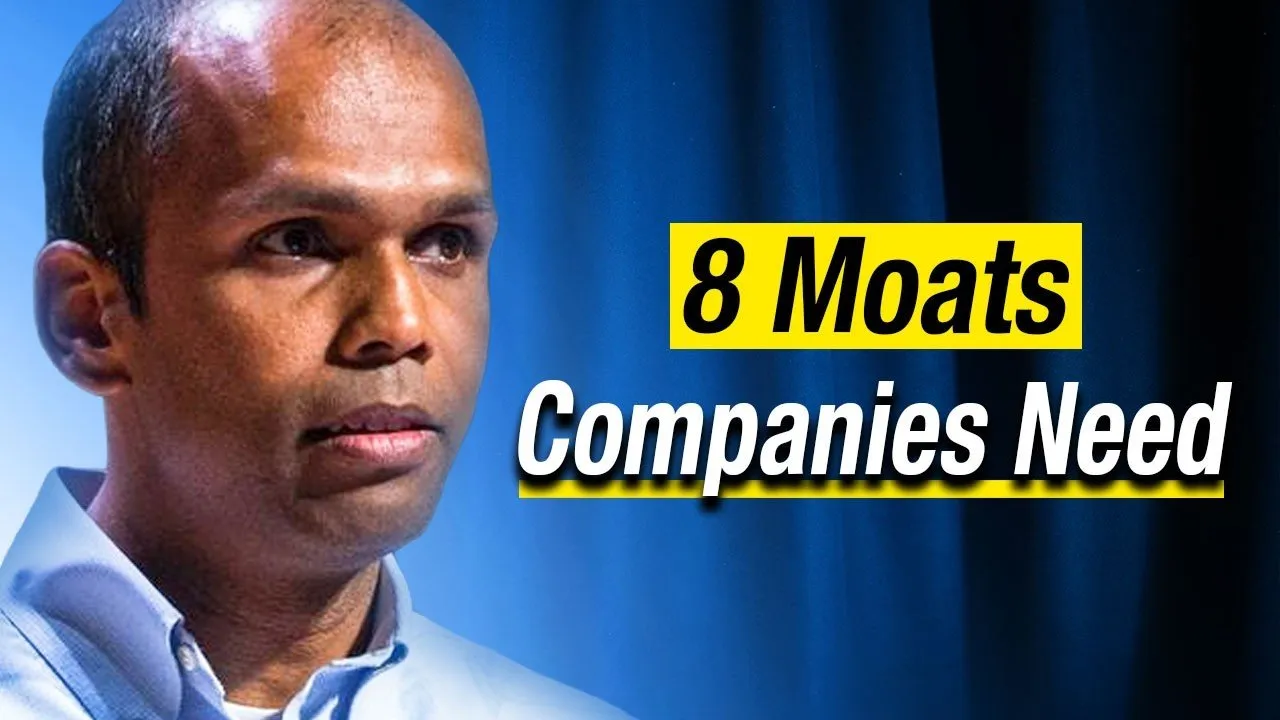
In an era where artificial intelligence is rapidly commoditizing software development, investors and founders alike are grappling with a fundamental question: how do you build a durable business when the barrier to entry for building software has effectively collapsed? For Gokul Rajaram—a veteran operator who has held key roles at Google, Facebook, Square, and DoorDash—the answer lies in shifting focus from traditional metrics to a new framework of defensibility. In a recent discussion, Rajaram outlined how the most resilient companies are not just shipping features, but solving complex, physical-world problems that machines cannot easily replicate.
Key Takeaways
- The Eight Modes of Defensibility: Beyond simple product quality, enduring companies possess structural advantages including data, workflow, regulatory, distribution, ecosystem, network, physical infrastructure, and scale modes.
- The Multi-Product Imperative: Relying on a single product is a liability. Successful companies build a portfolio where adjacent products drive both retention and profit pools.
- Beyond Software Budgets: The true potential of AI lies in its ability to capture human labor and BPO (Business Process Outsourcing) spend, not just traditional SaaS budgets.
- The Resilience of Non-Consumption: The most significant opportunities often exist in "non-consumption" markets—areas where users previously didn't pay for a tool until a product was so remarkable it changed their behavior.
- Retention Over Growth: In an AI-saturated landscape, explosive growth metrics mean little without robust customer and net revenue retention to prove the product's actual utility.
The Eight Modes of Durability
As the "SaaS apocalypse" fuels market volatility, many investors are painting all software companies with a broad brush. Rajaram argues this is an overreaction. He suggests evaluating companies through a rigorous checklist of eight distinct "modes." If a company possesses four or more, it is generally secure; if it has one or fewer, it is likely on a path to obsolescence.
The Structural Moats
The modes range from data mode—where the asset is proprietary and improves with every interaction—to regulatory mode, which includes hard-to-replicate licenses and government-mandated requirements. Rajaram points to Coinbase as a prime example of regulatory defensibility, where state-by-state money transmission licenses create an environment that competitors cannot easily penetrate.
"I think anything four or more, you're pretty damn secure. If you have zero, you're screwed." — Gokul Rajaram
The Power of Ecosystems
Ecosystem mode is perhaps the most difficult to "wipe code" away. While an AI might be able to replicate a simple e-commerce hosting platform, it cannot replicate the thousands of developers and third-party apps integrated into Shopify. This dense web of dependencies creates a structural barrier that keeps merchants embedded within the platform.
Shifting the Profit Pool: From SaaS to Services
One of the most profound shifts in the current tech landscape is the movement of AI spending from software budgets into the massive pool of human labor and operational services. Rajaram emphasizes that companies targeting BPO budgets in industries like medicine, law, and field services are tapping into a much larger TAM (Total Addressable Market) than those merely optimizing existing software workflows.
Outcome-Based Pricing
As AI agents begin to do the work rather than just providing access to a tool, the traditional seat-based pricing model faces a reckoning. Rajaram notes that while seat-based pricing offers predictability for enterprise buyers, it often breaks when a product's value shifts from "access" to "work output." Future-proof companies are increasingly gravitating toward outcome-based models where the pricing is tied directly to the value delivered, such as the number of contracts processed.
The Evolution of the Startup Playbook
The "triple-triple-double-double" growth trajectory no longer elicits the same awe it did a decade ago. Today, the focus has shifted toward high-quality, durable compounding. Rajaram observes that even the most "magical" product needs to evolve into a multi-product portfolio to survive, citing Square's evolution from a simple payments processor to a comprehensive platform offering everything from payroll to capital advances.
Avoiding the Sunk Cost Fallacy
For legacy companies attempting to pivot into the AI era, Rajaram offers blunt advice: burn the bridges. He highlights Intercom and Podium as successful examples of companies that did not merely "bolt on" AI features, but essentially rebuilt their core products from scratch. Firms that fixate on preserving their legacy businesses often lose the opportunity to define the new one.
"The more you fixate on how do we fix the business the less you're going to focus on how do we create a new business." — Gokul Rajaram
The Changing Role of the Venture Investor
In a world where mega-funds and high-velocity capital have become the norm, the role of an early-stage investor is evolving. Rajaram argues that "proprietary access" is a myth. Instead, a firm's value is determined by its ability to offer genuine counsel, distribution assistance, and talent acquisition support.
The Importance of Concentration
Reflecting on his own investment philosophy, Rajaram favors concentration over wide-net diversification. By doubling down on founders and companies in which he has deep conviction, he is better able to provide the marginal guidance that often separates a mediocre exit from a generational company. He notes that the best founders rarely need an investor to do their job, but they do need a partner to help navigate the critical decisions that shape a company's trajectory.
Conclusion
Navigating the AI era requires a fundamental shift in how we assess durability. As technology costs hit zero, the winners will be those who master the complexities of human workflows, physical infrastructure, and deep, proprietary data. For founders and investors alike, the path forward is not found in chasing the latest trend, but in the disciplined application of defensibility. By focusing on remarkable products that solve real-world problems and refusing to rely on outdated metrics, the next generation of trillion-dollar companies will likely be built by those who are brave enough to abandon the status quo.