Table of Contents
As the global political elite transition from the high-altitude networking of Davos to the strategic intensity of the Munich Security Conference (MSC), the mood within the "Collective West" has shifted perceptibly. While Davos often serves as a forum for globalization rhetoric and economic theory, Munich represents the "kinetic" counterpart—where security architecture is designed and military agendas are solidified. This year, however, the conference takes place against a backdrop of undeniable geopolitical fatigue. With the conflict in Ukraine on a deteriorating trajectory for NATO allies and economic indicators flashing red across the Eurozone, the upcoming summit promises to be a theater of crisis management rather than a celebration of unity.
Key Takeaways
- The Shift to Kinetic Planning: Unlike the theoretical discussions at Davos, Munich is where the Western elite coordinate concrete security policies and military escalation.
- Crisis as a Centralization Tool: European leadership is utilizing economic and geopolitical instability to justify stripping power from member states and centralizing control in Brussels.
- Transatlantic Asymmetry: The relationship between Washington and European capitals has evolved into overt hierarchy, with the US dictating terms to increasingly weakened European partners.
- The "Forever Threat" Narrative: As the proxy war in Ukraine falters, the narrative is pivoting toward a hypothetical Russian attack on NATO by 2030 to justify sustained military spending.
From Euphoria to Desperation: The Evolution of the MSC
To understand the current stakes at Munich, one must contextualize the drastic shift in atmosphere over the last two years. The 2022 conference was characterized by a sense of geopolitical intoxication. Western leaders were nearly euphoric at the prospect of confronting Russia, convinced that "nuclear" economic sanctions would cause the Russian state to implode within months. There was a palpable belief that regime change in Moscow was imminent.
By 2023, the tone had shifted to defensive anger, highlighted by clashes over human rights and free speech, notably involving U.S. Senator J.D. Vance. Now, as delegates gather for the latest iteration, the atmosphere is defined by grim reality. The "project" in Ukraine is visibly failing, and the United States appears eager to distance itself from the optical fallout of a lost conflict. Consequently, the focus at Munich is expected to pivot away from immediate victory narratives toward long-term militarization and the consolidation of political control.
The centralization of European Power
A recurring theme in European governance is the utilization of instability to forge a federalized superstate. This aligns with the philosophy often attributed to Jean Monnet, a founding father of the European Union, who posited that Europe would be forged in crises and would be the sum of the solutions adopted for those crises.
Weaponizing Weakness
Paradoxically, as European member states become economically weaker and politically more fragile, the European Commission in Brussels grows stronger. Leaders like Ursula von der Leyen are reportedly doubling down on centralization as the "only solution" to the continent’s frailty. This creates a feedback loop where failed policies lead to crises, which are then used to justify the further transfer of sovereignty from national capitals to Brussels.
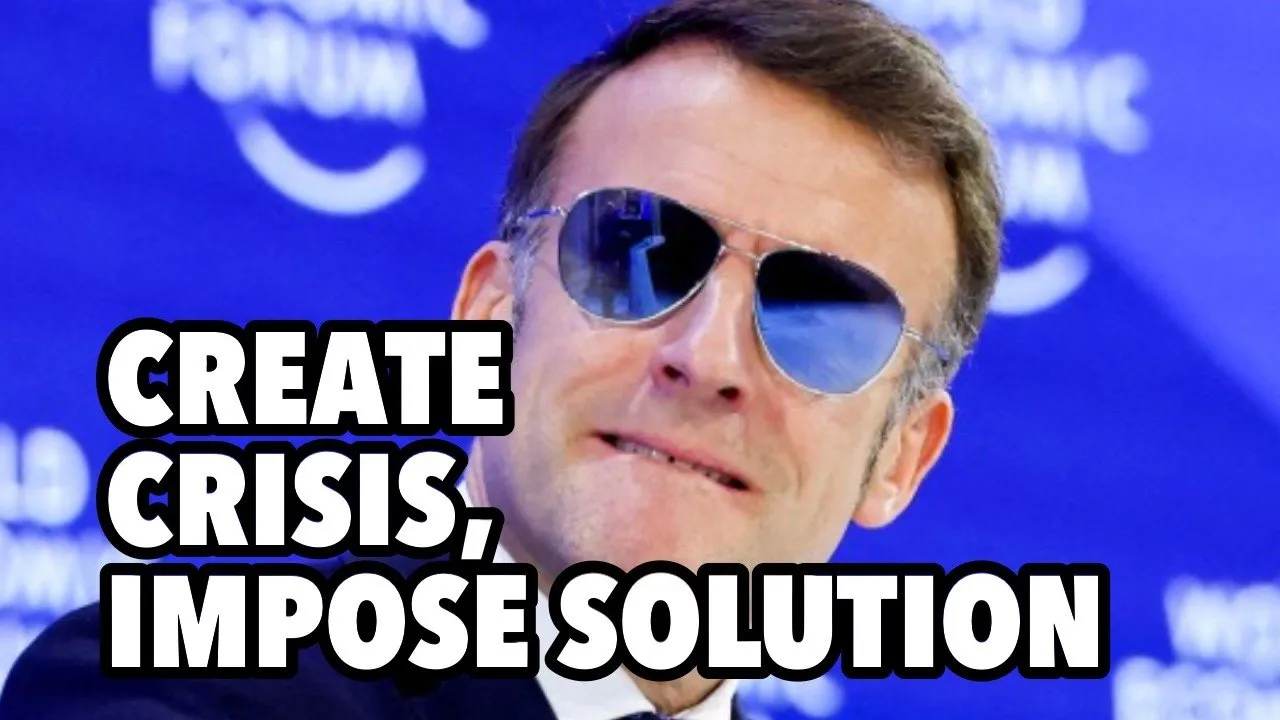
The way to constantly keep the European project moving forward is to take advantage of every crisis. You create a crisis, take advantage of it, and then argue always for further and further centralization to deal with the same crisis that you have created.
This dynamic is evident in the erosion of established rules. Whether it is the fast-tracking of Ukraine’s EU membership—bypassing standard accession requirements—or the repurposing of trade legislation to enforce foreign policy sanctions, the EU is increasingly tearing up its own rulebook. The objective appears to be the hollowing out of the nation-state, rendering national elections increasingly irrelevant as power coalesces in unelected bureaucratic structures.
Transatlantic Tensions and U.S. Hegemony
The relationship between the United States and Europe has moved beyond traditional partnership dynamics. Critics argue that Washington now views European leaders not as peers, but as subordinates to be managed. This dynamic was symbolized by reports of Donald Trump displaying maps to European officials that depicted Greenland and Venezuela within the U.S. sphere of influence—a gesture reinforcing the assertive, transactional nature of American foreign policy.
The United States attends Munich not to negotiate as an equal, but to dictate the geopolitical direction. With the Ukraine proxy war yielding diminishing returns, Washington is keen to avoid being tethered to a failing enterprise. The strategy involves keeping Europe committed to the security architecture of NATO while the U.S. maintains the flexibility to pivot its focus elsewhere. The result is a Europe that is economically hollowed out by sanctions and severed from cheap energy, yet remains entirely dependent on American security guarantees.
The Economics of the "2030 Threat"
With the current military objectives in Ukraine becoming unattainable, a new narrative is being constructed to maintain cohesion and defense spending. The conversation is shifting from "defeating Russia now" to "preparing for a war with Russia in 2030."
This narrative serves a vital function for the military-industrial complex and political leadership:
- Non-Falsifiable Justification: If massive defense spending is approved and Russia does not attack NATO (a scenario most analysts deem unlikely regardless), leaders can claim the spending was a successful deterrent.
- Economic Transfer: It facilitates a massive transfer of wealth from European taxpayers to the defense sector, masking de-industrialization with military production figures.
- Political Stability: Fear of an external existential threat distracts the populace from domestic economic mismanagement and the cost-of-living crisis.
This "forever threat" model ensures that even as de-industrialization accelerates in Germany and living standards stagnate across the continent, the flow of capital into defense procurement remains unimpeded.
Conclusion
The Munich Security Conference is no longer merely a forum for defense policy; it has become the staging ground for a post-democratic Europe. As economic vitality drains from the continent, the response from the elite is not course correction, but acceleration—more centralization, more debt-financed militarization, and tighter control over political dissent.
The disconnect between the ruling class and the economic reality of the citizenry has never been starker. Yet, through the sophisticated management of crisis narratives, the machinery of the "Collective West" continues to grind forward, insulating decision-makers from the consequences of their policies while asking the public to pay the price for a security architecture that offers less security by the day.
For more in-depth geopolitical analysis, follow The Duran on Rumble, X (formerly Twitter), and Substack.