Table of Contents
The geopolitical landscape surrounding the conflict in Ukraine is undergoing a profound shift, characterized by a growing disconnect between official rhetoric and the grim realities on the ground. As European officials scramble to coordinate a new round of sanctions, a "worm of doubt" has begun to permeate the halls of power in London, Brussels, and Washington. This creeping uncertainty is driving a paradoxical response: rather than seeking a diplomatic off-ramp, many Western leaders are doubling down on escalatory language and long-term military commitments, even as their own strategic reserves dwindle.
Key Takeaways
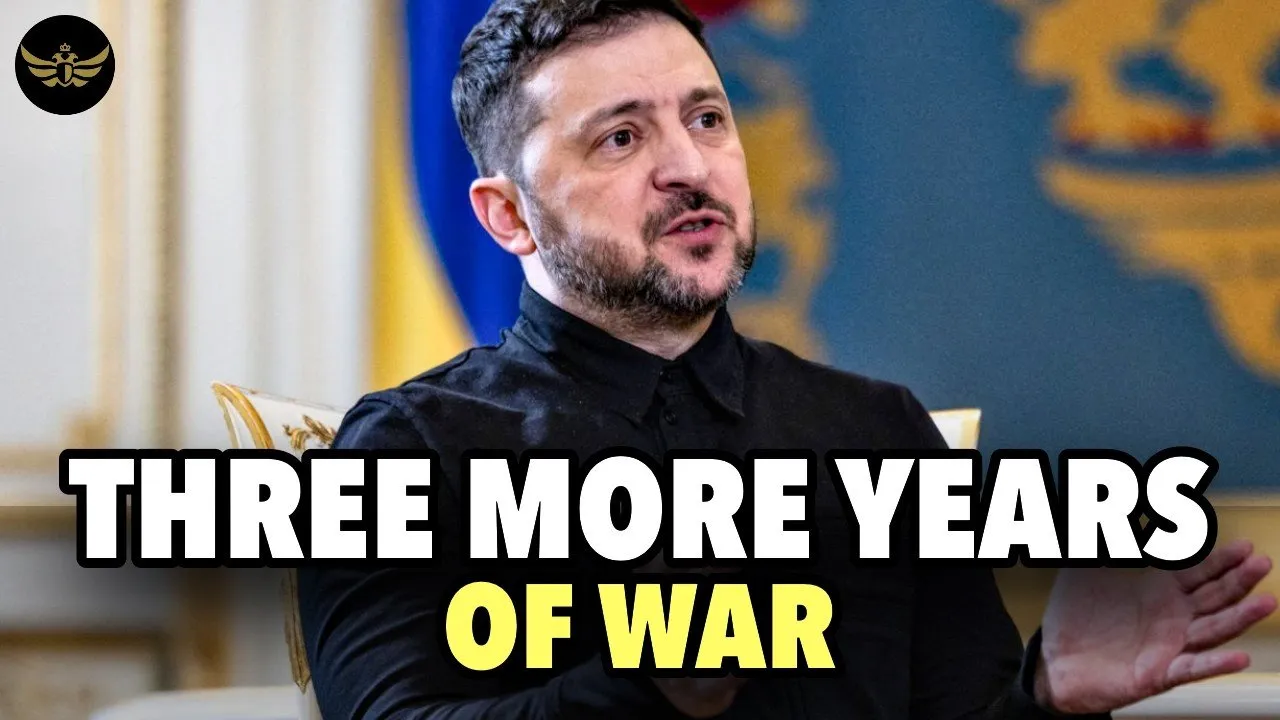
- The Three-Year Timeline: President Zelensky is reportedly pushing for a plan to extend the conflict for another three years, aligning with the next U.S. presidential cycle.
- Performative Diplomacy: Recent media appearances and diplomatic gestures, such as the use of World War I-style poppy pins in Ukrainian colors, suggest a highly scripted effort to maintain public support.
- Technological Escalation: The deployment of the "Flamingo" missile, capable of striking deep into Russian territory, indicates continued Western technical and intelligence support despite official "red lines."
- Naval Tensions: Proposed EU sanctions targeting Russian oil insurance could lead to a maritime blockade, a move Moscow has warned would trigger a direct naval response.
- Internal Fragility: Growing tensions between the Ukrainian political leadership and military command, coupled with a devastated economy, suggest the current strategy may be nearing a breaking point.
The Scripted Nature of Modern War Diplomacy
Recent high-profile interviews and diplomatic summits suggest that much of the current narrative surrounding Ukraine is carefully curated for Western audiences. A notable example is President Zelensky’s recent interview with the BBC, where the conversation touched heavily on the parallels between the current conflict and World War II. Critics argue that these interactions are increasingly performative, designed to frame the war as a civilizational struggle that justifies continued financial and military sacrifice.
The involvement of Jonathan Powell, a former British diplomat and chief of staff to Tony Blair, is particularly significant. Reports suggest Powell has been instrumental in "coaching" the Ukrainian leadership, ensuring that their messaging remains aligned with British and broader NATO interests. This influence was visible during recent EU meetings where officials were seen wearing poppy pins—traditionally a British symbol of remembrance for World War I—reimagined in the colors of the Ukrainian flag. This symbolism serves to link the current struggle to historical European sacrifices, reinforcing the "Project Ukraine" narrative.
The Three-Year Gamble
Behind the scenes, the strategy appears to be shifting toward a long-term war of attrition. Zelensky has reportedly presented his cabinet with a plan to sustain the conflict for at least three more years. This timeline is not arbitrary; it coincides with the next United States presidential election. The gamble is that by keeping the war going, Ukraine can wait out political shifts in the West, hoping for a renewed commitment of high-end weaponry and funding from a future administration.
"He wants to keep the war going that long because he's still gambling... that at that point a new president will come in... and give Zelensky everything that he needs to win."
Technological Provocations and the "Flamingo" Missile
While the diplomatic front focuses on rhetoric, the military front is seeing the introduction of new, more provocative technologies. The recent strike on a strategic factory in Votkinsk, Russia—over 1,000 kilometers from the Ukrainian border—was reportedly carried out using the "Flamingo" missile. Though presented as a Ukrainian innovation, evidence suggests it is a "lash-up" of various technologies, potentially involving British design and Danish manufacturing.
More critically, the guidance systems required for such long-range precision strikes almost certainly rely on United States intelligence. Since GPS signals are often jammed or unavailable deep within Russian territory, these missiles require sophisticated data packages that only the U.S. military can provide. This level of involvement breaches previous "red lines" regarding Western participation in direct strikes on Russian soil, yet it is being framed as an indigenous Ukrainian capability to avoid immediate escalation.
The Diminishing Returns of New Weaponry
Historically, the introduction of new Western systems—from HIMARS to Storm Shadow missiles—follows a predictable pattern. They initially cause disruption, but the Russian air defense network typically adapts within six to eight weeks. The Flamingo missile is expected to follow this trajectory. While the strike in Votkinsk was a significant psychological provocation, the industrial redundancy of the Russian military-industrial complex suggests that the long-term impact on production will be minimal.
The 20th Sanctions Package and the Threat of a Sea Blockade
The European Union is currently debating its 20th package of sanctions against Russia, focusing on the "shadow fleet" that transports Russian energy. The proposed measures aim to ban European insurers—particularly those in the UK—from providing coverage to any vessel carrying Russian oil, regardless of the price cap. This moves beyond economic pressure and enters the realm of maritime law.
Russian officials, including Nikolay Patrushev, have warned that such measures are a precursor to a naval blockade. If the EU or NATO attempts to seize or redirect Russian tankers on the high seas, it would represent a violation of international maritime law. Moscow has signaled that its navy will protect its merchant fleet, raising the specter of a direct naval confrontation in the Baltic or Mediterranean seas.
"If they start seizing even one of our tankers and we sit idly by, then that will escalate into an all-out naval blockade."
Internal Resistance Within the EU
The push for these sanctions is facing stiff resistance from within the European Union. Countries with significant shipping interests, such as Greece, Malta, and Cyprus, are wary of the precedents these measures would set. Meanwhile, Hungary and Slovakia continue to oppose broader energy restrictions that threaten their own economic stability. Even the United States has shown signs of hesitation, fearing that a total disruption of the Russian oil trade would lead to a global energy price spike, particularly as tensions rise in the Middle East.
The Human and Economic Cost of Attrition
While the rhetoric in London and Brussels remains defiant, the internal state of Ukraine is increasingly fragile. The economy has been devastated, and millions of citizens have fled. According to former Ukrainian officials, the majority of the population remaining in the country consists of pensioners and those unable to leave, while the pool of young men available for the front lines continues to shrink.
There are also signs of growing friction within the Ukrainian government. Reports suggest that members of the cabinet were "shocked" by the proposal of a three-year war plan. Historically, such disconnects between the political leadership’s ambitions and the military’s capabilities are the conditions under which internal power struggles or coups occur. The tension between the presidency and the military command remains a silent but potent factor in the conflict's future.
Conclusion: The Looming Crisis
The "worm of doubt" is no longer just a metaphor; it is a tangible force shaping Western policy. As the realization sets in that the current strategy is not yielding the promised victories, the response from hardliners has been to increase the stakes. From long-range missile strikes to proposed naval blockades, the path currently being trodden is one of maximum provocation.
However, this aggression masks a fundamental insecurity. Depleted Western arsenals and a fracturing European consensus suggest that the "three-year plan" may be more of a desperate hope than a realistic strategy. As the rhetoric of World War II is invoked with increasing frequency, the risk of a major international escalation grows, driven by a leadership that feels it has no choice but to push forward, regardless of the red lines it crosses.