Table of Contents
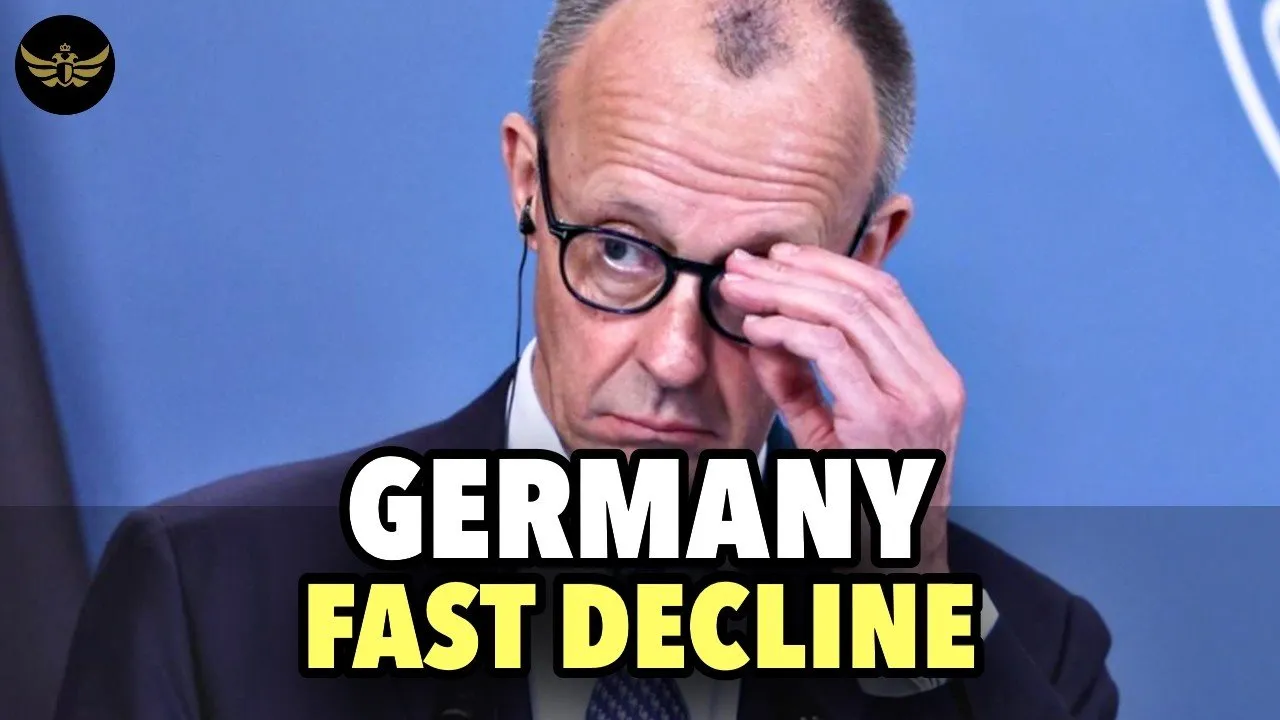
Recent regional election results in Germany, particularly in the affluent state of Baden-Württemberg, have sent shockwaves through the political establishment. Despite expectations that Friedrich Merz and the Christian Democratic Union (CDU) would capitalize on widespread dissatisfaction with the current government, the results tell a story of polarization and the steady erosion of traditional political power. As the industrial heart of Germany faces mounting economic pressure, the country’s long-standing party system is showing signs of terminal decline.
Key Takeaways
- The CDU is struggling to capture voter momentum despite a clear rightward shift in the electorate.
- The AfD (Alternative for Germany) has achieved a significant breakthrough, effectively competing for the conservative vote.
- The Social Democratic Party (SPD) is in a state of historic collapse, as its working-class base migrates toward populist alternatives.
- Green parties are consolidating support among affluent, middle-class voters who prioritize progressive social agendas and Atlanticist foreign policy.
- Germany faces a period of rapid de-industrialization as the current political leadership maintains its course on energy and economic policy.
The Polarization of German Politics
Baden-Württemberg has historically served as a stronghold for the CDU, representing the conservative backbone of the Federal Republic. However, the 2021 election cycle signaled a major shift, with the Greens rising to prominence. Recent results demonstrate that while there is an undeniable swing to the right in the region, the CDU has failed to harvest that support. Instead, the AfD has seen its polling numbers double, moving from roughly 9% in 2021 to over 18% today.
This suggests a growing polarization of the electorate. On one side, affluent middle-class voters are gravitating toward the Greens, who advocate for progressive social issues and maintain a rigid, pro-EU, Atlanticist stance. On the other side, working-class voters—and those disillusioned with the establishment—are abandoning the SPD and the CDU in favor of the AfD. The CDU is effectively being squeezed from both directions, unable to appeal to either the suburban progressives or the disaffected right-leaning working class.
The Terminal Decline of the SPD
The collapse of the Social Democratic Party (SPD) is perhaps the most significant development in modern German politics. As the oldest political party in the country, the SPD historically represented the bedrock of German republicanism. Yet, years of propping up the Merkel administration, followed by their current role in the ruling coalition, have caused irreversible damage to their reputation.
The SPD's historic working-class vote seems to be shifting just completely over to the IFD.
The SPD’s decline is no longer an outlier; it is a structural reality. By failing to address the concerns of their traditional base and instead pursuing policies that alienate working-class voters, the party has effectively alienated its core. Analysts observe that the party is in terminal decline, a fate that is increasingly threatening the Free Democratic Party (FDP) as well, which has seen its presence in regional parliaments vanish.
Economic Stagnation and De-industrialization
The political malaise is unfolding against a backdrop of severe economic contraction. Germany’s industrial sector, once the engine of Europe, is struggling under the weight of high energy costs and the ripple effects of international sanctions. Despite the financial instability of major manufacturers and the warnings of a deepening energy crisis, the current leadership—including figures like Merz and Ursula von der Leyen—has shown little appetite for a change in strategy.
The CDU because it is the establishment party in Germany... its decline is slower. But if it could not capitalize on a big swing to the right... then frankly with a deeper crisis on its way things are going to get much worse for it very soon.
The refusal to reconsider energy policies or temporary relief for Russian oil imports highlights a "no reverse gear" approach to governance. For the German middle class and the business community, this path appears to lead toward deeper de-industrialization. As costs rise and growth stagnates, the political disconnect between the ruling elites and the general public continues to widen.
The Future of the CDU
While the CDU maintains deeper institutional roots in German society than its coalition counterparts, its inability to capitalize on the current political environment is telling. The CDU has historically relied on the stability of the German voter, but that desire for stability is now being overshadowed by a desire for change. If the party continues to mirror the policies of the establishment in a time of crisis, it risks following the SPD and FDP into irrelevance.
The shift in Baden-Württemberg serves as a microcosm for the rest of the nation. As establishment parties fade, the political landscape is being redrawn by forces that operate outside the traditional consensus. For Germany, the coming years will be defined not by the success of its historic parties, but by how the electorate responds to a deepening economic crisis and the ongoing transformation of its political identity.