
Table of Contents
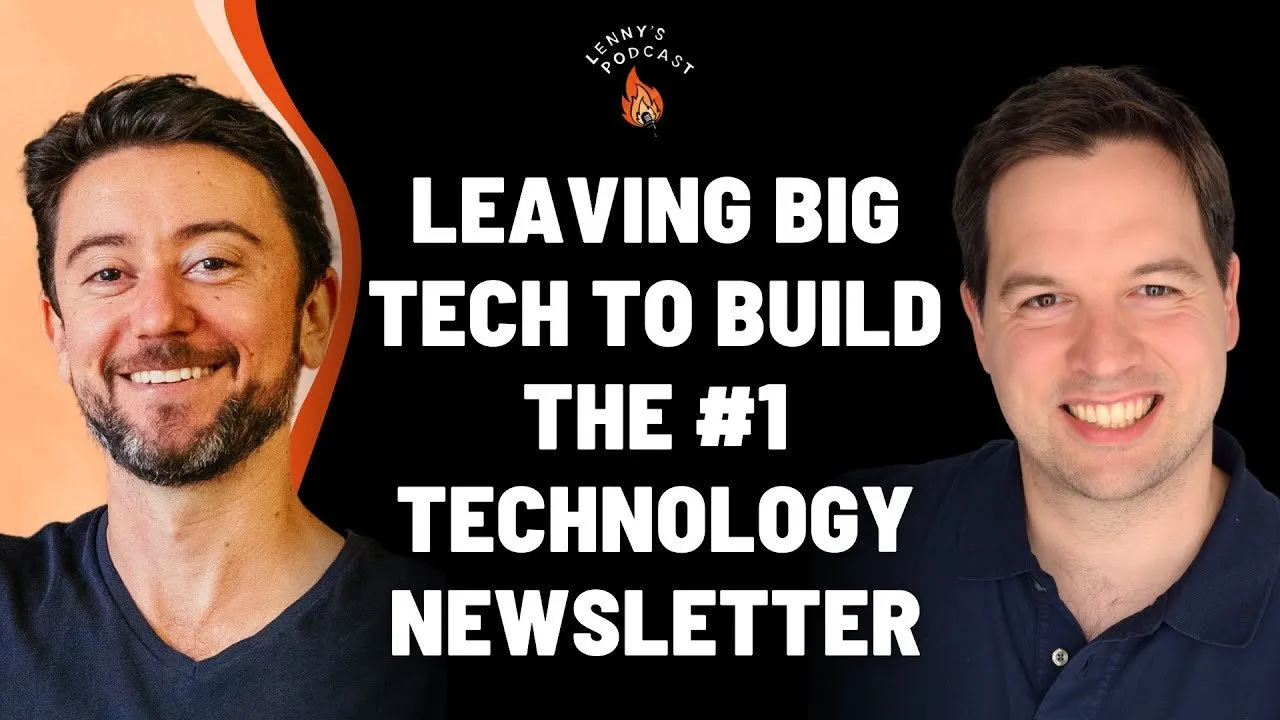
Leaving a total compensation package of over $300,000 at a top-tier tech company to send emails for a living sounds like a gamble few would take. Yet, for Gergely Orosz, the author behind The Pragmatic Engineer, this bet didn't just pay off—it redefined what is possible in the creator economy. Orosz transformed his experience as an engineering manager at Uber into the number one technology newsletter on Substack. His journey offers a masterclass in leveraging career capital, mastering productivity without a boss, and the stark realities of trading corporate stability for creative autonomy.
Key Takeaways
- Uncapped Potential: Unlike a corporate salary with fixed bands, newsletter revenue provides immediate financial feedback—a successful article essentially gives the creator an instant raise.
- Career Capital come First: Orosz attributes his success to years of deep industry experience and blogging without financial expectation before monetizing.
- The "Jeff Atwood" Rule: The secret to internet fame is deceptively simple: write consistently (twice a week) for two years. Most people quit; those who don't, win.
- Managing Unstructured Time: Without a corporate schedule, creators must manufacture pressure. Orosz uses strict deadlines and technical blockers (like modifying host files) to force deep work.
- The Solopreneur Trade-off: The freedom of an empty calendar comes at the cost of workplace loneliness and the difficulty of truly taking time off.
From Big Tech to the Creator Economy
Before becoming a full-time writer, Gergely Orosz followed a traditional, high-achieving path in software engineering. After working through consultancies in Europe and rising to Principal Engineer at Skyscanner, he landed at Uber in Amsterdam. There, he managed teams and enjoyed a compensation package peaking around $330,000—a massive sum for the European tech market.
However, the stability of "Big Tech" proved fragile. When COVID-19 hit, Uber laid off roughly 20% of its engineering workforce. witnessing talented colleagues let go shattered the illusion of the corporate "family" and sparked a desire for true ownership.
"I realized that it’s not a family... It’s just a corporate and I’m just a number. I lost my sense of trust in the system that it will take care of me because I saw some of my colleagues who are really good professionals... get let go because they were in the wrong team."
Initially planning to launch a venture-backed startup, Orosz began writing to bridge the gap. He promised himself a six-month runway to try professional writing. If it failed, he would return to the job market. Instead, his deep dives into engineering culture and advice struck a nerve, rapidly outpacing his former executive salary.
The Economics of a Paid Newsletter
The financial dynamic of a subscription newsletter differs fundamentally from a salary. In a corporate job, your income is capped by your level and negotiations. In the subscription model, earnings are theoretically uncapped, limited only by churn and total addressable market.
Orosz tracks his metrics meticulously, noting that a single high-quality article often results in a permanent revenue bump. This creates a direct correlation between effort, quality, and reward that rarely exists in a traditional workplace. However, the pressure shifts from satisfying one manager to satisfying thousands of paying subscribers.
The "Micro-Boss" Model
While Orosz no longer reports to a director or VP, he notes that he now answers to thousands of "micro-bosses." Every subscriber has the power to "fire" him by unsubscribing. While this sounds daunting, the diversification actually offers more security than a single employer who can terminate your income stream in one day.
Operationalizing Creativity: How to Write at Scale
One of the biggest challenges for employees turning into creators is the shift from a calendar filled with meetings to completely unstructured time. To maintain the output required for a top-tier publication—two in-depth posts per week—Orosz had to engineer his own constraints.
The Production Schedule
Orosz treats his writing with the rigor of a software shipping cycle. His typical week involves:
- Monday: Final polish of the "deep dive" article.
- Tuesday: Publish day and free-writing for future topics.
- Wednesday: A "rest" day with lighter workload.
- Thursday: Writing and publishing "The Scoop" (industry news and analysis).
- Friday: Drafting the next deep dive for the following Tuesday.
Productivity Hacks for the Distracted Mind
Even with a schedule, the allure of social media is a constant threat to deep work. Orosz admits that willpower alone often fails. He utilizes "nuclear" options to ensure focus, including a custom Python script that modifies his computer's host file to block access to Twitter, LinkedIn, and other distractions at the network level.
"I set a timer of 20 minutes and then I say, 'Alright, no distractions.'... In the first few minutes I’m kind of grumbling... but about five minutes in, there’s a switch and I’m now actually heads down and doing it."
The Reality of the "Dream Job"
While the financial upside and autonomy are significant, Orosz is transparent about the downsides of the solopreneur life. The primary struggle is loneliness. The camaraderie of the coffee machine, the shared lunches, and the team dynamic are gone, replaced by a solitary workspace.
The Hamster Wheel of Content
Perhaps the most difficult aspect is the inability to disconnect. In a paid newsletter model, subscribers pay for a service. If the writer stops, the value proposition vanishes. Unlike a tech job where you can take a four-month parental leave or a two-week vacation while the team covers for you, a solo creator is the business.
This creates a "golden handcuffs" scenario where the creator must produce excellence every week, indefinitely. There is no clear exit strategy or acquisition path for a personal brand newsletter in the same way there is for a SaaS company.
Advice for Aspiring Creators
For those looking to replicate this success, Orosz advises against starting with monetization in mind. Instead, he points to the importance of "career capital"—having done the work before writing about it.
Build Depth Before Reach
The internet is flooded with surface-level content. Orosz’s newsletter succeeded because he had spent over a decade actually doing the job he was writing about. He recommends that aspiring writers focus on gaining deep experience in their field first. Credibility is the currency of the creator economy.
The Consistency Formula
Orosz references a blog post by Jeff Atwood (co-founder of Stack Overflow) regarding internet fame. The formula is brutally simple but difficult to execute:
- Write a blog post.
- Do it twice a week.
- Do it for two years.
Most people give up after a few months. Orosz blogged for six years with little fanfare before his work gained critical mass on platforms like Hacker News. Success was not an overnight event; it was the accumulation of years of public thinking and refining his craft.
Conclusion
Gergely Orosz’s transition from Uber engineer to media powerhouse proves that niche expertise, when combined with relentless consistency, can outperform traditional career paths. However, it requires a fundamental shift in mindset—treating creativity not as a muse, but as a business with strict deadlines, operational constraints, and a commitment to serving the audience above all else.

)