Table of Contents
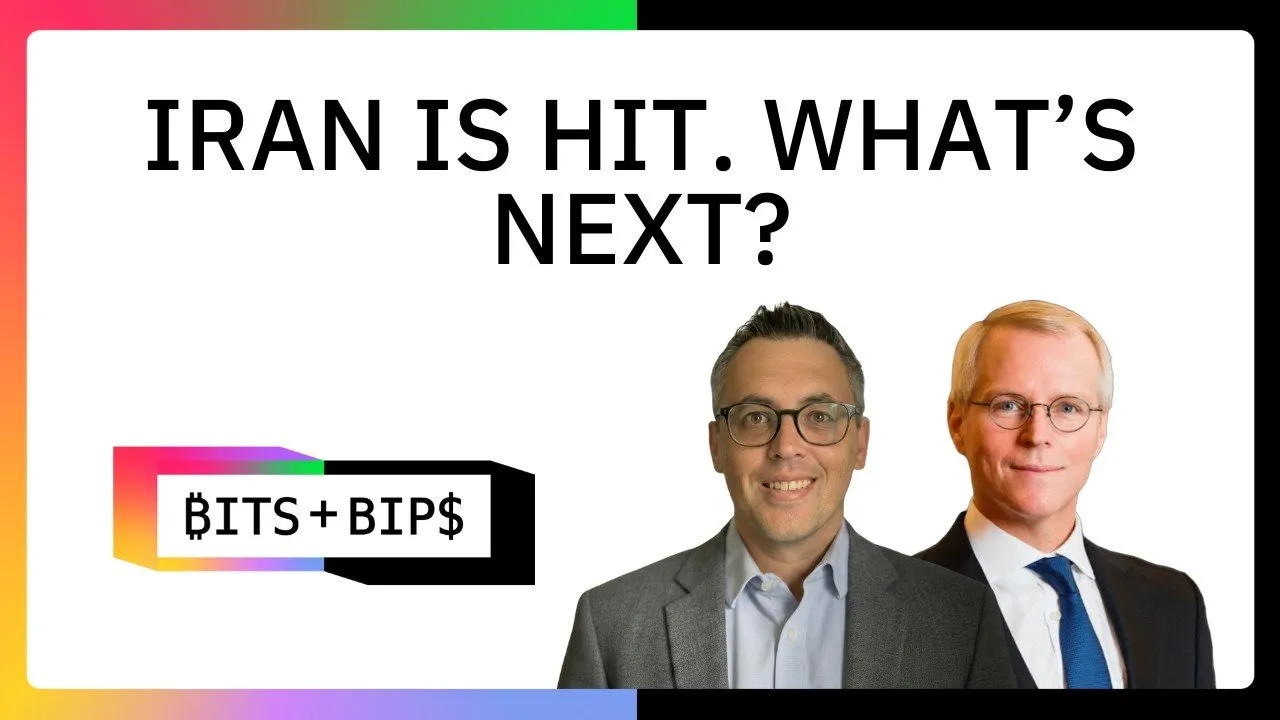
The intersection of geopolitics and global markets has rarely been as volatile or as unpredictable as it is today. To navigate this landscape, Steve Ehrlich, Head of Research at Sharplink, sat down with Charles Meyers, Founder and CEO of Signum Global Advisors. As a former senior foreign policy advisor to both Hillary Clinton and Joe Biden, and the former Vice Chairman of Evercore, Meyers brings a unique dual perspective on how diplomatic tensions translate into economic reality. From the escalating situation in Iran to the return of the Monroe Doctrine in Venezuela, Meyers argues that the current era of American foreign policy is shifting toward a more muscular, expansionist, and imperialist framework that investors cannot afford to ignore.
Key Takeaways
- Aggressive Expansionism: The "America First" doctrine has evolved beyond domestic isolationism into an assertive, imperialist foreign policy focused on regime change and military leverage.
- The Bond Market Guardrail: While global sentiment is bearish on U.S. governance, the bond market—specifically the 10-year yield—serves as the primary check on the Trump administration’s policy shifts.
- Energy as a Geopolitical Tool: U.S. strategy in Venezuela and Iran is fundamentally driven by an objective to drive oil prices down to the low $50s to combat domestic inflation.
- Industrial Policy is the New Normal: The U.S. government is increasingly taking direct equity stakes in private companies (like U.S. Steel or potentially OpenAI) to secure supply chains and national security.
Redefining Geopolitical Risk in a Rules-Breaking Era
Traditional frameworks for analyzing political risk often rely on historical patterns and international norms. However, Meyers suggests that the current administration has rendered these models obsolete. By ignoring conventional treaties and legal precedents, the U.S. has created a environment where certainty is a rare commodity. Meyers emphasizes that looking for patterns in the current geopolitical climate is a dangerous exercise for investors.
The End of Isolationist Assumptions
Many analysts initially interpreted "America First" as a pivot toward isolationism. Meyers argues this was a fundamental misunderstanding. Instead, the policy has manifested as a highly assertive and imperialist strategy. This approach includes a willingness to engage in regime change and use military force to secure American interests abroad.
"I think looking back three years from now, we will realize that the Trump administration has been the most expansionist and imperialist since George W. Bush."
Dismissing Historical Frameworks
Because the current administration often operates outside of established treaties and sometimes the Constitution itself, historical analogies fail to predict future actions. Meyers suggests that the only consistent variable is the aggressive protection of American industry through tariffs and muscular diplomacy. This requires a shift from pattern recognition to a more dynamic, case-by-case analysis of actors and motives.
The "Sell America" Sentiment and Economic Guardrails
There is a growing trend among global investors referred to as the "Sell America" theme. This sentiment is driven by concerns over the independence of the Federal Reserve, the integrity of U.S. elections, and the perceived erosion of democratic institutions. Despite this bearishness, Meyers remains optimistic about the underlying strength of the U.S. economy.
The Bond Market as a Policy Check
In previous cycles, the "Trump put" was often measured by the performance of the equity markets. Today, the primary guardrail is the bond market. Meyers notes that the administration becomes noticeably nervous when the 10-year Treasury yield approaches 4.5% and typically course-corrects when it hits 5%. This financial pressure serves as a more effective check on executive power than traditional political opposition.
Institutional Resilience
While international observers fear for the safe-haven status of the U.S. dollar and Treasuries, Meyers argues these fears are overblown. He predicts that the Federal Reserve will remain independent and data-dependent, regardless of personnel changes. With the U.S. economy projected to grow at roughly 3% this year, the structural foundations of the market remain robust despite the political theater in Washington.
High Stakes in Iran: Diplomacy vs. "Shock and Awe"
The situation in Iran represents one of the most significant military buildups in the region since the early 2000s. While diplomacy remains on the table through talks in Geneva, the window for a peaceful resolution is rapidly closing. Meyers identifies early April—following a projected meeting between President Trump and President Xi—as a critical deadline.
The Path to Decapitation
If diplomacy fails to produce a deal that limits Iran's nuclear enrichment and ballistic missile programs, Meyers anticipates a major military strike. Unlike surgical strikes of the past, this would likely be a "shock and awe" campaign lasting up to two weeks, targeting government buildings, nuclear sites, and the religious leadership. The goal is "decapitation"—removing the current regime in hopes of negotiating with a more pragmatic group of military generals.
Market Impact and Oil Volatility
The oil markets have already priced in a geopolitical risk premium. However, a full-scale military conflict would likely cause a spike in oil prices far beyond current expectations. Investors should monitor the progress of diplomatic meetings closely, as any breakdown will likely trigger a massive "risk-off" move across global asset classes.
The "Don-Road" Doctrine and Venezuelan Oil
The U.S. has revived the Monroe Doctrine, colloquially renamed the "Don-Road Doctrine" by the administration. This policy asserts that the U.S. has a moral and national security imperative to dominate the Western Hemisphere both economically and militarily. The recent leadership changes in Venezuela are a direct application of this philosophy.
Energy Affordability as a Priority
Meyers is blunt about the motivations behind U.S. intervention in Caracas: it is about oil. By bringing Venezuelan production back online and potentially securing a new arrangement with a post-strike Iran, the U.S. aims to flood the market with supply. The objective is to drive oil prices into the low $50s to reduce gasoline costs—a key priority ahead of the midterm elections.
A Bright Outlook for Caracas
Despite the controversy surrounding the methods of regime change, Meyers believes the economic future for Venezuela is incredibly bright. With a guaranteed income stream from its vast oil reserves, the country is poised for rapid growth as infrastructure and chemical companies begin to reinvest. Meyers is currently leading delegations of business leaders into the country to explore these emerging opportunities.
Industrial Policy and the AI Moonshot
The U.S. has fully embraced industrial policy, a trend that began under the Biden administration and has been accelerated under Trump. This involves the government taking direct stakes in private enterprises to protect national security interests and secure essential supply chains.
The Government Backstop of OpenAI
OpenAI recently announced a massive $110 billion investment, but Meyers views the company's valuation with skepticism. He argues that the mathematical sales estimates required to justify a $730 billion valuation are "science fiction." However, because OpenAI is the centerpiece of the U.S. "AI Moonshot," he believes the government would likely take an equity stake or provide a backstop if the company faced a credit event.
Strategic National Champions
Meyers expects the current AI "displacement trade" to result in the emergence of two or three national champions. While Google remains a dominant player due to its resources, companies that align closely with the Department of Defense will have a strategic advantage. This merging of private enterprise and state interest is a hallmark of the new American industrial policy.
Conclusion
Navigating the current geopolitical landscape requires a rejection of old certainties. The U.S. has entered a phase of aggressive industrial policy and expansionist foreign relations that prioritizes economic leverage and energy dominance. Whether through the "shock and awe" of military intervention or the subtle pressure of the bond market, the primary goal remains clear: securing American interests at any cost. For investors, the challenge lies in identifying the "guardrails" that still function in a world where the traditional rules no longer apply. For more insights on global risk, you can visit Signum Global Advisors.