Table of Contents
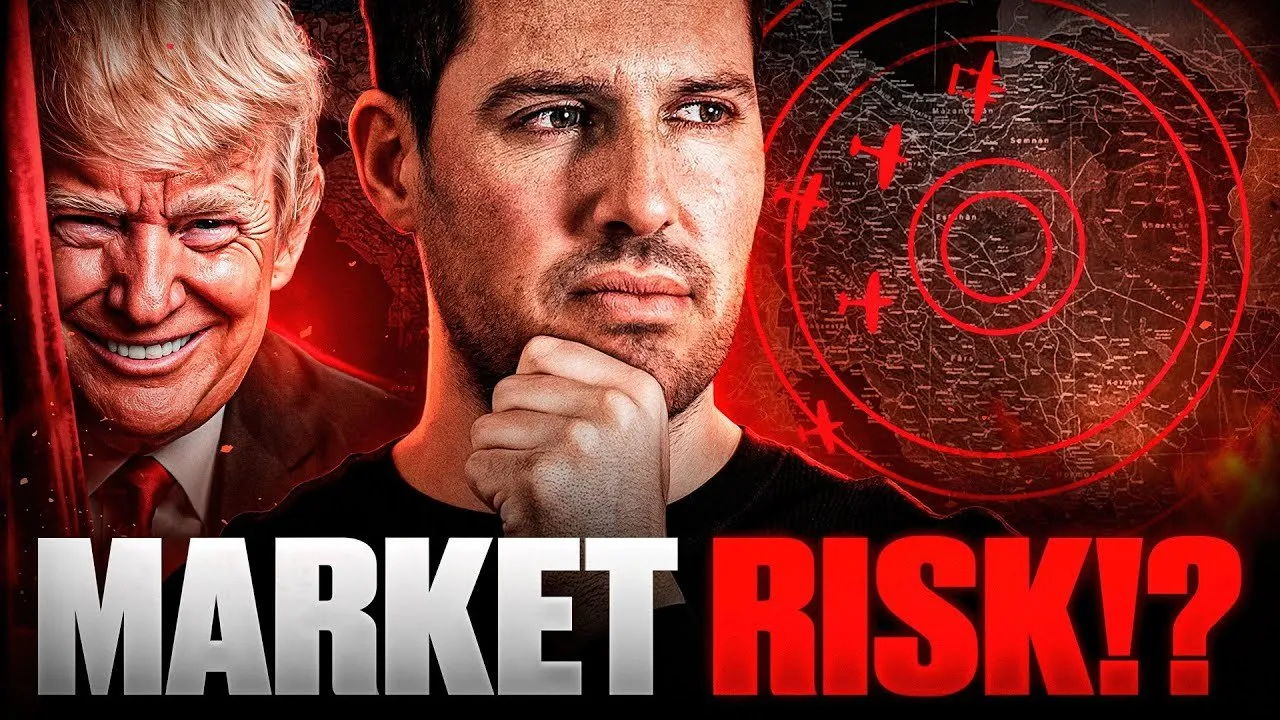
Global financial markets are currently navigating a turbulent period marked by escalating geopolitical tensions, particularly between the United States and Iran in the Middle East. This heightened uncertainty is compelling a significant flight from risk assets towards traditional safe havens and commodities, fundamentally reshaping investment landscapes and driving cautious sentiment across equities and digital currencies.
Key Market Shifts Amidst Rising Tensions
- Geopolitical Risk Premium: Heightened U.S.-Iran tensions are the primary catalyst for current market volatility and a shift in investor focus.
- Commodity Rally: Oil, gold, and silver prices have surged, reflecting a clear investor preference for tangible assets and inflation hedges.
- Cryptocurrency Downturn: Bitcoin and other digital assets, along with major tech stocks, are experiencing significant declines and bearish technical indicators.
- Energy Sector Outperformance: The energy sector is positioned for potential gains, fueled by both geopolitical supply concerns and long-term demand from AI data centers.
- Strategic Caution: Market analysts advocate for a risk-managed approach, identifying selective opportunities in commodities while advising patience and vigilance in volatile risk asset markets.
Geopolitical Headwinds Reshape Market Landscape
The recent intensification of geopolitical tensions, specifically involving the United States and Iran in the Middle East, has cast a long shadow over global financial markets. Reports of significant U.S. military air movements into European and Middle Eastern bases over the past 48 to 72 hours underscore the severity of the situation. This backdrop is driving a palpable shift in investor sentiment from risk-on to a more cautious, risk-averse stance.
The market's immediate reaction has been clear: a rally in traditional safe-haven assets and commodities, juxtaposed with a decline in riskier ventures. Prediction markets, such as Polymarket, reflect this anxiety, with 65% of participants forecasting a U.S. military strike on Iran by March 31st. This growing consensus among market observers highlights the perceived inevitability of significant geopolitical developments impacting investment decisions.
"No one wants to profit from catastrophic events, but right now, this is our livelihood," one market analyst observed. "This is a market, and we're here to try to make money, aren't we?"
Commodities Ascend Amidst Risk Aversion and AI Demand
In this environment of heightened risk, commodities have emerged as the clear beneficiaries. Oil prices have seen a notable uptick, climbing over 5.5% since the onset of the latest tensions. Analysts are closely watching the $70.51 per barrel mark as a crucial breakout level that could propel prices towards $80. Should the situation escalate further, particularly involving a potential closure of the Strait of Hormuz, predictions suggest oil could surge dramatically, potentially retesting its all-time high of $127 per barrel.
Precious metals are also reflecting this flight to safety. Gold has demonstrated strong upward momentum, while silver, though initially lagging, has begun to follow suit. Platinum is also on the radar, currently hovering above $1900, a level identified as a potential breakout point that could lead to significant gains. The broader energy sector, represented by ETFs like XLE, has seen robust performance, with some individual energy companies (e.g., XOM, CVX, Shell) posting year-to-date gains of 17-27%.
Beyond immediate geopolitical factors, the energy sector is underpinned by a powerful secular trend: the exponential growth in demand from artificial intelligence data centers. Projections indicate a fourfold increase in AI data center energy consumption over the next decade, reaching approximately 1600 Terawatt-hours by 2035. This massive capital-intensive undertaking, coupled with current commodity-to-equity ratios at 50-year lows, suggests a potential "war cycle" dynamic where commodities and energy could significantly outperform, reminiscent of historical economic shifts.
Even oil tanker and shipping stocks, such as FRO, TK, and STNG, are showing bullish chart patterns, including large "cup and handle" formations, suggesting potential 100-140% upside moves. These indicators reinforce the broad-based appeal of the commodities and energy complex in the current market climate.
Cryptocurrency Sector Faces Sustained Pressure
In stark contrast to commodities, the cryptocurrency market, particularly Bitcoin, is experiencing significant headwinds. Technical analysis reveals a breakdown from a symmetrical triangle pattern and consistent rejection at key resistance levels, like the 9-day Exponential Moving Average (EMA) on daily charts. Market sentiment has plunged, with the Fear & Greed Index registering an extreme "Fear" reading of 9%.
Major institutional Bitcoin holders are also facing increasing pressure. While some, like Tesla, hold Bitcoin at an average entry price of around $32,000, others are underwater or precariously close to it. MicroStrategy's average entry price stands at $76,062, while Binance's $1 billion reserve fund holds Bitcoin at an average of $69,160. These positions suggest significant vulnerability to further price declines, with concerns about potential selling exacerbating market weakness. Traders are eyeing a crucial support level at $62,600, with a close below this potentially triggering a cascade of short positions.
Altcoins are faring no better. Ethereum shows strong bearish signals, with analysts suggesting a high probability of falling below $1,500 and potentially challenging its 2022 bear market low of $896. Solana appears "extremely unhealthy," consolidating beneath critical levels, raising the likelihood of a drop to $48. Privacy coins like Zcash and Monero, once popular for their anonymity features, are also struggling, while newer meme-driven tokens like "World Liberty Financial Coin" and "Trumpcoin" are dismissed by analysts as "absolute garbage" and "slow rug-pulls."
"Bitcoin's volatility, in my opinion, is a feature, not a bug," commented an industry observer. "As a short-term trader, that's how you can make massive wealth by buying lows and selling near highs during big swings and wide price ranges."
Navigating Volatility: Strategic Investment Approaches
In this volatile environment, market analysts are emphasizing a cautious yet opportunistic approach. While the general sentiment for risk assets like cryptocurrencies is bearish, selective opportunities can still be identified through meticulous technical analysis and risk management.
For Bitcoin, the current extreme fear sentiment does not necessarily signal an immediate buying opportunity; historically, markets can become even more fearful before capitulation. Traders are advised to look for divergences between price action and momentum indicators like RSI and MACD, combined with higher lows on the Fear & Greed Index, before considering long positions. The lack of a clear "capitulation signal" from funding rates and liquidity pools suggests further downside may be possible.
Investors seeking to capitalize on commodity trends are exploring various avenues, including direct exposure to oil, gold, and energy sector equities. Platforms like Pionex offer copy-trading features for these commodities, while Bybit provides access to various commodity and cryptocurrency markets. For skilled traders, proprietary trading firms like Bitfunded offer challenges to access substantial capital for trading a wide range of assets.
As geopolitical tensions remain fluid and market sentiment continues to evolve, investors must prioritize vigilance and adaptable strategies. The current environment demands careful risk management, a deep understanding of market dynamics, and the flexibility to reallocate capital as new information emerges. Staying informed and strategically positioned will be crucial for navigating the ongoing shifts in global finance.