
Table of Contents
Global geopolitical stability is currently being tested on multiple fronts, creating a convergence of crises that spans from the battlefields of Ukraine to the corridors of power in London. We are witnessing a simultaneous hardening of military positions in Eastern Europe, a chaotic recalibration of US policy towards Iran, and the unraveling of a decades-old scandal that implicates the highest levels of the British establishment. The narrative that political leaders are in control is rapidly eroding, replaced by the reality of reactive measures and dangerous escalations.
Key Takeaways
- Russia’s Hardened Stance: Following failed "truce" narratives and attacks on Russian territory, Moscow has significantly hardened its negotiating position, evidenced by massive missile strikes on Ukraine’s energy infrastructure.
- The Iranian Pivot: The US administration appears to be backing down from a military confrontation with Iran, returning to negotiation frameworks after realizing military options are unviable.
- The Epstein-UK Nexus: New revelations suggest deep entanglements between Jeffrey Epstein and the British political establishment, specifically regarding the flow of government secrets via figures like Peter Mandelson.
- Collapse of Arms Control: With the expiration of the New START treaty, the world is entering an era without formal arms limitation regimes, increasing the risk of nuclear proliferation and accidental escalation.
The Escalation in Ukraine and the Fiction of Truces
The conflict in Ukraine has entered a more volatile phase. Recent events have dismantled the media-driven narrative that a ceasefire was imminent. Despite reports suggesting a potential seven-day truce, the reality on the ground demonstrated the opposite. Following attacks on the Valdai region, Russia launched one of its most powerful combined missile strikes to date, targeting energy systems and logistics hubs across Ukraine.
This military escalation correlates with a confirmed diplomatic shift. The Russian Foreign Ministry has signaled that Moscow is hardening its negotiating position. The window for compromise appears to be closing as the Kremlin views recent actions by Kiev—specifically attacks on state residences and the use of long-range drones—as state terrorism. This shift suggests that previous diplomatic off-ramps are no longer on the table.
The Disinformation of Diplomacy
Much of the confusion regarding a potential "Christmas truce" or "winter ceasefire" stems from a distortion of diplomatic exchanges. While Western media outlets claimed President Putin begged for a truce, the reality appears to be that the overtures for a pause came from the US side. This pattern of misrepresenting the origin of diplomatic requests serves to obscure the actual balance of power. When these performative truces fail to materialize, the resulting military response is often severe, leaving Ukraine in a more precarious position than before.
US Policy on Iran: The Cycle of Failed Coercion
In the Middle East, we are seeing a familiar pattern in American foreign policy: aggressive escalation followed by a quiet retreat to negotiation when maximalist goals prove unreachable. The administration initially pursued a strategy of intense pressure on Iran, hoping for regime collapse or significant concessions. However, the Pentagon has reportedly advised the White House that a military campaign would not result in a quick victory or regime change.
Consequently, Washington is pivoting back to diplomatic solutions that closely resemble proposals from a year ago—specifically, a consortium of countries working together on nuclear power and uranium enrichment. This underscores the futility of the interim escalation; the deal currently being sought was likely available before the recent spike in tensions.
His tactic was to escalate, escalate on the military front, escalate with the sanctions front... He makes these deals. He talks about negotiation. Then he tries to remove the other party. And it doesn't work.
The danger of this approach lies in the unpredictability of the US executive branch. Even when a deal is on the table, external influences from hawkish advisors can derail progress at the last moment, resetting the cycle of threats and mobilization. This volatility makes the US a nightmare for international analysts and a difficult partner for adversaries trying to gauge actual intent.
The Epstein Scandal and the British Establishment
While geopolitical tensions rise abroad, the United Kingdom is facing an internal crisis regarding the release of the Jeffrey Epstein files. The focus has shifted sharply toward the British establishment's involvement. The central figure in this developing narrative is Peter Mandelson. Reports suggest a flow of high-level government information—including cabinet papers and secrets regarding economic policy—passed through Mandelson to Epstein.
This connection raises uncomfortable questions about the nature of Epstein's operation. The volume of government secrets being transferred, combined with the lack of scrutiny at the time, reinforces the theory that Epstein may have had connections to intelligence services, potentially British intel, given the involvement of Ghislaine Maxwell.
Political Miscalculations
In the US, the political handling of this scandal has been equally inept. At a moment when public demand for transparency regarding the Epstein files is peaking, Donald Trump chose to attack Representative Thomas Massie, a vocal proponent of releasing these files. This highlights a disconnect between the political donor class, who likely want the files suppressed, and the populist base, which demands accountability. Siding with donors against the base on an issue of such moral clarity is a significant strategic error.
The Erosion of Global Security Architecture
Beyond regional conflicts, the fundamental architecture of global security is crumbling. We are facing the expiration of the New START treaty, marking the end of the post-Cold War arms control era. For decades, arms limitation regimes provided a baseline of stability and a channel for communication between superpowers. The absence of these treaties creates a sense of vertigo—a world where nuclear proliferation is no longer checked by mutual agreement.
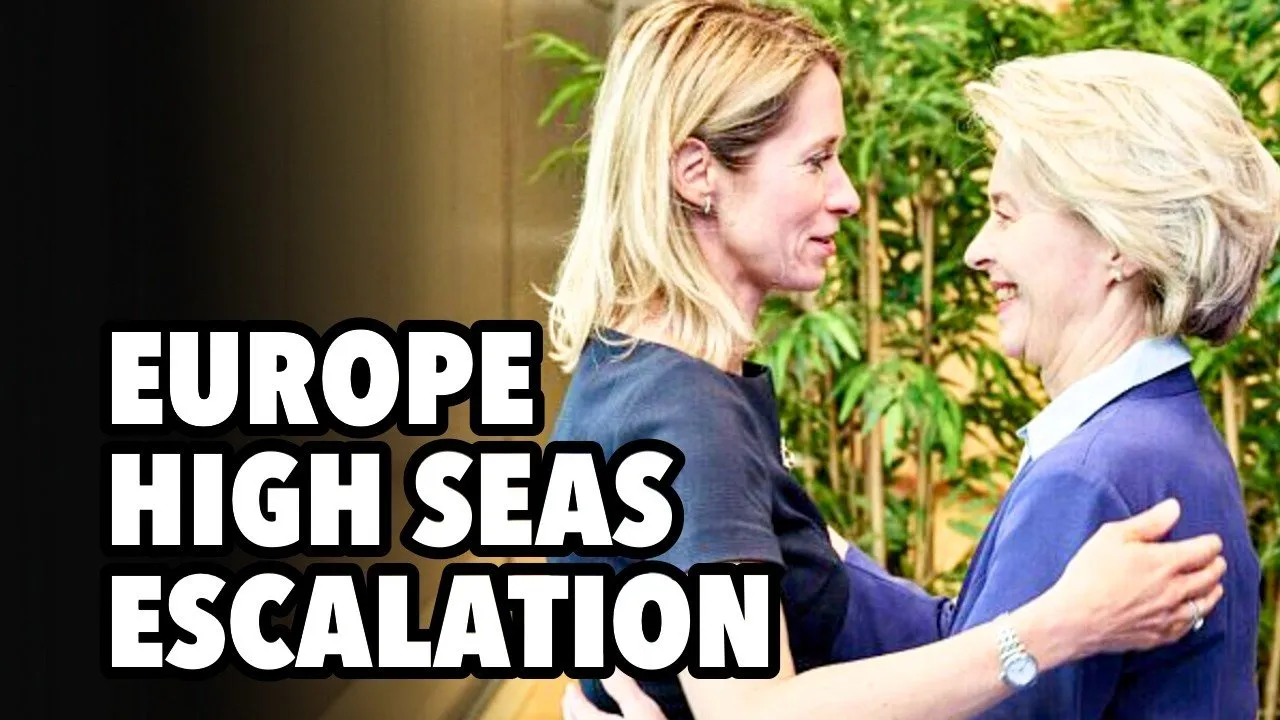
This danger is compounded by reckless rhetoric from European leaders. Calls for the unilateral disarmament of Russia or the stationing of nuclear weapons in previously neutral countries like Sweden indicate a profound misunderstanding of nuclear deterrence. This amateurism in Europe’s political class creates an environment where miscalculation could lead to catastrophic outcomes.
We are in a world without arms control. This is something that I myself, it makes me dizzy to feel it... there's always been that key point of stability and security... and that's all gone.
Simultaneously, we face threats in new domains, such as the potential for "Kessler Syndrome" in low Earth orbit—a scenario where debris density becomes so high that it creates a cascade of collisions, rendering space orbits unusable. Whether in space or regarding nuclear stockpiles, the guardrails that once protected the global commons are being dismantled.
Conclusion
We stand at a pivotal moment. The aggressive posturing that defined the last year of geopolitics may be reaching its limit. The US backing off in Iran and the hardening of reality in Ukraine suggest that the wave of confrontation might be starting to ebb, simply because the West lacks the capacity to sustain it. However, the danger has not passed. The collapse of arms control treaties and the exposure of deep corruption within Western establishments create a volatile mix. If the current leadership cannot navigate a de-escalation, the lack of diplomatic safety nets means the next crisis could spiral out of control far faster than those of the past.

![Fidelity Just EXPOSED Crypto's Biggest Secret [Not What You Think]](/content/images/size/w1304/format/webp/2026/02/fidelity-2026-crypto-outlook-revenue-sharing.jpg)
)