Table of Contents
Few questions are as uncomfortable—or as necessary—as asking how much of our character is written into our DNA before we are even born. We like to believe we are the sole architects of our destiny, yet science increasingly reveals that our genes play a profound role in shaping our risks for addiction, our capacity for empathy, and our propensity for what we historically call "sin."
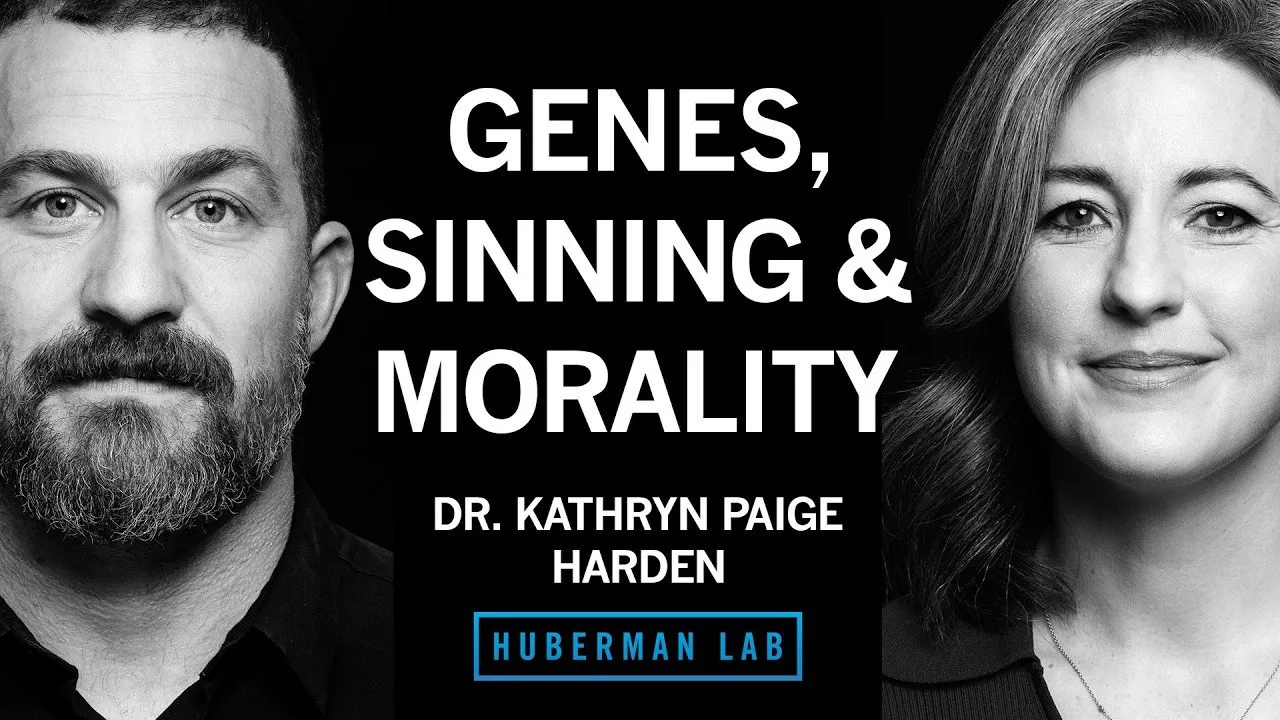
Dr. Kathryn Paige Harden, a psychologist and geneticist at the University of Texas at Austin, operates at the controversial intersection of biological determinism and human agency. By studying the interplay of nature and nurture, particularly during the volatile years of adolescence, she offers a framework that challenges our traditional views on morality, crime, and punishment. The following analysis explores the biological underpinnings of behavior and asks a critical question: If our biology drives our choices, how should we approach justice and forgiveness?
Key Takeaways
- Adolescence is the critical launchpad: The timing and tempo of puberty act as a biological biological clock that correlates with long-term mental health, aging, and behavioral risks.
- "Sin" is often neurodevelopmental: Behaviors associated with the "seven deadly sins"—such as lust, wrath, and addiction—are linked to polygenic traits influencing the brain's balance of inhibition and excitation.
- The "Rescue-Blame" Trap: Society struggles to reconcile the biological causes of bad behavior (the victim) with the need to hold individuals accountable (the agent).
- The physiology of punishment: Humans experience a dopamine reward when witnessing the punishment of social norm violators, suggesting a biological drive for retribution.
- Genetics is not destiny: While genes provide the blueprint, environmental factors and "developmental noise" create significant variability, meaning biology is a probability, not a script.
The Biological Clock: Puberty and Life Trajectory
Adolescence is not merely a social transition; it is a profound biological metamorphosis that sets the stage for adult life. Dr. Harden’s research highlights that the timing and pace of puberty are strong predictors of future health and behavioral outcomes. This period, roughly spanning ages 10 to 25, is when individual differences in life trajectories begin to canalize, or deepen.
The implications of pubertal development extend far beyond physical appearance:
- The impact of early timing: For girls, early pubertal onset is a robust predictor of mental health struggles, physical health issues, earlier menopause, and even a shorter lifespan.
- The danger of rapid tempo: For boys, the rate of change matters immensely. Boys who transition through puberty very quickly—changing "overnight"—often struggle to assimilate these changes, leading to emotional and behavioral volatility.
- Epigenetic aging: There is a correlation between the speed of reproductive development and cellular aging. Faster physical maturity appears to be tied to a faster ticking of the "epigenetic clock," potentially accelerating mortality risks.
- The plasticity window: Puberty marks a shift in neuroplasticity. While the brain remains changeable, the intense, "critical period" plasticity diminishes as reproductive maturity sets in.
- Environmental cues: The absence of a biological father has been statistically linked to earlier puberty in girls, suggesting an evolutionary mechanism where uncertain environments trigger faster reproductive strategies, though this is confounded by genetic inheritance.
- The mismatch effect: Adolescents often possess adult-level physical capabilities and drives (sex, aggression) before they have developed the adult-level cognitive inhibition required to regulate them.
The Genetics of Vice and Impulse Control
Historically, society has categorized behaviors like sloth, lust, or wrath as moral failings. However, modern genetics suggests these behaviors are deeply rooted in our neurobiology. Rather than being located in a single "sin center" like the hypothalamus, these traits are the result of massive polygenic influences—thousands of genes interacting to shape the brain.
The biological architecture of what we call "vice" reveals a complex picture:
- The inhibition-excitation balance: Genetic variances often affect the neurodevelopmental balance between GABA (inhibitory) and glutamate (excitatory) systems in the brain. Disruption here can manifest as impulsivity or addiction.
- Commonality of risk: The genes that predispose an individual to alcohol addiction often overlap with those that predispose them to risky sexual behavior and impulsive aggression. These are not separate silos but expressions of a shared underlying liability.
- The sensation-seeking spectrum: People vary genetically in their drive for intensity. Some crave high-stimulation environments to feel "normal," while others are naturally more inhibited.
- Callousness and antagonism: Distinct from simple impulsivity, some genetic profiles are associated with a lack of concern for the social consequences of one's actions, a trait often seen in conduct disorders.
- Neurodevelopmental origins: Conditions like conduct disorder and substance abuse share a similar genetic etiology to ADHD, originating in the early wiring of the brain during the second and third trimesters of pregnancy.
- The fallacy of the "Bad Seed": While these traits are heritable, they are not deterministic. A child is not a copy of their parents but a genetic recombination, creating a unique "product" with a distinct trajectory.
I think that substance use disorders are every bit as a neurodevelopmental disorder as ADHD. I think conduct disorder, which is characterized by impulsive aggression, is every bit a neurodevelopmental disorder as ADHD.
Navigating the Rescue-Blame Trap
One of the most profound ethical challenges presented by behavioral genetics is how we judge "bad" behavior when we know it has biological roots. This dilemma creates what philosophers call the "Rescue-Blame Trap." We oscillate between viewing a perpetrator as an agent who made a choice (blame) and a victim of their own biology and environment (rescue).
This tension complicates our modern understanding of justice and morality:
- The Whitman Paradox: Charles Whitman, the Texas Tower shooter, was found to have a tumor pressing on his amygdala. Society finds it easier to forgive when there is a visible biological cause, viewing him as a "broken machine" rather than a moral failure.
- The visibility of genes: Unlike a tumor, polygenic risk scores are invisible. We struggle to extend the same empathy to someone whose "bad" behavior is driven by a complex web of genetic markers rather than a single lesion.
- Original Sin revisited: Many cultural frameworks operate on the assumption of inherent brokenness or "original sin." Genetics can inadvertently reinforce this if interpreted as someone being "born bad," rather than born with specific susceptibilities.
- Bad luck vs. responsibility: A more nuanced approach acknowledges that a person may have "bad luck" in their genetic lottery but maintains that they still hold responsibility for their actions.
- The role of environment: Genetic risk does not exist in a vacuum. The "orchids and dandelions" theory suggests some children (orchids) are highly susceptible to their environment—wilting in bad conditions but thriving spectacularly in good ones—while others (dandelions) are resilient regardless of the setting.
- Separating the actor from the act: Understanding the biological inputs allows us to hold people accountable for future safety without necessarily condemning their essential self as irredeemable.
The Psychology of Punishment and Reward
Why does society rely so heavily on punishment? Evidence suggests that punitive measures are often ineffective at changing behavior compared to reinforcement. However, humans have a deep-seated evolutionary drive to punish rule-breakers. This drive is so potent that it activates the brain's reward centers.
The dynamics of punishment reveal uncomfortable truths about human nature:
- The dopamine of retribution: When we see a social norm violator punished, the brain releases dopamine. We derive a physiological "high" from seeing "justice" served, which complicates our ability to be objective.
- Cruelty as currency: Nietzsche theorized that punishment pays a "debt" to society by offering the public the pleasure of seeing the perpetrator suffer. This suggests our justice system is partially built on satisfying a collective lust for cruelty.
- Ineffectiveness of harshness: Whether in raising children or managing criminals, increasing the severity of punishment (e.g., spanking, harsh prison sentences) rarely results in better behavior. Accountability works; suffering does not.
- The "Penalty Box" model: A forward-looking justice system focuses on separation for safety (like a hockey penalty box) rather than the infliction of pain. The goal is to stop the game disruption, not to torture the player.
- Freeloader detection: Humans are evolutionarily hardwired to detect inequality and unfairness. We punish to prevent "freeloading"—the idea that someone is gaining an energy or resource advantage without following the group's rules.
- Inequality vs. Unfairness: Research indicates people will tolerate inequality if the process seems fair, but they will burn down a system (or a society) that feels unfair, prioritizing the punishment of cheaters over their own gain.
I think that it is a lust just as much as lust for substances or lust for sexual partners. It is a desire people want to see people punished.
Modern Society and the Dissolution of the Village
Our evolutionary psychology was designed for small, tight-knit groups where reputation, reward, and punishment regulated social cohesion. Today, these ancient mechanisms are misfiring in the vast, anonymous landscape of the modern world, particularly online.
The clash between ancient biology and modern technology creates unique friction:
- Collapse of context: In a tribe, we know the context of a person's behavior. On the internet, we see only the act, stripping away the mitigating factors that might trigger empathy.
- The infinite village: We are now exposed to norm violations from strangers globally. Our brain's "punishment drive" is constantly triggered by people we will never meet, leading to chronic outrage.
- Ambiguous rules: In digital spaces, there is no consensus on social norms. We are essentially arguing over the rules of the game while the game is being played, leading to a chaotic "might makes right" approach to enforcement.
- Status dominance: Public punishment and "canceling" often serve as status dominance moves. By punishing a transgressor, the punisher signals their own power and adherence to group norms.
- The loss of redemption: In a small village, a person who errs must be reintegrated because they are needed for survival. In the digital world, we can permanently exile (block/cancel) individuals, removing the necessity for forgiveness or rehabilitation.
- Local action as an antidote: To combat the toxicity of globalized outrage, the solution may lie in re-localizing our emotional energy—focusing on tangible actions in our physical communities where our biology is better adapted to function.
Moving Beyond Genetic Determinism
Accepting the influence of genetics does not require a surrender to nihilism. On the contrary, understanding the biological "deck of cards" we are dealt allows for more strategic and compassionate gameplay. The science of behavioral genetics is ultimately a tool for understanding human difference, not a sentence of doom.
A forward-looking perspective involves:
- Data as power: Knowing one's genetic predispositions (e.g., a family history of addiction) allows individuals to build "guardrails" and make informed choices to buffer against those risks.
- Cycle breaking: Biology is not destiny. People can and do break generational cycles of trauma and addiction through conscious effort and environmental changes.
- Redefining accountability: We can hold people responsible for their actions without needing to inflict suffering. Responsibility means owning the consequences and doing the work to ensure the harm is not repeated.
- The recombination of hope: Because genes recombine in every generation, lineages are not fixed. Every child is a new roll of the dice, a new "production" rather than a mere "reproduction," offering a fresh start for every family line.
- Compassionate pragmatism: We can acknowledge that some people have harder battles due to their biology while still expecting them to adhere to the social contract.
- The rejection of "Born Bad": We must move away from essentialist narratives that view people as inherently broken. We are all complex mixtures of biology, environment, and choice.
Bad luck doesn't negate responsibility. It might not have been my fault, but it's still my responsibility. But holding people accountable doesn't have to mean harsh punishment.
Conclusion
The intersection of genetics and behavior challenges our deepest assumptions about who we are. It forces us to confront the reality that the "self" is partially constructed by forces outside our control—from the lottery of our DNA to the timing of our puberty. However, this knowledge should not lead to despair or the abandonment of moral responsibility.
Instead, Dr. Harden’s work suggests a new path: one where we use scientific understanding to build a justice system that prioritizes safety over cruelty, and a personal ethic that favors understanding over judgment. By recognizing the biological underpinnings of our "sins," we can move past the primitive lust for punishment and toward a future defined by pragmatic compassion and forward-looking accountability.