Table of Contents
Gecko Robotics has secured a $71 million contract with the United States Navy to deploy its advanced robotic fleet for critical infrastructure maintenance and vessel readiness. By utilizing autonomous systems to inspect naval assets, the company aims to drastically reduce dry-dock cycles and improve long-term fleet durability through high-fidelity data collection.
Key Points
- The $71 million agreement focuses on using robotics and AI to accelerate maintenance cycles that previously required three to four months to complete.
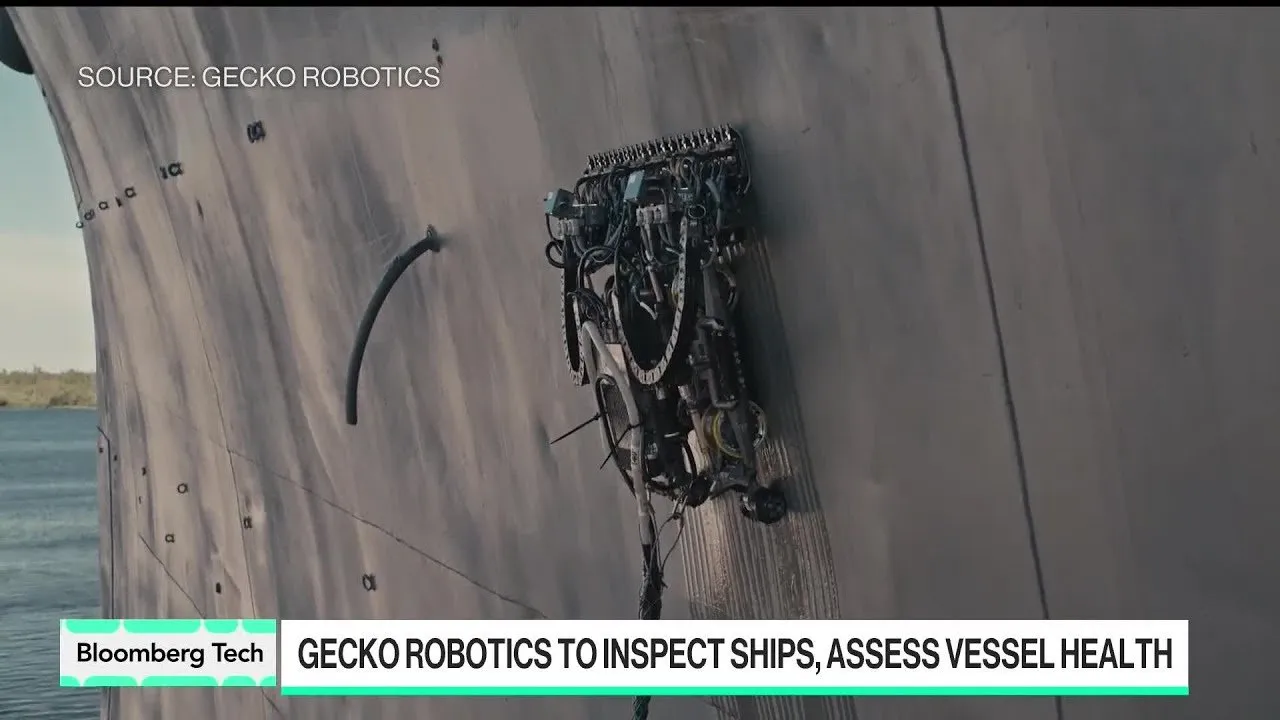
- Gecko Robotics employs autonomous crawlers to capture granular data, turning physical "atoms into bits" to create a "digital thread" of infrastructure health.
- The technology is integrated into the Cantilever software platform, which provides the Navy with a centralized source of truth for predictive planning.
- The initiative is designed to support the Navy’s goal of reaching 80% fleet readiness to maintain a strategic advantage in the Pacific and Middle East.
Transforming Naval Maintenance with Robotics
The core of the partnership relies on Gecko Robotics' ability to perform non-destructive testing on massive naval vessels. Historically, assessing the structural integrity of a ship has been a labor-intensive process, often requiring months of downtime. By swarming these ships with specialized climbing robots, the company captures comprehensive datasets that reveal the physical state of the infrastructure without needing to disassemble or damage components.
According to Gecko Robotics CEO Jake Loosararian, the shift toward robotics-driven maintenance is about more than just speed—it is about data-backed decision-making. The information gathered by these robots is funneled into Cantilever, a software environment that allows the Navy to simulate potential failures and schedule repairs before they result in costly, unplanned shutdowns.
"We're providing to the Navy, and kudos to the Navy for adopting this technology, a way that's giving them an advantage over others that deal with the same problem every single day. They're taking very seriously this demand of getting to 80% readiness of their fleets," said Jake Loosararian.
The Strategic Advantage of Data
For the Department of the Navy, this collaboration is a direct response to the global need for rapid deployability. In an era of heightened geopolitical tension, the ability to keep vessels in the water rather than in dry dock is a significant military multiplier. By leveraging AI to analyze the "ground truth" collected by robots, military planners can optimize the lifecycle of assets, effectively extending the operational life of existing structures while reducing the budgetary strain of maintenance.
The company emphasizes that this is not a long-term research project but an immediate operational upgrade. While the Navy is currently the focus of this major contract, Gecko Robotics has already demonstrated success in the private sector, notably with energy giants like ADNOC. By applying these industrial-grade insights to defense, the Navy hopes to secure an intelligence edge that rivals or exceeds global competitors.
Scaling Autonomous Readiness
As the partnership moves forward, the focus will remain on refining the digital models that interpret the data gathered by the robots. The goal is to move beyond reactive repairs toward a state of predictive maintenance where "downtime" becomes a managed variable rather than a disruptive surprise. By continuously feeding data into the Cantilever platform, the Navy expects to build a repository of knowledge that will inform not just current maintenance schedules, but also the design and construction of future maritime assets.
The success of this $71 million contract serves as a case study for the current administration’s push to integrate commercial AI and robotics into the defense industrial base. As the Navy continues to integrate these autonomous systems, the focus will shift toward scaling these deployments across the entire fleet to ensure that current military advantages are sustained well into the coming decade.