Table of Contents
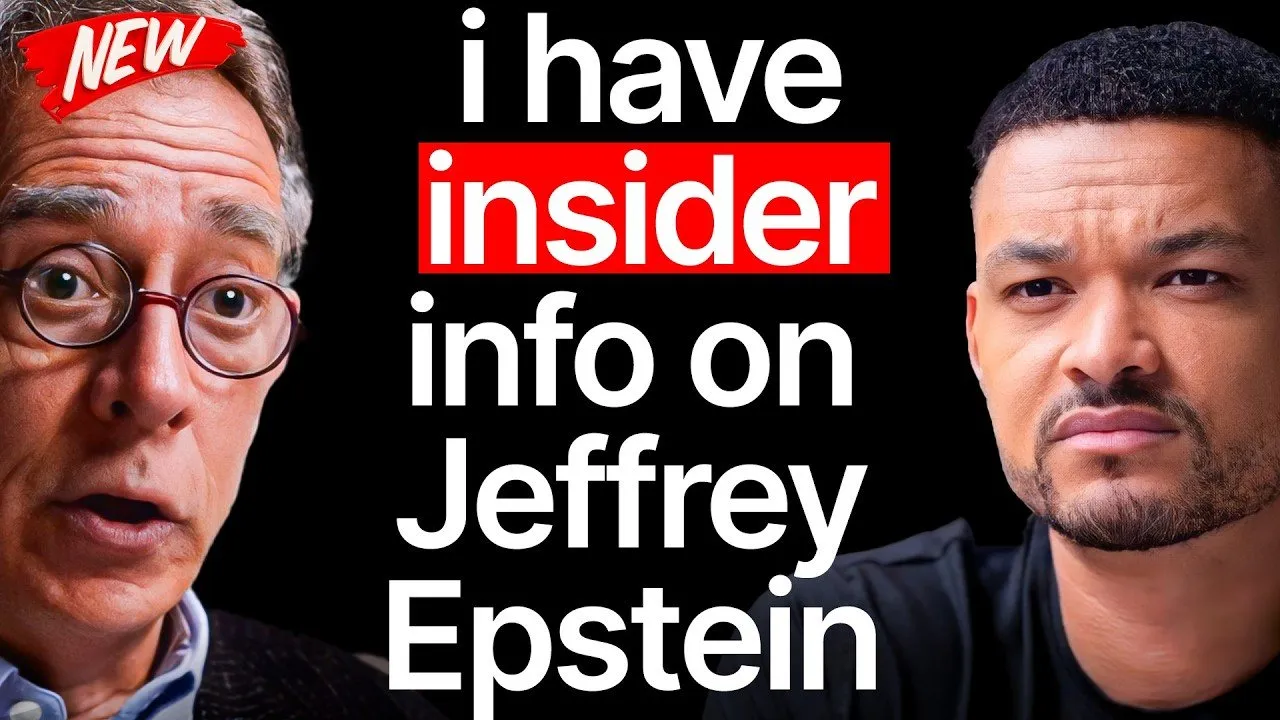
In a world where privacy is increasingly treated as a relic of the past, few people possess the vantage point of Gavin de Becker. As a world-renowned security expert and the author of the seminal work The Gift of Fear, de Becker has spent decades protecting the world’s most powerful individuals, from tech titans like Jeff Bezos to heads of state. His insights go far beyond simple physical protection; they delve into the mechanics of institutional secrecy, the vulnerability of our digital lives, and the startling truth behind one of the most mysterious figures in modern history: Jeffrey Epstein.
Key Takeaways
- Digital Privacy is Non-Existent: If a government target's your phone, there is no software or hardware solution capable of stopping a "no-click" exploit like Pegasus.
- Epstein as an Intelligence Construct: Evidence suggests Jeffrey Epstein was not a self-made billionaire but a "construct" utilized for a sophisticated blackmail and "compromat" operation.
- Intuition as a Biological Defense: De Becker argues that intuition is a cognitive process faster than logic, designed specifically to protect humans from violence and deceit.
- Institutional Deception: Power centers naturally prioritize "what" to tell the public rather than "how" to tell the truth, leading to decades-long delays in transparency regarding public health and national security.
The Myth of Digital Confidentiality
The assumption that your text messages, calls, and photos are private is, according to de Becker, a dangerous illusion. During his investigation into the hacking of Jeff Bezos’s phone, de Becker uncovered the reality of "no-click" exploits. These are systems, such as the Israeli-made Pegasus 3, that allow a government to infiltrate a device without the user ever clicking a link or answering a call.
De Becker notes that even the most advanced updates from companies like Apple are merely temporary fixes in an endless arms race. Thousands of hackers globally work to find the next vulnerability the moment a patch is released. For high-profile individuals, the only reliable strategy is to assume that every digital communication is public. De Becker shares that one of his most prominent clients has every outgoing message BCC’d to an assistant specifically to ensure he never sends anything he wouldn't want the world to see.
"There is absolutely no protection viable for the confidentiality of your phone if a government wants you."
Jeffrey Epstein: The Intelligence "Construct"
One of the most provocative revelations in de Becker’s discourse is his assessment of Jeffrey Epstein. He argues that Epstein was not a billionaire in the traditional sense, but a "created construct" funded through unusual channels, most notably the $500 million power of attorney granted to him by Les Wexner. De Becker posits that Epstein’s role was to facilitate an intelligence operation designed to compromise and control powerful figures through "compromat"—a Russian term for compromising material.
The Blackmail Engine
The operation relied on hidden cameras and microphones in Epstein’s New York and Caribbean residences. De Becker explains that blackmail is most effective when the perpetrator acts as a "rescuer." By informing a target that a girl had "recorded" an encounter and offering to "handle it," Epstein could own a senator, scientist, or CEO forever. This explains the unusual "sweetheart deal" Epstein received in Florida, where the US Attorney was reportedly told that Epstein "belonged to intelligence."
The Involvement of Foreign Intelligence
De Becker aligns with the theory that Epstein functioned as an asset for a foreign ally, specifically pointing toward Israeli intelligence. He cites Ghislaine Maxwell’s father, Robert Maxwell—who had documented ties to the Mossad—as a key part of this connective tissue. The reluctance of the US government to release the full, unredacted Epstein files is, in de Becker's view, a matter of protecting national security and maintaining relationships with key allies.
Why All Power Centers Lie
Transparency is rarely the default setting for any large institution. De Becker’s experience working within the Reagan administration taught him that government meetings rarely focus on the truth. Instead, the focus is on "spinning" events to manage public perception. He draws parallels between this and corporate scandals, such as the 50-year delay in acknowledging asbestos in baby powder or the lethal impact of opioids.
He argues that tyranny is the historical norm for human governance, while representative democracy is a "tiny sliver" of history that is currently trending toward totalitarianism. This shift is characterized by an explosion of unelected regulators and tens of thousands of new laws passed annually. For de Becker, the constant state of division in society is a tool used by leadership to maintain control.
"Division is the fuel of power. The king and queen look over the castle wall and when they see their subjects fighting, they high-five each other."
The Gift of Fear: Reclaiming Intuition
In response to a world filled with deceit and digital threats, de Becker points to our oldest survival mechanism: intuition. Unlike logic, which is slow and plodding, intuition is an instantaneous cognitive process that connects current observations with deep-seated patterns of behavior. It is, as he describes it, "knowing without knowing why."
The Cost of Being Polite
A central theme of de Becker’s philosophy is that humans are the only animals that will ignore a "red alert" signal to avoid being perceived as rude. He uses the example of a woman who feels an intuitive sense of danger when an elevator door opens, yet gets in anyway because she doesn't want to offend the stranger inside. De Becker urges a return to "personal responsibility," where listening to a gut feeling is prioritized over social etiquette.
Training the Intuitive Muscle
While intuition is natural, it can be honed through experience. De Becker notes that top performers, like world chess champion Magnus Carlsen, often find that their first thought is the correct one. The "training" required is not necessarily to make intuition better, but to learn to stop interrogating and second-guessing the signals your body is already sending you.
Living "Downstream" and Finding Reality
As we navigate the rise of AI and the "dead internet theory"—the idea that most online content will soon be bot-generated—de Becker suggests a shift in how we define reality. He advocates for a philosophy of living "downstream," which means moving with the current of reality rather than fighting against it. When we stop using our energy to "manage the past" or force outcomes that aren't meant to be, we become more effective and at peace.
In an age of deepfakes and digital manipulation, de Becker finds optimism in the fact that we are being forced to value what is irreplaceably human: touch, nature, and genuine connection. He believes that by questioning the official narratives and digital simulations around us, we can return to a more authentic way of existing.
Ultimately, de Becker’s message is one of empowerment. Whether dealing with a global conspiracy or a personal threat, the most potent tools we possess are our awareness and our willingness to trust ourselves. You can explore more of Gavin de Becker's work and his protective strategies at Gavin de Becker & Associates.