Table of Contents
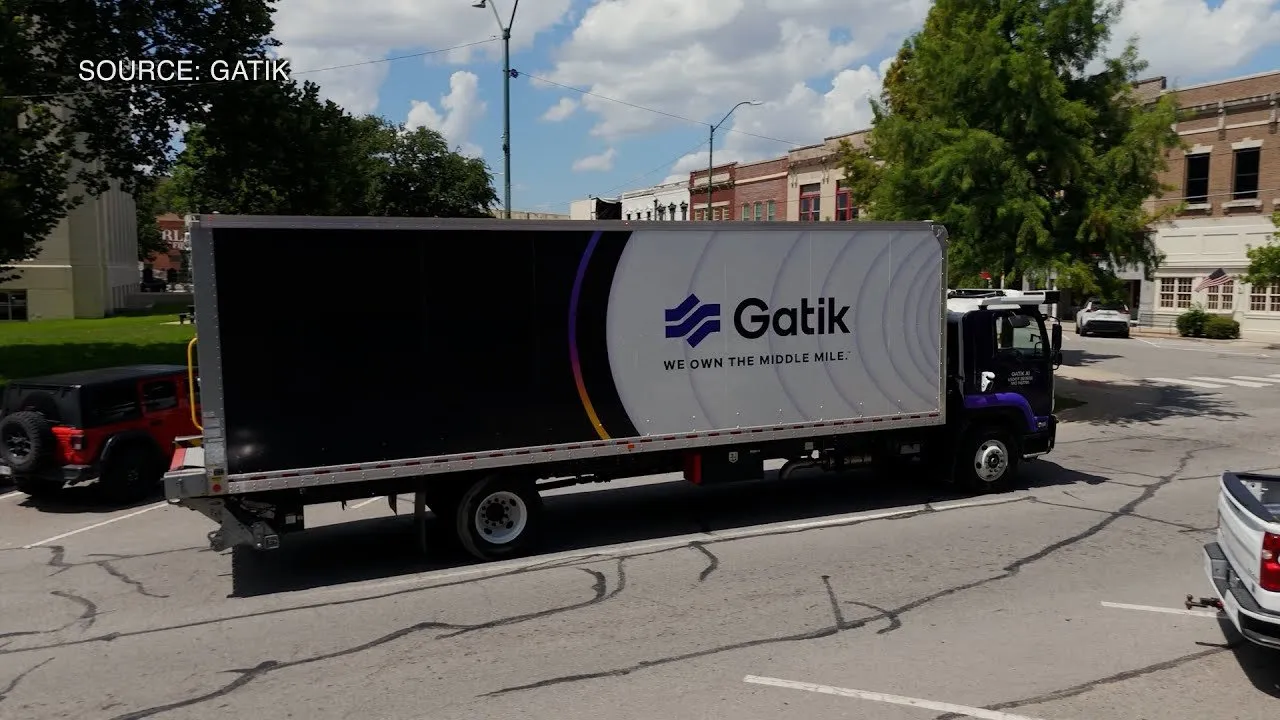
Autonomous trucking firm Gatik has officially transitioned to fully driverless commercial operations, removing safety drivers and human observers from its vehicles on public roads. The company announced it has secured over $600 million in future revenue commitments and plans to significantly expand its fleet across Texas, Arkansas, and Arizona in the coming weeks.
Key Highlights
- Fully Driverless Operations: Gatik is now operating trucks without safety drivers or in-cab observers on public roads in multiple markets.
- $600 Million Commitment: The company revealed a single key customer has committed to a deal valued at $600 million, contributing to a stable revenue pipeline.
- Rapid Fleet Scaling: Operations are scaling from approximately 10 trucks today to over 60 in the coming weeks, with projections to reach hundreds by year-end.
- Strategic Partners: The firm is leveraging hardware from NVIDIA and manufacturing capabilities from Isuzu Motors to reach mass production.
Operational Milestones and Rapid Expansion
Gatik’s shift to "driver-out" operations marks a significant turning point in the autonomous freight sector, differentiating the company from competitors still reliant on human oversight. While the current deployment involves a modest fleet of approximately 10 vehicles, the company has outlined an aggressive scaling strategy. Management confirmed that the fleet will expand to over 60 fully driverless trucks executing daily commercial routes within weeks.
The company focuses specifically on "middle-mile" logistics—moving goods from warehouses to retail stores—rather than long-haul trucking. This regional approach has allowed Gatik to commercialize faster by operating on repetitive, fixed routes. Operations are currently active in Texas, Northwest Arkansas, and Phoenix, where regulatory environments have been conducive to autonomous deployment.
"Today, truly, there is no safety driver, no observer on public roads. And in our space, no one can make that claim today... By year end [we will have] over hundreds of trucks."
Business Model and Financial Security
Unlike traditional automotive sales models, Gatik operates on an "Autonomous Transportation as a Service" (ATaaS) model. Customers are charged a fixed fee per truck per year, providing the company with recurring revenue and high visibility into future earnings. The company emphasized that its contracts are multi-year and non-cancellable, signaling strong market validation from major enterprise clients.
Current partners include industry giants such as Walmart, Kroger, and Tyson Foods. The $600 million deal mentioned by company leadership is attributed to a single key customer, underscoring the scale at which supply chains are beginning to absorb autonomous technology.
Manufacturing and Technology Infrastructure
To support its growth, Gatik has hardened its "Generation 3" hardware stack, developed in close collaboration with NVIDIA. On the manufacturing side, the company is working with Isuzu Motors to transition from retrofitting vehicles to mass production.
A new Isuzu production facility in South Carolina is scheduled to come online toward the end of next year. Gatik projects this facility will eventually support the production of tens of thousands of autonomous vehicles annually, necessary to meet the demand from retail and logistics partners.
While the company is currently capitalizing on favorable state-level regulations, leadership acknowledged the necessity of a federal framework to facilitate nationwide adoption. Gatik continues to work with federal administrators to help shape a cohesive national strategy for autonomous vehicle rollout, expecting a unified framework to emerge in the near future.