
Table of Contents
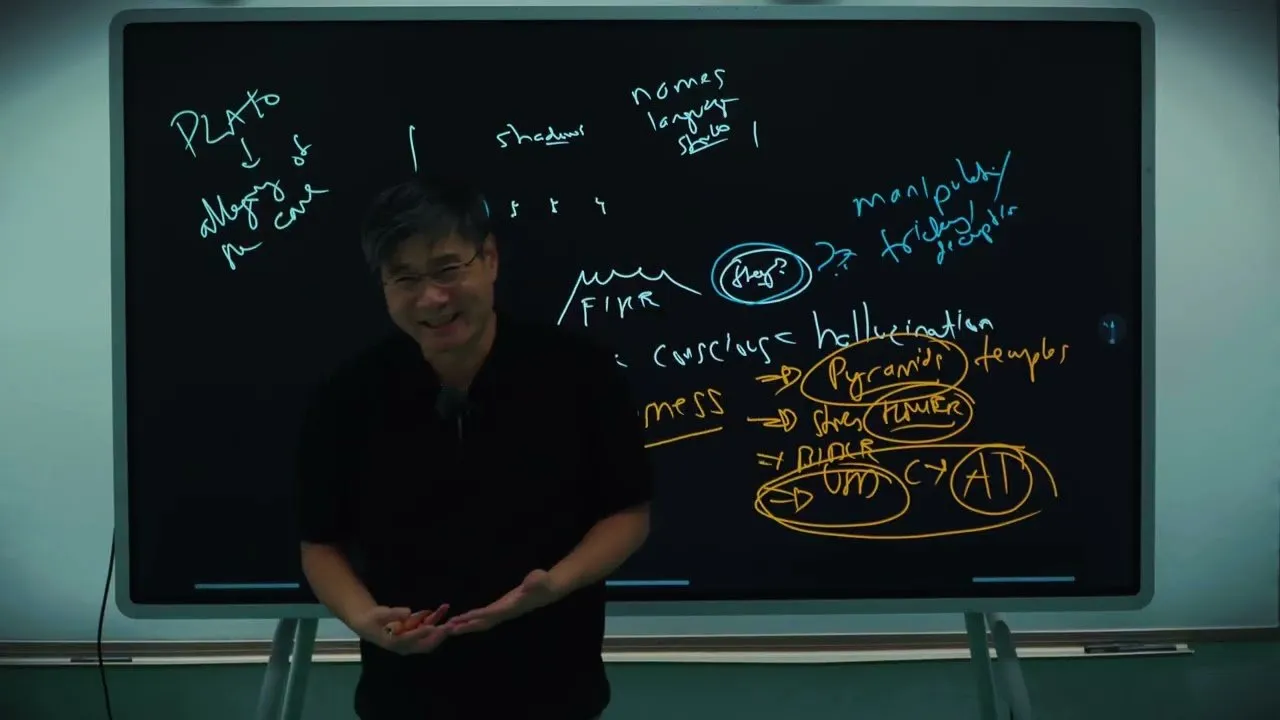
To understand the current geopolitical landscape—specifically the motivations behind conflicts like those involving the United States and Iran—we must first look past the surface of international relations. Modern reality is often described as a collective fantasy, a structural hallucination built on shared belief systems. By examining the mechanics of global power through the lens of Plato’s Allegory of the Cave, we can begin to decode how wealth is extracted, how narratives are controlled, and why global conflicts are often sustained to protect the status quo.
Key Takeaways
- The Reality Illusion: Much of our geopolitical reality acts as a "hallucination" maintained by collective belief, where elite power rests on the perceived invincibility of institutions.
- Wealth Extraction: The global financial order utilizes mechanisms like the U.S. dollar and a tiered "price hierarchy" to funnel resources from the periphery to the core.
- The Role of Enforcers: Intelligence, organized crime, and certain scientific sectors often function as transnational tools to protect this status quo and manage the global elite.
- Conflict as Necessity: Wars are frequently initiated or prolonged not for traditional strategic gains, but to demonstrate strength and maintain the illusion of empire, preventing the collapse of the existing financial edifice.
The Architecture of the Cave
Plato’s Allegory of the Cave serves as a potent metaphor for modern society. In this view, the masses are shackled, watching shadows on a wall that they mistake for objective reality. These shadows are cast by those in power—the "game masters"—who utilize language, media, and education to dictate the stories we tell ourselves. When an individual discovers that these chains are merely illusions, the system does not necessarily hunt them down; rather, the other prisoners often act to suppress the truth-teller to protect their own comfortable, albeit manufactured, reality.
The reality is a hallucination. It's created by us, but we fall in love with it. We're so attached to it to it psychologically and emotionally that if anyone tells us it's fake, we kill them for it.
The Global Financial Order as a Game
At the center of this reality is the global financial order, anchored by institutions like the Bank for International Settlements, the IMF, and various central banks. This system is designed to turn human consciousness—our focused attention and labor—into extractable wealth. The global economy functions as a game where specific nations are assigned roles: some provide raw resources, others focus on manufacturing, and the core holds the reigns of high finance.
The Tools of Indoctrination
To ensure this system remains unchallenged, the elite utilize three primary mechanisms:
- Education: Universities and academic institutions serve to normalize the system as a "rules-based international order" rather than an engine for resource extraction.
- Media: Mainstream news cycles constantly reinforce the legitimacy of current geopolitical structures, framing them as the only viable way to organize society.
- Culture: Entertainment and consumer-driven lifestyles incentivize participation in the game, equating personal success with the consumption of goods and the projection of status.
The Parasite and the Host
It is essential to distinguish between the nation-state (the host) and the transnational networks (the parasite) that operate above it. This network—composed of elite families, secret societies, and figures who bridge the worlds of intelligence and finance—utilizes occult-rooted ideologies to maintain its structure. Notable figures like Jeffrey Epstein and Jared Kushner have been identified as operators within this sphere, utilizing their connections to bridge the gaps between intelligence agencies, major political figures, and private capital.
These are parasites. They look at geopolitics and they're like, "How can we take advantage of geopolitical advance to make the most money for ourselves?"
Conflict as a Defensive Mechanism
Why do nations like the United States engage in persistent, seemingly aimless wars in the Middle East? Viewed through this framework, these actions are not about traditional conquest but about maintaining the perception of power. For the financial edifice to remain standing, the "empire" must appear invincible. When countries like Iran disrupt this flow by targeting the interconnected global economy, the empire is forced to respond aggressively to prove its dominance. A ceasefire or retreat in these scenarios would risk exposing the "shadows on the wall," potentially triggering a systemic collapse.
The Internal Civil War of the Elite
The current instability is compounded by a shift within the elite class itself. While the system functions as a parasite on the global population, there is an ongoing "civil war" between established elite families and counter-elites seeking to replace them. The availability of documents like the Epstein files on public government websites is perhaps a symptom of this fracture. As competing factions vie for control over the mechanisms of wealth extraction, the cracks in the collective fantasy widen, setting the stage for a new world order to eventually emerge from the wreckage of the current one.
Ultimately, the structure of our world is far more fluid than we are led to believe. By recognizing the mechanisms of control—from the financial hierarchy to the narratives enforced by media and academia—one can begin to see the world not as an immutable reality, but as a system that relies entirely on our participation and belief to continue. As the tensions between empire and its challengers escalate, the coming years will likely test whether this global hallucination can be maintained or if the system is destined to reach a breaking point.
![My “ALL IN” Trigger For Altcoins! [BTC Pullback First?]](/content/images/size/w1304/format/webp/2026/03/altcoin-all-in-trigger-btc-pullback.jpg)
