Table of Contents
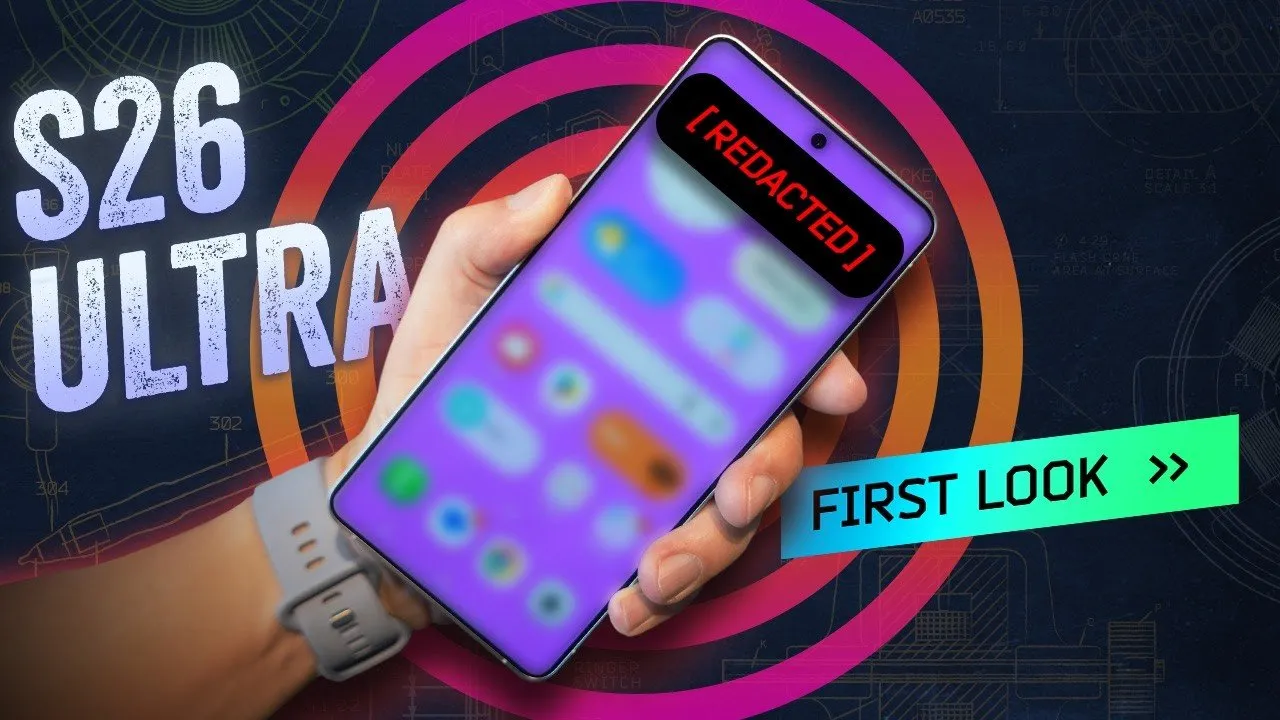
Samsung officially unveiled its latest flagship, the Galaxy S26 Ultra, at a launch event in San Francisco, signaling a shift toward software-defined hardware innovations and enhanced charging capabilities. While the device maintains the familiar silhouette of its predecessor, it introduces a first-of-its-kind "privacy display" and a significant boost to wired power delivery, even as the company continues to resist industry-standard magnetic charging. Pre-orders for the $1,300 handset are now live, with wide availability expected by March 11.
Key Points
- The Galaxy S26 Ultra features a software-controlled privacy screen that utilizes integrated polarization to block side-angle viewing.
- Wired charging speeds have increased to 60W, allowing the 5,000 mAh battery to reach a 75% charge in approximately 30 minutes.
- Samsung has opted for an Aluminum frame, moving away from the Titanium build used in the previous generation.
- The device debuts "Task Automation" AI in partnership with Google, designed to handle multi-step actions in third-party apps like Uber and DoorDash.
- Despite the Qi2 standard becoming common, Samsung has again declined to include internal magnets for accessories.
A Software-Defined Privacy Display
The most distinctive hardware advancement in the Galaxy S26 Ultra is its integrated privacy technology. Rather than relying on third-party physical screen protectors, Samsung has embedded polarized layers directly into the display stack. This feature, which renders the screen nearly black when viewed from angles greater than 15 degrees, is uniquely managed by the phone's software.
Because the privacy layer is controlled on a per-pixel basis, users can toggle the effect for specific applications or sensitive data fields. According to early hands-on reports from MrMobile, the system can be programmed to obscure notification bubbles or PIN entry screens while leaving the remainder of the display visible to bystanders. This transformation of a traditionally static hardware accessory into a dynamic software feature represents Samsung’s most significant "S" series innovation in years.
Performance, Power, and the Qi2 Omission
Under the hood, Samsung has finally addressed long-standing criticisms regarding its conservative charging speeds. The Galaxy S26 Ultra supports 60W wired charging and 25W wireless charging, up from 45W and 15W respectively. However, the battery capacity remains stagnant at 5,000 mAh, trailing behind competitors who have begun adopting high-density silicon-carbon battery chemistry.
A point of contention remains the lack of built-in magnets for the Qi2 wireless charging standard. Despite the standard being finalized two years ago, Samsung continues to omit the feature, citing high case-usage rates among its customer base. When questioned about the absence of magnets, Samsung representatives reportedly stated that 98% of customers use a case, suggesting that magnetic functionality is better served via external accessories rather than internal hardware.
"Samsung claimed that 98% of its customers put a case on their phones. So, the right balance from its perspective is to keep putting magnets in its cases instead... It reminds me of the kind of innovation we used to expect from the company, and I'm hopeful we'll see even more of it going forward."
AI-Driven Task Automation
The Galaxy S26 Ultra leans heavily into its partnership with Google to introduce Task Automation. This feature aims to function as an "AI agent" capable of navigating app interfaces to perform tasks on behalf of the user. At launch, the service is expected to support Uber, Lyft, Amazon, and Instacart. During initial demonstrations, however, the system showed signs of early-stage friction, occasionally describing the process of booking a ride rather than executing the transaction.
On the imaging front, the Ultra retains its focus on low-light performance. Both the primary and telephoto sensors feature larger apertures to improve light intake. A new 360-degree stabilization mode has been added to the video suite, allowing for full "barrel roll" rotations with minimal camera shake, though the feature requires a reduction in output resolution to maintain the crop needed for stabilization.
Design and Availability
In a surprising reversal, Samsung has transitioned the S26 Ultra back to an Aluminum chassis. The device will ship in a variety of standard colorways and retains the integrated S Pen, which remains hardware-identical to the 2024 version. Consumer interest will likely hinge on whether the premium $1,300 price point is justified by the new privacy features and improved charging, or if the incremental nature of the camera and battery updates will dampen enthusiasm.
Following the launch event, the Galaxy S26 Ultra enters a competitive market alongside the Google Pixel 10 and upcoming flagship releases from OnePlus. Detailed reviews in the coming weeks will determine if the "Task Automation" AI can move beyond its current beta-like state to become a reliable daily utility for power users.