Table of Contents
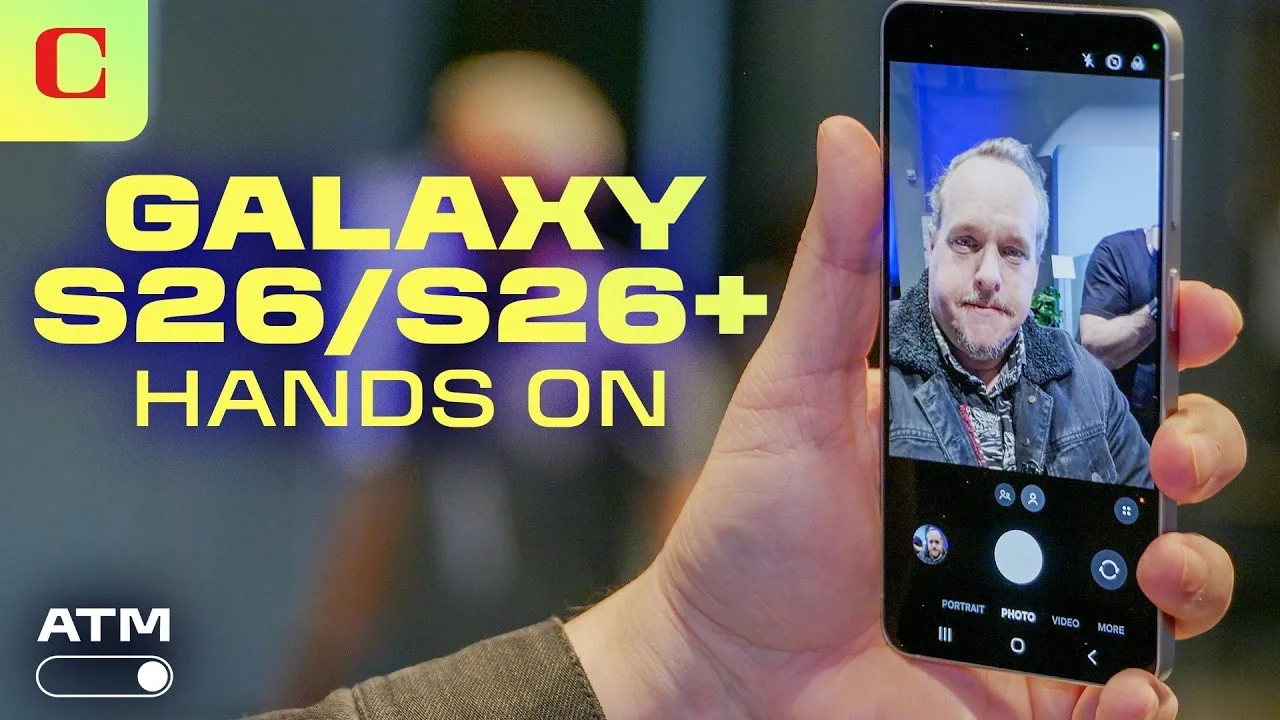
Samsung officially unveiled its latest flagship smartphone lineup, the Galaxy S26 series, introducing significant price increases alongside deep integration of third-generation Galaxy AI. The new S26 and S26 Plus models feature hardware refinements and a custom Snapdragon 8 Elite Gen 5 processor designed to prioritize automated tasks and advanced computational photography. While the devices offer enhanced functionality, including native voice support for third-party apps like Uber, the price hike represents a notable shift in Samsung's market strategy.
Key Points
- The Galaxy S26 and S26 Plus both see a $100 price increase, starting at $900 and $1,100 respectively.
- Both devices utilize the Snapdragon 8 Elite Gen 5 for Galaxy, a chipset optimized specifically for on-device Galaxy AI performance.
- New Automated App Action features allow users to execute complex tasks in third-party applications, such as ordering an Uber, using only voice commands.
- The base Galaxy S26 features a larger 6.3-inch display and an expanded 4,300 mAh battery.
- Samsung opted to omit internal magnets for accessories to maintain a thinner chassis design, relying instead on specialized cases for magnetic support.
Pricing Strategy and Hardware Evolution
The most immediate change for the 2024 lineup is the cost of entry. Samsung has raised the MSRP for the base S26 to $900 and the S26 Plus to $1,100, marking a $100 jump over the previous generation. While the S26 Ultra remains the premium tier, the S26 Plus now sits just $200 below the flagship Ultra model. Industry analysts are weighing whether this increase is driven by rising component costs, such as increased RAM requirements for AI, or external economic factors like trade tariffs.
Physically, the base Galaxy S26 has grown to accommodate a 6.3-inch screen, up from the 6.2-inch panel found on the S25. This change results in a slightly taller and wider footprint, which Samsung leverages to include a larger 4,300 mAh battery. The S26 Plus maintains the same dimensions as its predecessor but shares the new unified design language and color palette, which includes Cobalt Violet, White, Sky Blue, and Black.
"AI is all over the place," a Samsung representative stated during a briefing regarding the deep integration of machine learning across the hardware and software stack.
Third-Generation Galaxy AI and Software Capabilities
Samsung is positioning the S26 series as a "mobile-first" AI powerhouse. The Snapdragon 8 Elite Gen 5 for Galaxy is the engine behind these capabilities, enabling the new Automated App Action system. This feature moves beyond simple voice commands by interacting directly with third-party software. During hands-on demonstrations with All Things Mobile, the device successfully processed the command "Get me an Uber to San Francisco Airport" without requiring the user to manually navigate the application.
Advanced Imaging and Computational Tools
While the physical camera hardware remains consistent with the S25—comprising a 50-megapixel wide, 13-megapixel ultra-wide, and 10-megapixel 3X telephoto lens—the software experience has been overhauled. Key features include:
- Advanced Selfie: Utilizes machine learning to optimize skin tones, textures, and complexions in challenging lighting environments.
- Photo Assist: A generative AI tool that allows users to add or modify elements in an image, such as adding clothing or objects, via text prompts.
- Horizontal Lock: A video stabilization feature that maintains a level horizon even if the camera is rotated 360 degrees.
Market Impact and Design Choices
Despite the push for high-tech features, Samsung made specific trade-offs regarding hardware utility. Most notably, the S26 series lacks integrated magnets for mounting accessories—a feature increasingly common in the flagship market. Samsung representatives indicated that this was a deliberate choice to maintain the phone's thin profile. Users seeking magnetic compatibility for wallets or stands will need to purchase specific Samsung-branded cases.
The success of the Galaxy S26 and S26 Plus will likely depend on whether consumers find the third-generation Galaxy AI conveniences valuable enough to justify the higher price point. As the devices head toward retail availability, the focus shifts to real-world battery performance under heavy AI workloads and the broader adoption of Automated App Actions by third-party developers.