Table of Contents
The latest showcase at the Consumer Electronics Show (CES) marked a pivotal shift in the robotics industry, moving from experimental prototypes to polished, commercially viable humanoid products. Industry leaders and experts report that while physical logistics and movement challenges have been largely solved, the focus is now shifting toward social interaction and open software ecosystems to drive mass adoption in homes and healthcare facilities.
Key Points
- Rapid Maturation: Robots have evolved from "janky" experiments with visible wiring to refined products ready for workplace and home integration.
- Software Divide: While logistical tasks like "pick and place" are effectively solved, social robotics remains the primary technological frontier.
- Healthcare Impact: Humanoid robots are showing unexpected efficacy in elderly care, with patients forming significant emotional bonds with the machines.
- Open Ecosystems: Companies like OpenMind are advocating for an open-platform model similar to smartphones, allowing developers to build specific skills for general-purpose hardware.
From Science Experiment to Commercial Product
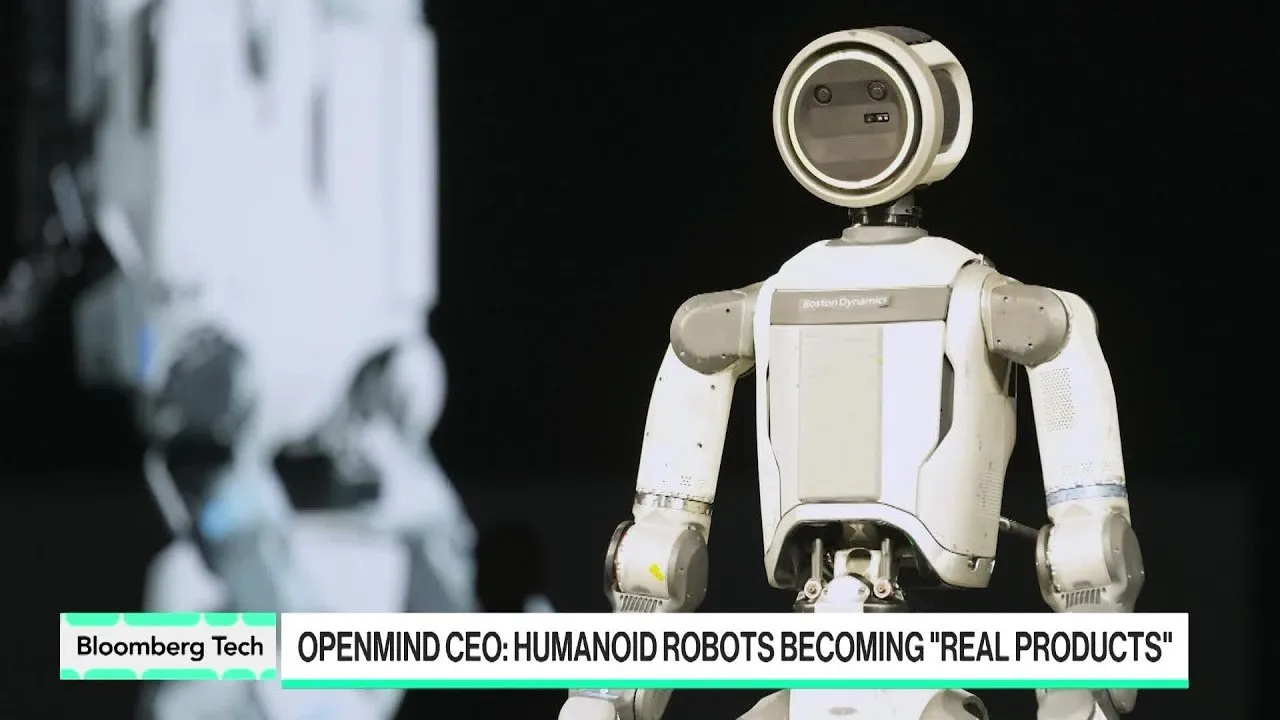
The improved fidelity of humanoid robots was a dominant theme at this year's CES. Interest in the sector has surged, evidenced by two-hour wait times to view Boston Dynamics' latest Atlas model. According to industry insiders, the visual and functional gap between prototypes and products has closed dramatically in recent years.
Experts noted that previous iterations of these machines were often characterized by wobbliness and exposed wiring—essentially science experiments on display. Today, however, manufacturers are presenting vertically integrated units that appear ready for immediate deployment in human-centric environments.
"It's really fascinating to see just how quickly humanoids are turning into a real product. instead of them being science experiments, they look like real things that you might want to have in your home or in your workplace."
The Software Frontier and Infrastructure Compatibility
While the hardware has advanced, the software governing these machines is becoming the critical differentiator. Industry analysis suggests that logistical challenges, such as moving boxes in a warehouse, are effectively "solved" problems, citing Amazon's deployment of over 1.1 million robots as proof of concept.
The current debate centers on the necessity of the humanoid form factor. Proponents argue that because human infrastructure—stairs, door handles, and light switches—is built for the human body, bipedal robots are the most efficient vessels for navigating these spaces without retrofitting environments.
However, the cognitive aspect remains a hurdle. While a robot can easily stack shelves, "social robotics"—machines capable of teaching children or caring for parents—requires a level of interaction, humor, and responsiveness that is difficult to program. This has led to a split in the market: hardware-focused companies are increasingly partnering with software specialists to bridge this gap.
Unexpected Emotional Bonds in Healthcare
One of the most profound, albeit controversial, applications for this technology is in the care of the elderly. Despite initial skepticism regarding the "dystopian" nature of robotic care, early deployments in memory care facilities in San Francisco and Australia have revealed deep human-machine engagement.
Reports from these facilities indicate that residents, often starved of human interaction, are forming genuine emotional attachments to the robots. This phenomenon has validated the potential of humanoids to address the massive labor shortages in the care sector.
"The stories they tell are heartbreaking... nurses now have to clean the head of the humanoid every evening because the patients will kiss the humanoid. For many people that are starved of human interaction, they get so attached... their eyes light up and they laugh."
The "App Store" Model for Robotics
Looking ahead, the business model for robotics is beginning to mirror the smartphone industry. Rather than selling "magic black boxes" with fixed capabilities, software developers are pushing for open platforms. This approach allows third-party developers to create "skills" or apps for the robots, accelerating their utility and versatility.
By treating the robot as an open platform, the industry aims to democratize development, ensuring that a single hardware unit can be programmed for diverse tasks—from flipping burgers to teaching mathematics—simply by updating its software package. This shift toward an open ecosystem suggests a future where the utility of a robot is defined not by its manufacturer, but by the global developer community.
![URGENT: This Next Market Rotation Will Go Parabolic! [& It’ll Be Quick]](/content/images/size/w1304/format/webp/2026/03/market-rotation-parabolic-shift-forecast.jpg)