Table of Contents
The Era of "Vibe Coding" and the Shifting Software Landscape
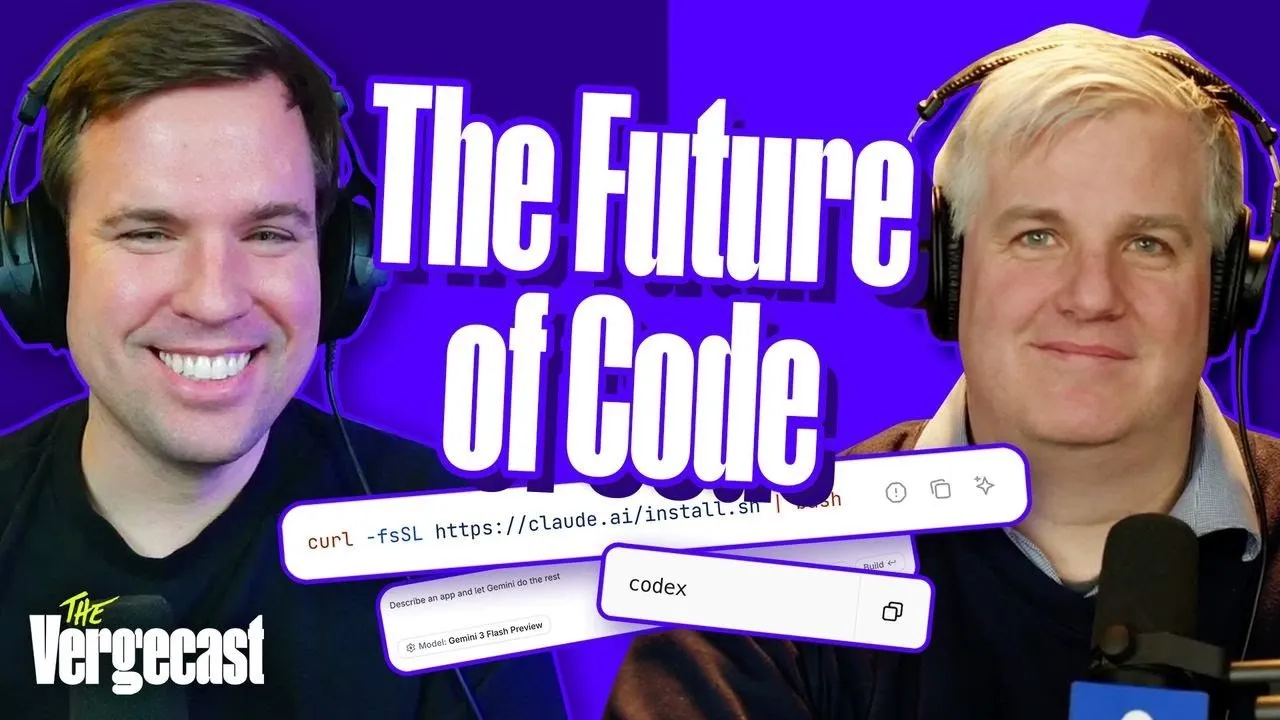
The definition of software development is undergoing a rapid, and for some, unsettling, transformation. As AI-powered tools become increasingly capable of generating and managing complex codebases, longtime tech observers and industry experts are grappling with the reality that building custom applications is becoming accessible to a wider audience than ever before. This shift, often described as "vibe coding"—the practice of using natural language prompts to guide AI agents through software development tasks—marks a departure from the traditional, highly specialized engineering workflows that have dominated the industry for decades.
Key Points
- Accessibility vs. Displacement: AI tools like Claude Code are lowering the barrier to entry for building complex software, allowing individuals to construct personalized solutions without deep technical expertise.
- The Productization of LLMs: Experts note that the true "AI moment" arrived when companies began building sophisticated software wrappers around existing models to manage prompts and file structures, moving AI beyond mere novelty.
- Professional Anxiety: The automation of rote coding tasks creates existential concerns for software professionals who built careers on specialized skills that are now increasingly susceptible to automation.
- The "Hardware Gap": While the U.S. market remains the global standard for mainstream devices, consumers are increasingly missing out on innovative hardware features—particularly in camera sensor technology and foldable design—that are currently exclusive to international markets.
The Disruption of Software Development
For decades, the path to software development required rigorous study and years of experience. However, tools that integrate directly with existing file structures have fundamentally changed the equation. According to Paul Ford, a veteran tech writer and software business owner, this evolution is less about a single "AGI" (Artificial General Intelligence) milestone and more about the maturation of software products built atop large language models.
"It was them saying, 'Okay, this is how this works and we're going to make this thing better.' The reality is we can get so much value out of it if we just put all this code on top of it that manages it for you... and now suddenly stuff is kind of happening in a more structured way than we used to be able to do before." — Paul Ford
The implications are twofold. On one hand, individuals can finally build the custom tools they have always wanted—such as specialized content management systems or productivity apps—without being forced into restrictive, pre-packaged ecosystems. On the other hand, this ease of development poses a challenge to the traditional tech labor market. Experts argue that the industry is at a crossroads, balancing the democratizing potential of AI against the genuine economic risk to professionals who built their careers on the assumption that specific technical certifications were "safe bets."
The Global Smartphone Divide
While software is becoming more fluid, the hardware market remains starkly bifurcated. At the recent Mobile World Congress, a recurring theme was the significant gap between the smartphones available in the U.S. and those dominating international markets. While U.S. consumers prioritize Apple and Samsung, international brands like Vivo, Oppo, and Honor are pushing the boundaries of what a mobile device can physically achieve, specifically in camera technology.
The focus abroad has shifted toward one-inch sensors and advanced telephoto lenses that provide a more natural, professional depth-of-field without relying solely on algorithmic processing. These "Ultra" models often prioritize performance over aesthetics, resulting in bulkier, more utilitarian designs that U.S. manufacturers—constrained by a design-first, mainstream-focused market—have been hesitant to adopt.
What's Next for Tech Consumers
As the "vibe coding" trend continues to mature, we are likely to see a transition from generalist AI chat tools to domain-specific platforms. Future developments may include "runtimes" that allow hobbyists to program specialized hardware, such as synthesizers or guitar pedals, using natural language. For the average consumer, this means that while the underlying technology of the devices we carry is becoming increasingly "intelligent," the most significant improvements may not be digital, but the result of hardware manufacturers finally embracing the physical components—like larger sensors—that truly move the needle on quality.
Moving forward, the industry faces an "ugly wrestling match" between the convenience of AI-driven automation and the social and economic consequences of that shift. Whether society chooses to embrace these tools for personal productivity or seek stricter regulatory guardrails, the genie is, by all accounts, out of the bottle.