Table of Contents
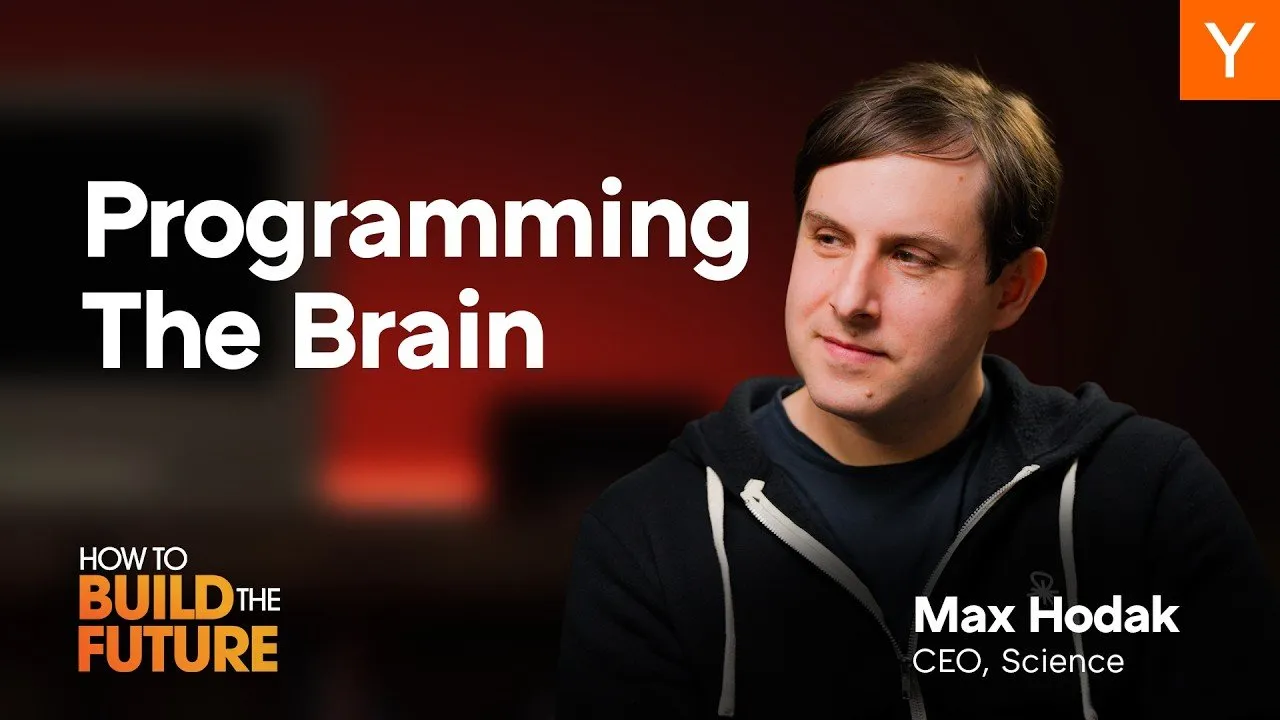
We are currently witnessing a historic shift in human capability. While biotechnology has historically been defined by incremental, often stagnant progress, the emergence of advanced brain-computer interfaces (BCIs) suggests that we have entered a "takeoff era." Max Hodak, co-founder of Neuralink and founder of Science, believes we are moving toward a future where the integration of biology and technology will redefine the human condition—potentially enabling us to treat previously intractable conditions and expand the limits of consciousness itself.
Key Takeaways
- Beyond Restoration: While current BCI applications focus on restoring lost functions like sight, hearing, and motor control, the future lies in structural neural engineering and cognitive enhancement.
- The Power of Neuroplasticity: The adult brain remains remarkably plastic. By providing the correct feedback loops, BCIs can effectively "teach" the brain to interpret new sensory data, turning artificial signals into coherent reality.
- Biohybrid Innovation: Science’s approach utilizes "hypoimmunogenic" stem cell-derived neurons, allowing for a biological interface that avoids the complications of traditional, purely electrical hardware.
- The AI/Neuroscience Unification: Insights from artificial intelligence are fundamentally changing how we understand the brain, revealing that neural representations and latent spaces in AI models share deep architectural parallels.
The Dawn of Neural Engineering
For decades, BCIs were largely experimental or limited to rudimentary signals. Today, the focus has shifted from simple electrical stimulation—which often resulted in disorganized "flashes" of light—to sophisticated neural integration. Science recently achieved a breakthrough with a retinal prosthesis that restores form vision in patients, marking the first time a device has allowed users to assemble disparate signals into a coherent image in the mind's eye.
Reframing Medicine
Hodak argues that humanity is fundamentally better at engineering systems than it is at drug discovery. Traditional medicine often involves a decade-long cycle of trial and error to find a single effective drug. In contrast, neural engineering treats the brain as an information-processing system. By tapping into the established "API" of the cranial nerves, we can bypass damaged areas entirely, whether the goal is to restore sight or address neurological conditions like depression or addiction.
The brain is a computer... It gets information down one of 12 cranial nerves or 31 spinal. All of the information that flows in or out of the brain goes through a small number of cables.
The Mechanics of Biohybrid Interfaces
One of the most ambitious projects at Science involves "biohybrid" interfaces. Rather than solely relying on metallic electrodes, which face long-term compatibility issues, the team is developing grafts using engineered neurons. These neurons act as a bridge between the biological brain and digital systems.
Solving the Immune Problem
A critical barrier to brain implants has always been the body's immune response. By developing hypoimmunogenic stem cells, Science can create standardized neural grafts that do not require patient-specific manufacturing. This innovation allows the device to integrate seamlessly with the brain, effectively creating a "new cranial nerve" capable of high-bandwidth communication with external machines.
Neuroplasticity and the "World Model"
The human brain is an active prediction machine, constantly generating a world model. When a patient is blind, the brain turns up the gain on its internal noise, leading to phantom perceptions. During rehabilitation, the goal is not just to feed data to the brain, but to teach the brain to interpret it. The brain is surprisingly adept at this; when given consistent feedback, the visual cortex can learn to associate specific digital signals with real-world objects in a matter of hours.
The brain stays way more plastic throughout life and adulthood than I think is widely appreciated.
The Future of Consciousness and Connectivity
Looking toward 2035, the trajectory of BCIs moves beyond mere restoration into the realm of human enhancement. If we can understand the physical basis of consciousness through high-bandwidth neural interfaces, we may eventually achieve a state where humans can interface directly with superintelligent machines. This is not just a story about gadgets; it is a story about the fundamental evolution of our species.
A Shift in Human Potential
As we integrate these technologies, we begin to challenge the limitations of biological aging and cognitive decay. By re-imagining the human body as a modular system where input and output can be upgraded or restored, the "limitations" of biology become engineering problems to be solved. Whether through improved motor control, sensory restoration, or advanced brain-to-brain communication, we are rapidly approaching a threshold where the line between natural and artificial intelligence will blur permanently.
The transition we are experiencing today is comparable to the Industrial Revolution—a period where life changed so fundamentally that those living through it could not have predicted the world of the following century. As we stand at this event horizon, the potential for BCI technology to reshape health, communication, and the very nature of human consciousness is immense. We are no longer just observing the evolution of our biology; we are beginning to direct it.