Table of Contents
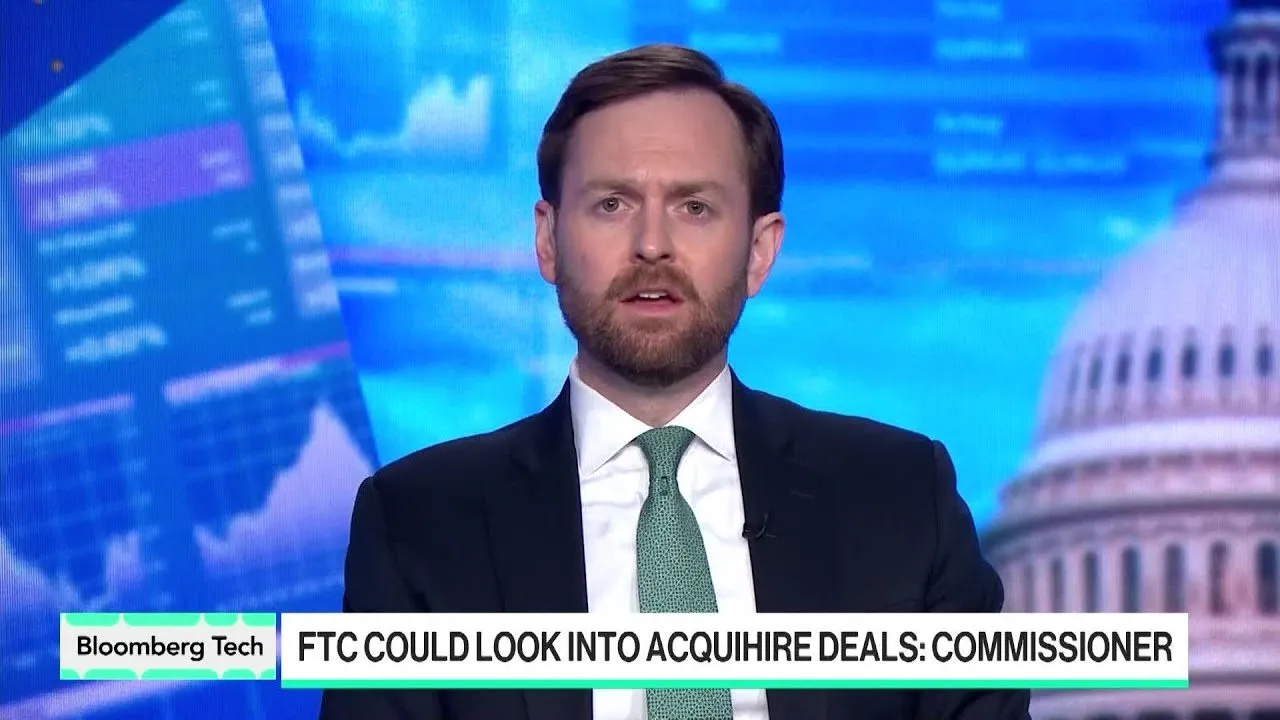
Federal Trade Commission (FTC) Chairman Andrew Ferguson has issued a stern warning to Silicon Valley regarding "acquihires," signaling that the agency is launching a targeted examination of talent-focused acquisitions designed to bypass federal antitrust review. In a wide-ranging interview with Bloomberg, Ferguson emphasized that while the current administration intends to offer a faster, fairer review process than its predecessors, it will vigorously enforce laws against transaction structures intended to evade the Hart-Scott-Rodino (HSR) Act.
Key Points
- Regulatory Crackdown: The FTC is investigating "acquihires"—particularly in the AI sector—to determine if they are being structured specifically to avoid HSR pre-merger review.
- Policy Shift: Ferguson promised a departure from the previous administration's strategy, offering companies a "fair shake" where legal deals are cleared quickly and illegal ones face immediate litigation.
- AI Enforcement: The agency is hiring specialists to enforce the "Take It Down Act," new legislation requiring platforms to remove non-consensual deepfake imagery starting this spring.
- Leadership Stability: Ferguson dispelled rumors of a transfer to the Department of Justice, confirming he intends to remain at the FTC to focus on fraud and competition.
Scrutinizing the "Acquihire" Loophole
The practice of "acquihires"—buying a company primarily for its talent rather than its products—has long been a staple of the startup ecosystem. However, Ferguson noted that the scale of these transactions has shifted dramatically, moving from small startup exits to multi-billion dollar deals, particularly within the artificial intelligence sector.
The FTC's primary concern is whether companies are structuring these deals as hiring and intellectual property licensing agreements to circumvent the HSR Act, which mandates reporting large mergers to antitrust authorities. Ferguson acknowledged that under the Biden administration, companies utilized these "clever workarounds" because they believed regulators were attempting to block all consolidation regardless of merit.
"We don't need clever workarounds around antitrust review anymore because at the FTC under the Trump administration, you get a fair shake... If your deal is not illegal, we get out of the way and sort of let the market take care of things."
Despite this pro-business shift, Ferguson made it clear that evasion of the law would not be tolerated. He cited specific provisions in the HSR Act that prohibit structuring deals to escape review. While the FTC does not intend to create new "one-size-fits-all" rules, it is examining current deals to understand when a talent acquisition effectively becomes a transfer of assets or stock that triggers statutory requirements.
The AI Factor
The scrutiny comes amidst a wave of high-profile moves in the AI industry. While Ferguson declined to comment on specific investigations, the interviewer noted recent complex transactions, such as the arrangement between Nvidia and Grok, which involved hiring engineers and licensing technology valued at nearly $20 billion.
Ferguson confirmed that the agency has observed several such structures in the AI space over the last 12 months. The concern arises when the price attached to talent and IP licensing reaches the billions, effectively mimicking a merger without the regulatory filing.
"It is important to us to make sure that people aren't going to use clever deal structures to get around pre-merger review... If your deal is legal, I will get out of your way very quickly. And if it's not, I'll take you to court and I'll fight to win there."
New Powers to Combat Deepfakes
Beyond antitrust concerns, Ferguson highlighted the FTC's expanding role in consumer protection regarding artificial intelligence. He pointed to the "Take It Down Act," legislation signed in spring 2024 designed to protect individuals from non-consensual, artificially generated intimate images.
While the Department of Justice enforces the criminal components of the law, the FTC is tasked with compelling platforms to remove such content. This authority is set to take effect in the spring of 2025. Ferguson stated the agency is currently coordinating with the Department of Homeland Security and hiring IT experts and prosecutors to prepare for immediate enforcement.
"I don't care what kind of company you are. If you are a platform, whether you're a legacy social media company, a burgeoning AI company, I don't care. If you are violating the Take It Down Act, you are going to hear from us and we are going to be ready to do it."
Economic Focus and Commission Composition
Addressing broader economic concerns, Ferguson reiterated the FTC’s commitment to lowering consumer prices through competition enforcement. He cited recent actions in the healthcare and housing sectors—specifically regarding industrial adhesives—and the agency's ongoing lawsuit against Ticketmaster regarding alleged price inflation.
Ferguson also voiced strong support for President Trump’s nomination of David McNeil to the commission. Addressing concerns about McNeil’s lack of legal or antitrust experience, Ferguson argued that Washington has "too many lawyers" and praised McNeil’s background as a job creator and manufacturing proponent.
Finally, Ferguson addressed speculation regarding his own career, definitively rejecting rumors that he is being considered for a fraud role at the Department of Justice. He affirmed his commitment to his full-time role at the FTC, aiming to execute the administration's mandate on competition and consumer protection.
As the spring enforcement date for the Take It Down Act approaches and the FTC ramps up its review of complex AI deal structures, the technology sector should anticipate a regulatory environment that favors speed but demands strict adherence to statutory text.