Table of Contents
The boundaries of personal computing and digital media are undergoing a simultaneous transformation, driven by evolving hardware form factors and the aggressive fragmentation of streaming rights. On this week’s episode of The Vergecast, editors and industry analysts explored two distinct shifts: the viability of foldable phones replacing laptops for professional workflows, and the increasingly complex battle for dominance in live sports streaming involving tech giants like Google and Amazon.
Key Points
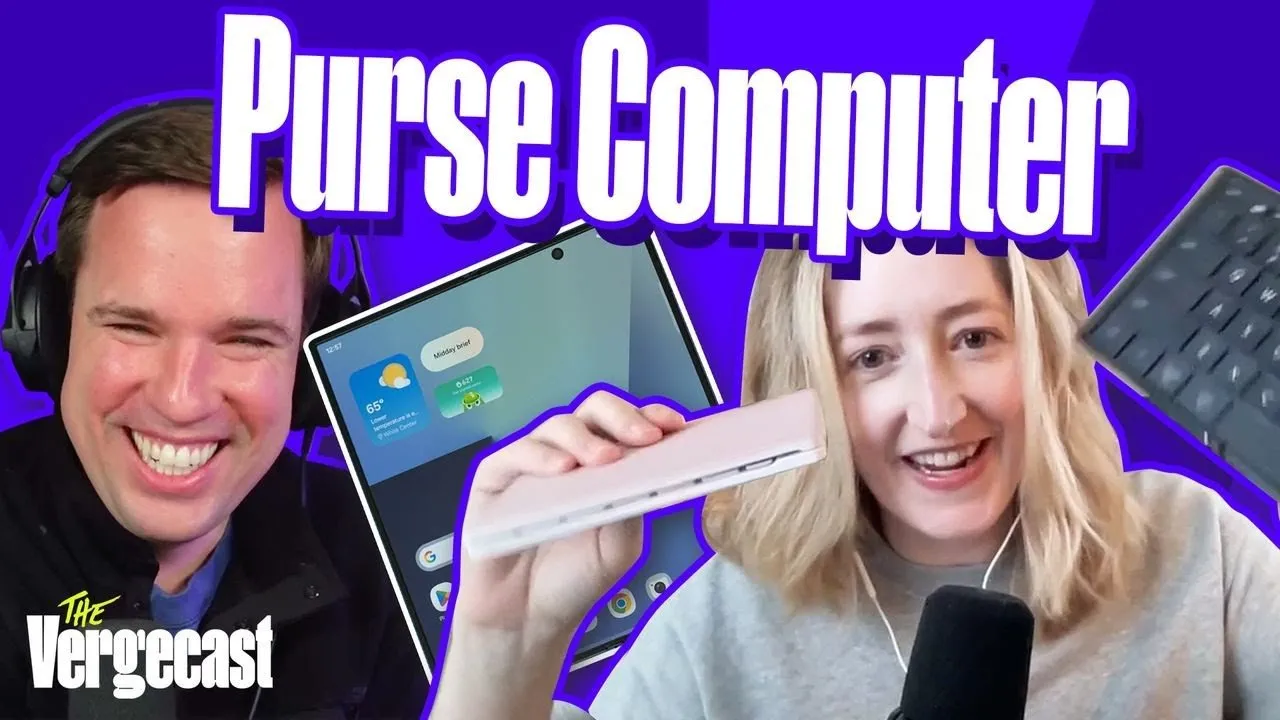
- Mobile Productivity: Verge senior reviewer Allison Johnson demonstrated that a Samsung Galaxy Z Fold 7 paired with a portable keyboard can successfully replace a laptop for 95% of daily work tasks.
- YouTube TV Strategy: The platform has launched granular sports and news packages to reduce subscriber churn following the end of the NFL season.
- Streaming Wars Evolution: The battle for broadcasting rights has shifted from "Cable vs. Streaming" to a high-stakes competition between tech platforms like Amazon, Netflix, and Google.
- Software Bottlenecks: Despite hardware advancements, Android’s tablet optimization remains the primary hurdle for foldable productivity.
The Rise of the "Purse Computer"
As smartphone screens grow larger and processors become more powerful, the industry has long chased the dream of a single device that serves as both phone and computer. According to recent testing by Verge senior reviewer Allison Johnson, that reality has largely arrived, provided users can navigate specific software hurdles.
Johnson conducted an experiment using the Samsung Galaxy Z Fold 7 paired with a Logitech Keys-To-Go keyboard. Dubbing the setup a "purse computer," she found that the 8-inch internal display was sufficient for running enterprise applications like Slack, WordPress, and web browsing.
The experiment revealed that the primary limitation is no longer hardware capability, but software design. While the device handles multitasking efficiently, many Android applications still force mobile interfaces onto tablet-sized screens. Johnson noted that bypassing apps in favor of desktop-mode browsers often yielded better results.
"There is so much more horsepower in this Z Fold 7 than the Chromebook I bought five years ago. It has an insanely good Wi-Fi and cellular chip. So many hardware problems are solved... but then you kind of get let down by the software and you're like, 'Oh, this is where the limitations are.'"
The psychological shift was as significant as the technical one. Moving from a laptop-centric workflow to a mobile-first setup changed the nature of remote work, allowing for a lighter, less encumbered experience that still met "minimum viable product" standards for professional output.
The Fragmented State of Sports Streaming
While mobile hardware converges, the landscape of live sports media is fracturing. Jacob Feldman, a reporter for Sportico, joined the program to analyze the post-Super Bowl state of streaming, highlighting significant strategic shifts from major players like YouTube and Amazon.
YouTube TV’s Anti-Churn Strategy
YouTube TV recently introduced flexible packaging options, allowing users to subscribe to sports or news bundles separately from the base plan. This move is strategically timed to combat the high cancellation rates that typically follow the Super Bowl.
By offering a sports-focused package at a slightly reduced rate—roughly $55 for new users—YouTube aims to retain subscribers through the NCAA "March Madness" tournament and the summer sports calendar. This leverage demonstrates YouTube's growing dominance in the live TV market, a position solidified during its recent carriage disputes with Disney.
Amazon as the Aggregator
Unlike YouTube TV, which seeks to replace the cable bundle entirely, Amazon is positioning Prime Video as an operating system for television. Amazon’s strategy relies on becoming the central hub through which consumers access other services, taking a percentage of subscriptions for partners like Paramount or Peacock.
"Amazon's model is... you're already coming to Amazon. And while you're coming here, you might as well buy Peacock from us. You might as well buy Paramount from us... We'll bundle it all together. We'll give you one interface with all your sports."
This approach addresses the "discovery problem" plaguing modern sports fans, who must currently navigate a labyrinth of apps to find specific games. Amazon aims to be the default interface, regardless of who holds the underlying rights.
Market Implications: The New Rights War
The sports broadcasting industry is entering a new phase of competition. Previously, the tension existed between legacy cable providers and upstart streamers. Today, the cable bundle is in terminal decline, and the war is being fought almost exclusively between streaming giants.
Netflix is increasingly entering the live sports arena, moving from docuseries like Drive to Survive to live events such as boxing and NFL Christmas games. The upcoming negotiation for NFL rights will likely be a bellwether event, determining whether tech companies will completely corner the market on premium sports content.
However, this fragmentation comes at a cost to the consumer. As rights split between Apple TV (MLS), Amazon (Thursday Night Football), Peacock (Olympics/NFL), and YouTube (Sunday Ticket), the friction of watching sports has increased. The industry is currently in a transition period where identifying where to watch a specific event requires significant effort, a problem the tech giants are racing to solve through aggregation.
What’s Next: AI and Form Factors
Looking forward, the evolution of mobile hardware may soon intersect with the boom in generative AI. Verge editor-at-large David Pierce argued that the flip phone form factor (such as the Motorola Razr Ultra) is ideally suited to become a dedicated AI wearable.
The concept suggests that when closed, a foldable device could function as a simple, voice-first AI interface—similar to the Humane AI Pin or Rabbit R1—while retaining the full capabilities of a smartphone when opened. This hybrid approach could bridge the gap between current smartphone utility and the experimental world of ambient computing without forcing consumers to buy entirely new categories of hardware.
As 2024 progresses, the industry expects further integration between hardware capabilities and streaming services, with platforms like YouTube and Amazon likely to exert more pressure on traditional media models.