Table of Contents
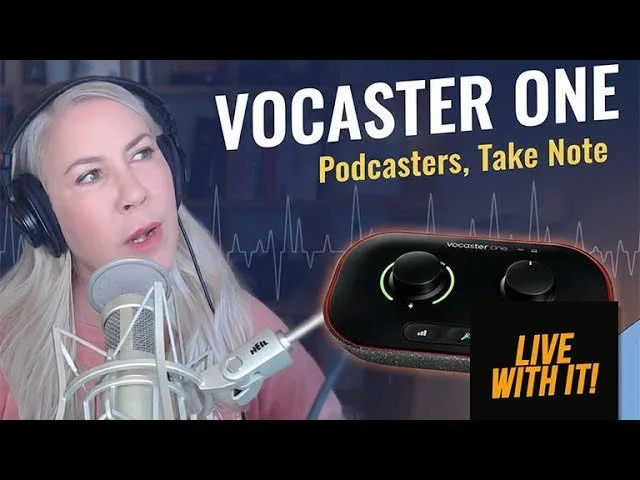
Focusrite has solidified its position in the entry-level audio market with the Vocaster One, a portable interface designed specifically for solo podcasters and content creators seeking a streamlined workflow. While originally launched at a higher price point, the device has emerged as a high-value solution for mobile recording setups, particularly when found at the $40 price mark, offering essential features like phantom power and automated voice presets without the complexity of professional music mixers.
Key Takeaways
- Target Audience: Designed exclusively for solo podcasters and voice artists, distinct from the music-centric Scarlett series.
- Price-to-Performance: Highly recommended at the roughly $40 price point, though value diminishes significantly at the original $150 MSRP.
- Portability: extremely compact, USB-C bus-powered design makes it ideal for travel and remote recording.
- Software Integration: Requires the Vocaster Hub app to unlock multi-channel routing and voice enhancement presets.
- Limitations: Single XLR input limits use to one person; plastic build quality and digital knobs reflect the budget categorization.
Market Positioning and Design
For years, Focusrite’s Scarlett series has been a staple for home audio, bridging the gap between instruments and computers. However, the Vocaster One represents a strategic pivot toward the booming creator economy. Unlike the Scarlett, which handles high-fidelity instrument recording, the Vocaster is engineered strictly for the human voice.
According to tech analyst Roger Chang, the device serves as a "turnkey" solution for beginners or traveling professionals who need an XLR-to-USB interface without the bulk of a full mixing board. Its form factor is notably smaller than even the most compact Scarlett interface, comparable in size to a modern smartphone, making it a viable alternative to ultra-portable dongles like the Shure X2U.
Technical Specifications and Performance
Despite its entry-level status, the Vocaster One includes several features typically reserved for more expensive hardware. The unit provides 48V phantom power, essential for operating professional condenser microphones. It is fully bus-powered via USB-C, eliminating the need for an external power brick, which enhances its utility for mobile users connecting to laptops.
Connectivity extends beyond a simple microphone input. The device features a 3.5mm TRRS input, allowing users to pipe in audio from a phone or tablet—useful for recording interviews or triggering sound effects directly into the mix. Additionally, a dedicated loopback feature facilitates streaming audio from the computer.
However, the hardware relies heavily on software integration. Chang noted that without installing the proprietary Vocaster Hub application, the device fails to separate internal audio channels properly.
"The Windows driver that comes installed will not see those other channels. So that means any audio that you speak will come through my mic and back out through to you... The only way to kind of actually control those individual channels is through the Voccaster app."
The software also provides access to four equalization presets—Radio, Clean, Warm, and Bright. While the device lacks discrete EQ knobs for fine-tuning mid, low, and high frequencies, these presets offer adequate sound shaping for most vocal applications.
Hardware Limitations and Build Quality
Prospective buyers must weigh the device's convenience against its physical limitations. The build quality reflects its budget-friendly pricing, utilizing a plastic chassis that feels less robust than the metal-bodied Scarlett series. Chang expressed concern regarding the longevity of the rear power button, suggesting it may not withstand years of heavy cycling compared to a mechanical toggle switch.
Furthermore, the control knobs are digital rather than analog potentiometers. This design choice results in a lack of tactile resistance and precision compared to professional mixers. Power delivery may also present a bottleneck; while sufficient for many standard microphones, the bus-powered unit may struggle to provide adequate gain for power-hungry dynamic microphones without an inline preamp.
Expert Analysis and Verdict
The value of the Vocaster One is inextricably linked to its current street price. At $150, the device faces stiff competition from more versatile interfaces. However, at the adjusted price of approximately $40, it represents a low-risk investment for beginners or professionals needing a backup travel rig.
"It is definitely bare bones, so don't expect too much out of it... But if you are getting into it and you have and you're just using borrowed mics... or as in my case, you actually need a portable solution... This is a pretty good solution."
For creators requiring a dual-microphone setup for in-person interviews, the Vocaster One’s single XLR input renders it unsuitable. In such cases, the Vocaster Two or a comprehensive mixer like the RØDECaster Pro would be necessary upgrades.
Future Outlook
As the podcasting hardware market becomes increasingly saturated, manufacturers like Focusrite are likely to continue segmenting their product lines to address specific niches. For the solo creator, the Vocaster One offers a functional, albeit imperfect, entry point. Users looking to expand their production capabilities in the future should anticipate upgrading to devices with multi-track recording and granular audio processing as their technical requirements grow.


![Bitcoin: An Unfortunate Pattern [Update]](/content/images/size/w1304/format/webp/2026/03/bitcoin-unfortunate-pattern-update.jpg)