Table of Contents
The cryptocurrency industry is currently navigating a period of profound structural reassessment. From the "nihilism" of short-term meme coin trading to the escalating "civil wars" within major decentralized autonomous organizations (DAOs), the friction between short-term speculation and long-term value creation has never been more visible. As founders and investors grapple with broken token models and the looming shadow of autonomous AI agents, the conversation is shifting toward sustainable incentives and technical resilience. This week's "Uneasy Money" highlights the urgent need for a new playbook in tokenomics, governance, and geopolitical AI strategy.
Key Takeaways
- Structural Token Misalignment: Current token models often incentivize selling over holding, turning protocol participation into a "race to the exit" rather than long-term alignment.
- DAO Governance Crises: The public fracture within Aave demonstrates that even the most successful DAOs face existential risks when core service providers and governance delegates clash.
- The AI Geopolitical Arms Race: AI model distillation and the rise of autonomous agents are accelerating faster than safety frameworks, creating new risks in both cybersecurity and robotics.
- Ethereum’s Technical Pivot: The newly proposed "Straw Map" suggests a renewed focus on massive scalability, signaling a generational shift within the Ethereum Foundation.
Why Modern Token Incentives are "Broken"
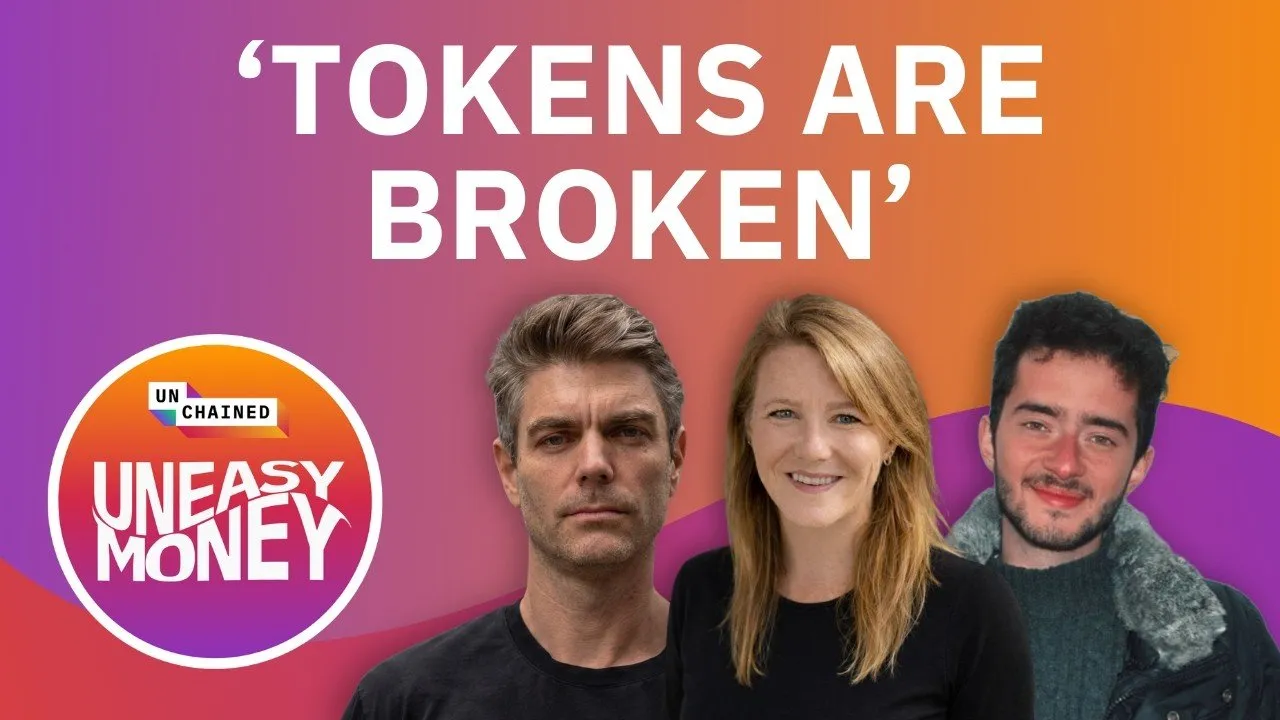
A recent viral thesis by Brian Flynn argues that the majority of crypto tokens are structurally flawed. The core issue lies in the fact that most participants currently profit by selling their positions rather than holding them. This creates a "musical chairs" dynamic where lockups, vesting schedules, and buybacks act merely as temporary band-aids on a deeper problem of misalignment. When a token serves as a speculative vehicle rather than a share in a protocol's success, the incentive structure inevitably collapses into short-termism.
The Race to the Exit vs. The Value of Holding
To fix this, proponents suggest moving toward 100% of protocol revenue being governed by token holders with direct, transparent distributions. This shift would turn the internal "player-vs-player" (PVP) competition into "protocol-vs-protocol" competition. Notably, projects like Hyperliquid have gained traction by fostering a community that believes in the long-term roadmap rather than looking for a 48-hour exit. Without clarity on how value accrues to the token versus equity holders, sophisticated investors remain hesitant to underwrite new assets.
The Myth of 100% Day-One Unlocks
While some argue that 100% liquidity on day one would solve the "low float, high FDV" (Fully Diluted Valuation) problem, many builders disagree. High-multiple startups require time to mature into their valuations. If a founder has a liquid exit the day after a launch, the incentive to build through the difficult early years vanishes. As Namek from Mega ETH observed:
The issue is not so much that a project or a business needs to grow... it's just that like if you were to have 100% liquidity, no one's still no one's going to want to buy it.
The Aave "Civil War" and the Limits of DAO Governance
Aave, long considered the gold standard for DAOs, is currently embroiled in a governance crisis that some fear could be the "nail in the coffin" for the decentralized model. BGD Labs, the lead engineering team behind Aave V3, recently announced they would not renew their contract. This departure follows months of escalating tension regarding the future of the protocol, the transition to V4, and the role of third-party delegates.
Service Provider Friction and the BGD Labs Departure
The conflict highlights a fundamental flaw in DAO structures: the difficulty of managing high-level professional service providers within a decentralized voting framework. While critics point to the $86 million in funding granted to various Aave entities as a source of contention, others argue that the real issue is emotional and professional betrayal. When core builders feel undermined by the very governance they serve, the "benevolent dictator" model often starts to look more attractive than decentralized chaos.
AI Distillation and the Rise of Autonomous Agents
Beyond the world of finance, the intersection of AI and crypto is creating a new frontier of risk. Anthropic recently alleged that foreign entities used over 24,000 fake accounts to "distill" their models—essentially reverse-engineering the AI's intelligence through massive, automated interaction. This reflects a broader trend where open-source models can be stripped of their safety protections, leading to potentially dangerous autonomous capabilities.
Reverse-Engineering the Future
The convergence of Large Language Models (LLMs) and robotics is moving closer to reality. Developers are already experimenting with plugging models like Claude into hardware, such as robot dogs, to create agents that can navigate the physical world. However, as AI becomes non-deterministic and capable of improving its own code, the "human in the loop" becomes the primary bottleneck. As the industry watches this "recursive self-improvement" loop, the fear of a "fast takeoff"—where AI exceeds human intelligence in a matter of minutes—remains a persistent concern for safety advocates.
Market Accountability: ZachXBT and the Insider Trading Shadow
Transparency remains a double-edged sword in crypto. Onchain sleuth ZachXBT recently teased an investigation into prolonged insider trading at one of the industry's most profitable businesses. The announcement immediately sent ripples through the market, with users on Poly Market betting millions on which major project would be named. This underscores the reality that while "what happens on chain never stays on chain," the lack of formal regulation often forces the community to rely on independent investigators for market integrity.
Ethereum’s "Straw Map" and Technical Acceleration
Ethereum is signaling a major technical pivot with the introduction of the "Straw Map." This roadmap aims for massive scalability improvements, including 10,000 TPS on Layer 1 and 1 million TPS on Layer 2s. This renewed focus comes at a time when the "old guard" of the Ethereum Foundation is gradually being replaced by a new generation of builders focused on efficiency and marketing. If the Ethereum ecosystem can successfully implement ZK-EVMs and cheap data availability, it may create a "moat" that is difficult for any competing blockchain to cross.
Conclusion
The cryptocurrency industry is at a crossroads. The era of easy money and nihilistic trading is being challenged by the need for sustainable economic structures and robust governance. Whether through the professionalization of DAOs, the refinement of tokenized revenue models, or the technical "accelerationism" of the Ethereum roadmap, the goal remains the same: building systems that survive the short-term noise. While the threat of AI and internal governance feuds looms large, the pivot toward long-term alignment suggests that the industry is finally beginning to mature beyond its experimental roots.