Table of Contents
As home theater technology continues to push the boundaries of scale and precision, consumers face increasingly complex decisions regarding display calibration, hardware logistics, and purchasing cycles. Recent industry analysis highlights the critical trade-offs between Filmmaker Mode and Movie Mode, the manufacturing constraints dictating OLED panel sizes, and the practical challenges of housing displays that now exceed 110 inches.
Key Points
- Filmmaker Mode provides the highest level of color and motion accuracy but often lacks the brightness necessary for well-lit environments.
- The industry standard for large-format OLED panels remains 83 inches due to "mother glass" manufacturing efficiencies, while 85-inch displays are typically reserved for Mini-LED technology.
- Purchasing previous-year flagship models, such as the Hisense U7N, remains a high-value strategy for gamers seeking 4K 120Hz performance on a budget.
- Integrated floor legs for massive 100-inch-plus TVs remain rare due to increased shipping costs and the logistical constraints they place on soundbar and media storage placement.
The Battle for Accuracy: Filmmaker vs. Movie Mode
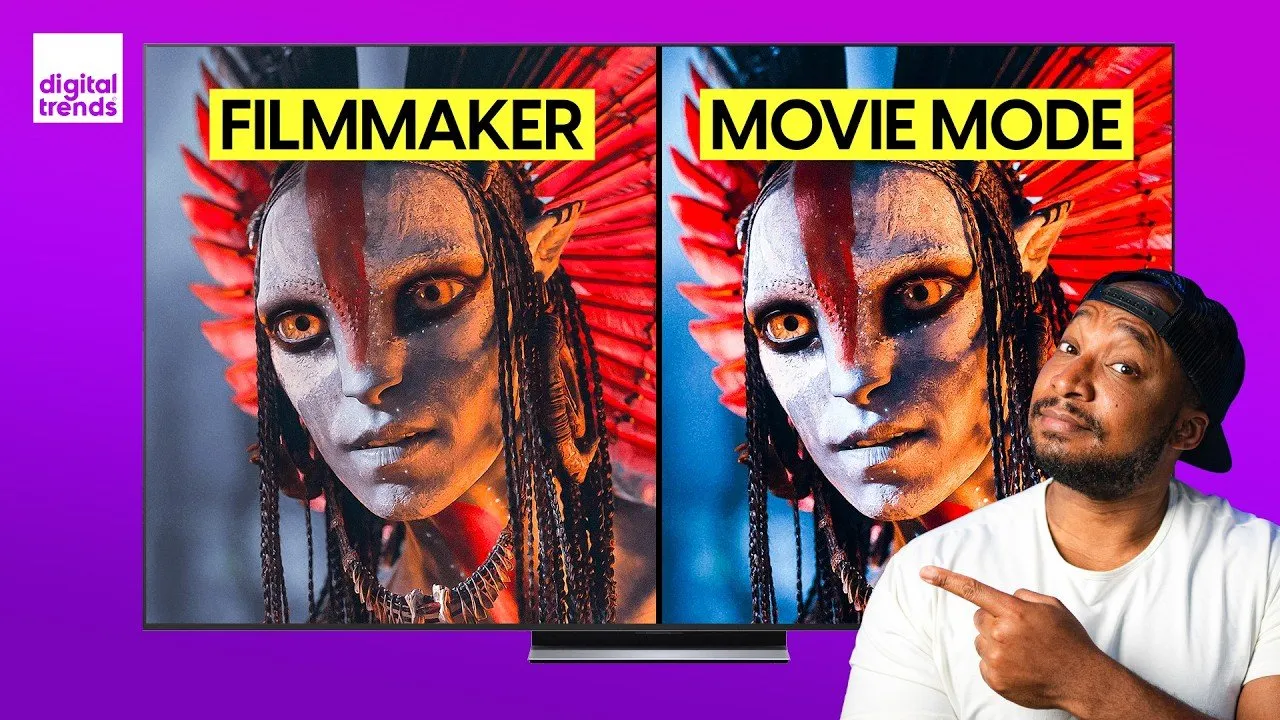
The introduction of Filmmaker Mode to brands like TCL has sparked a debate among enthusiasts regarding whether "accurate" always translates to "better." Technically, Filmmaker Mode is designed to replicate the director's intent by disabling motion smoothing, sharpening, and other artificial processing while maintaining precise color luminance.
However, the pursuit of a cinema-quality image often comes at the expense of peak brightness. In many viewing environments, particularly those with significant ambient light, the standardized Movie Mode may offer a superior experience. While slightly less "pure" than Filmmaker Mode, Movie Mode provides a brighter image while avoiding the oversaturation common in Standard or Vivid settings.
"If you're an absolute purist who wants to see the movie as intended, you'll find [Filmmaker Mode] better, but you may need the right conditions to find it enjoyable," says industry expert Caleb Denison. "It usually isn't as bright as movie mode and certainly not as bright as the other modes on the TV."
Logistical Challenges of Large-Format Displays
As displays like the 115-inch TCL QM891G and the 110-inch Hisense 110UX enter the consumer market, the physical requirements for supporting these massive units are evolving. While some users advocate for TVs to ship with 18-to-24-inch floor-standing legs, manufacturers face significant hurdles in implementation. Large legs increase production and shipping costs, and perhaps more importantly, they complicate the integration of home theater peripherals.
A floor-standing configuration often leaves no room for soundbars, gaming consoles, or physical media collections. Furthermore, the aesthetic impact of industrial-sized supports can be polarizing for functional living rooms. Current trends suggest that unless a display is too heavy for a traditional media console, manufacturers prefer configurations that allow for wall-mounting or placement on standard furniture to maximize versatility.
Manufacturing Realities of OLED Sizing
Consumers often wonder why high-end OLED panels are marketed at 83 inches rather than the 85-inch standard common in LCD and Mini-LED markets. This discrepancy is a result of manufacturing efficiency. High-end panels are cut from massive sheets of "mother glass." Cutting panels at 83 inches allows manufacturers to maximize the yield of the glass, leaving appropriate dimensions for smaller screens like tablets and smartphones without excessive waste.
Market Longevity and the Value of 2024 Models
In the rapid release cycle of consumer electronics, the urge to upgrade annually can lead to diminishing returns. For gamers specifically, 2024 models like the Hisense U7N remain highly relevant in 2025 and 2026. These displays already support the 4K 120Hz maximum output of the PlayStation 5 and Xbox Series X, making them a cost-effective alternative to newer, more expensive iterations.
The "sweet spot" for many buyers lies in identifying these late-cycle models as the next generation begins to hit showroom floors. By opting for a 2024 model during a clearance period, consumers can often secure flagship-level features at mid-range price points, provided they can still find remaining inventory.
Looking forward, the focus for major manufacturers is expected to shift toward further optimizing Micro-LED and Mini-LED brightness while attempting to bridge the gap between "purist" calibration and everyday usability. As Heat 2 prepares for production under director Michael Mann, the demand for displays that can handle high-contrast, cinematic visuals will only continue to grow.