
Table of Contents
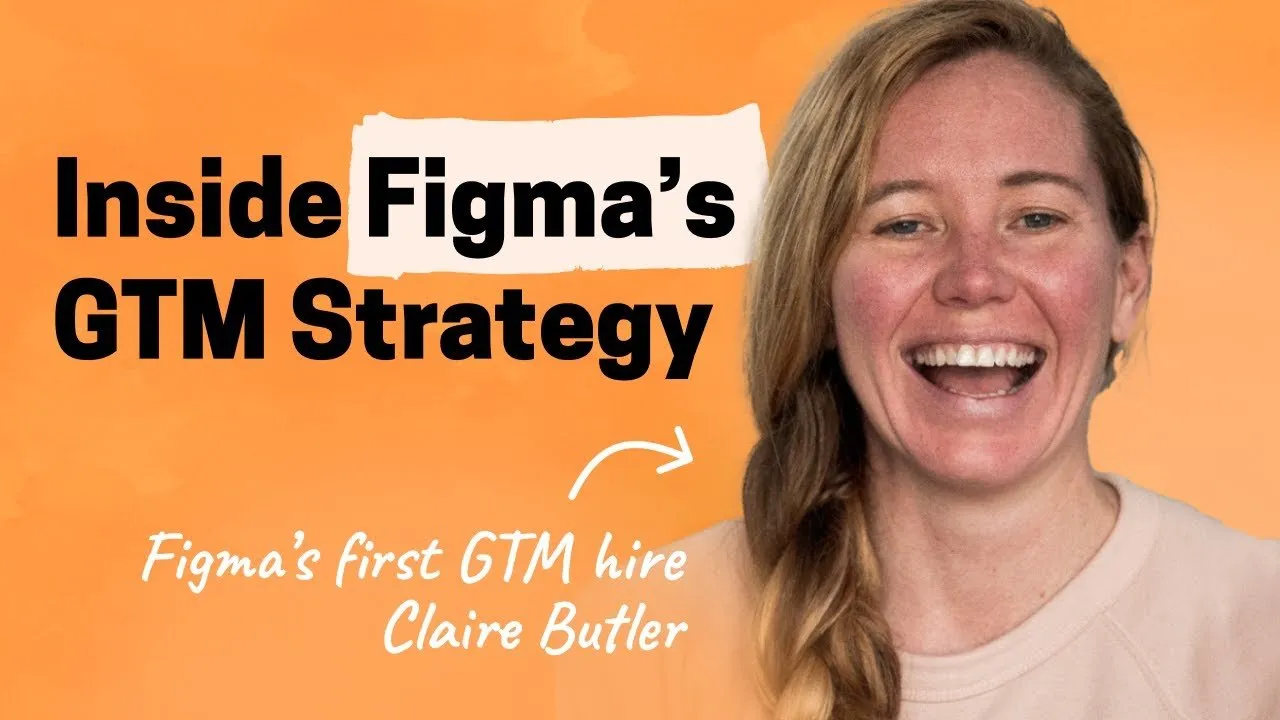
When Figma was still in stealth mode, the design world was fragmented, offline, and skeptical of browser-based tools. Today, Figma is the definitive case study for product-led growth, having fundamentally changed how software is built. Much of this success can be traced back to the strategies implemented by Claire Butler, Figma’s first go-to-market hire and current Senior Director of Marketing.
Butler joined Figma as employee number 10, tasked with marketing a product that hadn't yet launched. Over the last eight years, she helped architect a unique bottom-up growth motion that prioritized community, technical credibility, and radical transparency over traditional marketing tactics. The result was a product that didn't just sell to companies; it spread virally through them.
In this deep dive, we explore the specific mechanics of Figma’s go-to-market strategy, from their early days of fixing user laptops by hand to scaling a multi-billion dollar enterprise business.
Key Takeaways
- The Two-Part Motion: Figma’s strategy relies on two distinct phases: first, getting individual contributors (ICs) to love the product, and second, empowering those ICs to spread the tool throughout their organization.
- Credibility Over Marketing: Technical audiences reject fluff. Figma gained traction by hiring "Designer Advocates" and publishing engineering-heavy content rather than traditional product marketing.
- Pricing for Virality: Figma shifted its free tier strategy to allow unlimited collaborators, realizing that restricting collaboration killed the viral loop that fueled their growth.
- The "Tom Factor": Bringing technical experts into sales calls proved more effective than traditional sales tactics, bridging the gap between user needs and enterprise requirements.
- Turning Blockers into Wedges: Figma identified that the lack of "Design Systems" was a barrier to enterprise adoption, so they built features to own that workflow, eventually making it their primary upsell driver.
Phase One: Winning the Individual Contributor
Figma’s growth engine is built on a specific bottom-up philosophy. Before you can sell to an enterprise, you must secure the genuine love of the individual practitioner. For Figma, this meant winning over designers who were accustomed to desktop-based software like Sketch or Photoshop.
Building Technical Credibility
In the early days, the team recognized that designers possess a high "marketing detector." Standard buzzwords regarding efficiency and collaboration fell flat. To build trust, Figma ignored traditional marketing playbooks and focused entirely on craft and technical prowess.
Instead of hiring copywriters, Butler hired a Designer Advocate—a practitioner from the user base who loved the product. They produced content that explored the engineering challenges of building a design tool in the browser, such as the intricacies of Vector Networks and WebGL. This content signaled to the community that Figma understood the technical depth of their work.
Going Where the Users Are
Startups often make the mistake of trying to force communities to come to them. Figma took the opposite approach. Recognizing that the design conversation was already happening on Twitter, they built their presence there.
Founder Dylan Field built a scraper to analyze the "node graph" of the design community on Twitter, identifying clusters of influence—from iconographers to product designers. The team then engaged directly with these influencers, not to sell, but to solicit feedback. This turned potential critics into co-creators.
You can't optimize your way to product market fit. I don't care at the early stages if something's optimized by 5% from an email... that doesn't fundamentally tell me if something's working or not.
Doing Things That Don't Scale
To secure their initial user base, the team engaged in extreme "unscalable" activities. A notable example involved their first prospective user, a company called Coda. When Coda’s engineer couldn’t open a Figma file, it wasn't a support ticket; it was an emergency. Dylan Field drove his engineer down to Palo Alto to personally debug the user's MacBook on-site. This level of obsession was necessary to secure the first handful of teams that would eventually validate the product.
Phase Two: Operationalizing the Spread
Once individual designers loved the tool, the second phase of the strategy was enabling them to spread it across their organizations. This required removing friction and providing the right incentives for adoption.
Structuring the Free Tier for Growth
Pricing packaging is often treated as a financial decision, but at Figma, it was a growth lever. Initially, Figma’s starter team limit restricted the number of collaborators. They quickly realized this was a mistake. By restricting collaborators, they were choking their own viral loop.
They pivoted to a model where the "Starter" tier allowed for unlimited collaborators but limited the number of files. Furthermore, they made "viewers" free. This nuance was critical: it allowed designers to invite product managers, engineers, and marketers into files without friction. These free viewers became exposed to the product, eventually creating a network effect that made Figma the default operating system for the entire company.
Design Systems as the Enterprise Wedge
As usage spread, Figma encountered a barrier: large organizations needed robust Design Systems to maintain consistency at scale. Rather than viewing this as a hurdle, Figma turned it into their primary monetization lever.
They invested heavily in Design Systems features, turning a blocker into a feature set that justified upgrading from the Pro tier to the Organization tier. The people building Design Systems became internal champions. By empowering these champions with the tools they needed to govern design at scale, Figma gave them the ammunition to convince procurement and leadership to sign enterprise contracts.
The Secret Weapon: Designer Advocates
Perhaps the most unique element of Figma’s motion is the "Designer Advocate." This role sits at the intersection of marketing, product, and sales. It originated when the team realized that traditional account executives lacked the technical nuance to earn the respect of design teams.
The first experiment involved Tom Lowry, a power user who had organically implemented Figma at his previous company. When he joined sales calls, conversion rates spiked—a phenomenon the team dubbed "The Tom Factor."
Advocates are not salespeople; they do not carry quotas. Their job is to:
- Act as a peer to the prospect, speaking the language of design.
- Provide authentic feedback to the product team.
- Unblock technical objections during the evaluation process.
This role has since scaled into a global team, with specific advocates for different products (like FigJam and Dev Mode) and regions. They act as the "magic dust" that keeps the go-to-market motion authentic as the company scales.
Radical Transparency and Community Trust
Scaling a community-led product requires maintaining trust, even when things go wrong. Butler emphasizes that you cannot hide behind a corporate brand handle. This philosophy was tested during server outages and, most notably, during the Adobe acquisition announcement.
When the acquisition news broke, the community reaction was volatile. Rather than retreating to PR statements, the leadership team held a Twitter Space the very next day. They opened the floor to questions, allowing the community to vent, ask hard questions, and hear directly from the founders.
Even when it's like the highest stakes and the hardest thing, you still have to just be transparent... maintain that connection and not hide behind the brand.
This transparency extends to product development as well. Through initiatives like "Little Big Updates," Figma packages small quality-of-life fixes—often sourced directly from Twitter complaints—and launches them as a celebrated release. This reinforces the narrative that the company is listening and building alongside its users.
Conclusion
Figma’s rise from a stealth startup to a ubiquitous design platform wasn't an accident of timing; it was the result of a deliberate, two-part strategy. By obsessing over the individual contributor's experience and removing every barrier to collaboration, they built a flywheel where users became their most effective sales channel.
For founders and GTM leaders, the lesson is clear: authentic engagement, technical credibility, and enabling your champions often yield higher returns than traditional top-down marketing. As Butler summarizes regarding the long journey of building such a company: success ultimately comes down to "consistent pressure over time."



)