Table of Contents
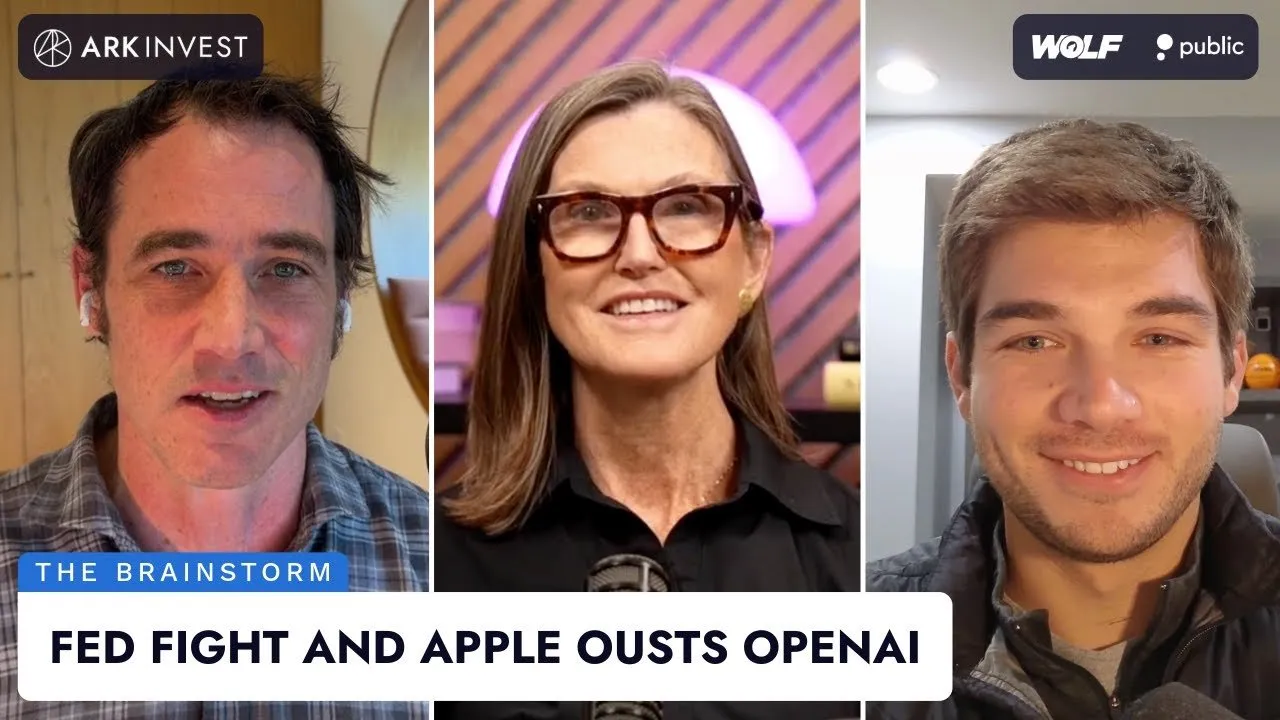
The intersection of macroeconomic policy and disruptive technology created a perfect storm of debate this week. From rumors regarding the independence of the Federal Reserve to paradigm-shifting partnerships in Silicon Valley, the landscape for investors is becoming increasingly complex. With significant political proposals on the horizon and major tech giants reshuffling their alliances, understanding the second-order effects of these moves is critical for navigating the current market environment.
In this analysis of The Brainstorm, we dissect the potential fallout from a rumored clash between the executive branch and the Fed, the hidden risks of capping credit card interest rates, and why Apple’s reliance on Google for AI might signal a deeper structural weakness in Cupertino.
Key Takeaways
- Fed Independence Under Pressure: Rumors of friction between the DOJ and Jerome Powell suggest a potential shift toward political influence over monetary policy, echoing the volatile inflationary period of the 1970s.
- The Airline Loyalty Risk: Proposals to cap credit card interest rates at 10% could inadvertently dismantle the loyalty reward programs that currently keep major US airlines profitable.
- Apple’s AI Concession: The breaking announcement that Apple will utilize Google’s Gemini models for Siri suggests Apple is prioritizing immediate utility over vertical integration, potentially weakening its long-term competitive moat.
- The ROI of Humanoid Robots: Despite high capital costs, the potential to replace labor expenses suggests the investment case for general-purpose robotics remains strong, with viable deployments expected by the late 2020s.
The Federal Reserve: Volatility and Political Independence
Recent news cycles have been dominated by reports suggesting heightened tension between the executive branch and Federal Reserve Chair Jerome Powell. The discussions surrounding potential Department of Justice inquiries or subpoenas have rattled institutional norms, raising questions about the future of central bank independence.
According to Cathie Wood, these political maneuvers are likely a reaction to recent election losses where affordability—specifically regarding housing and food—was a primary voter concern. While gas and grocery prices have stabilized, consumer sentiment remains soft. However, the introduction of political pressure into monetary policy introduces significant market risks.
Historical Parallels to the 1970s
The current friction draws uncomfortable parallels to the late 1970s, specifically the tenure of G. William Miller, who preceded Paul Volcker. Miller’s lack of focus on stabilizing the dollar contributed to a period where the U.S. economy began to resemble an emerging market, necessitating Volcker’s drastic interest rate hikes to tame double-digit inflation.
However, the economic backdrop today is fundamentally different. Unlike the cost-push inflation of the 1970s, current data suggests underlying inflation is effectively neutralized.
"If we're right, underlying inflation is probably under 2%. If you look at productivity, it was up more than 2%, taking unit labor costs down to 1.2% or 1.4%. That is what in the old days used to be considered underlying inflation."
The concern remains that increased transparency and frequent public commentary by Fed governors have inadvertently fueled high-frequency trading volatility rather than providing market clarity.
The Hidden Economics of Credit Card Rate Caps
One of the most disruptive policy proposals currently circulating is a federal cap on credit card interest rates at 10%. While politically popular as a tool to aid consumers facing 20%+ APRs, the structural fallout for the financial and travel industries could be profound.
The Threat to Airline Profitability
The most surprising victim of a credit card rate cap could be the airline industry. Loyalty and rewards programs are not merely value-adds for airlines; they are often the primary driver of operating income. Banks purchase miles and points from airlines to incentivize credit card spending. If interest rates are capped, the revenue model for card issuers breaks, leading to a devaluation or cancellation of these rewards programs.
Data regarding Delta Airlines illustrates the severity of this risk. In 2024, Delta’s operating margin with its loyalty program was approximately 10.5%. Without the loyalty program, that margin would plummet to -2.5%. This dependency is consistent across major carriers including United and American. A policy that dismantles the credit card rewards economy could effectively render major airlines unprofitable overnight.
The Rise of Alternative Lending
If traditional banks are forced to tighten underwriting standards due to capped rates, millions of consumers could lose access to credit cards. This vacuum would likely accelerate the adoption of alternative financial technologies:
- Buy Now, Pay Later (BNPL): Fintech platforms like Affirm, Klarna, and Block (Afterpay) offer transparent, fixed-payment structures that may replace revolving credit for everyday purchases.
- DeFi Lending: Decentralized finance protocols could step in to offer non-collateralized lending solutions that operate outside traditional banking regulations.
Apple, Google, and the "Devil You Know"
Breaking news confirms that Apple and Google have entered a multi-year collaboration to integrate Google’s Gemini models into the Apple ecosystem, specifically powering new features in Siri. While this partnership ensures Apple users get access to frontier-level AI, it raises strategic concerns about Apple’s ability to innovate internally.
A Sign of Weakness?
Critics argue that this move signals Apple is struggling to compete in the foundation model space. By outsourcing the intelligence layer of its operating system to a primary rival, Apple risks becoming a distribution channel for Google’s technology rather than a proprietary innovator. This mirrors the challenges seen with Microsoft’s Copilot, where bolting sophisticated AI onto legacy software suites has resulted in mixed user experiences.
"They just don't have taste anymore... The company seems to have lost its ability to curate. And I don't think that with the existing C-suite that is going to magically reappear now."
This partnership creates a duopoly dynamic—"two monopolies monopolizing the next generation of technology"—which may stifle new entrants like OpenAI. However, it also leaves Apple beholden to Google’s development cycle. If Gemini improves, Siri improves. If Gemini stagnates, Apple has no internal recourse.
The Capital Case for Humanoid Robots
The robotics sector continues to see massive capital inflows, exemplified by the recent unveiling of the 1X Neo humanoid robot. While the production value of these announcements is high, the economic logic driving the investment is becoming increasingly clear.
The return on invested capital (ROIC) potential for humanoid robots is staggering when compared to human labor costs over time. Even with a high upfront cost (e.g., $25,000 to $100,000 per unit), a robot that can operate for 24 hours a day offers a productivity multiple that dwarfs the cost of human labor, which can exceed $500,000 over a decade for similar tasks.
This massive total addressable market justifies the billions being spent on compute and hardware development today. While current demonstrations often rely on teleoperation (humans remotely controlling the robots to train the AI), the trajectory suggests fully autonomous, general-purpose humanoid robots could be viable products by the late 2020s.
Conclusion
We are currently navigating a period where traditional institutions and business models are being stress-tested. Whether it is the Federal Reserve grappling with political pressure, airlines facing the potential loss of their most profitable revenue stream, or Apple conceding ground in the AI arms race, the theme is disruption. For investors, the key lies in looking past the headlines to understand the structural shifts these changes will trigger in the global economy.