Table of Contents
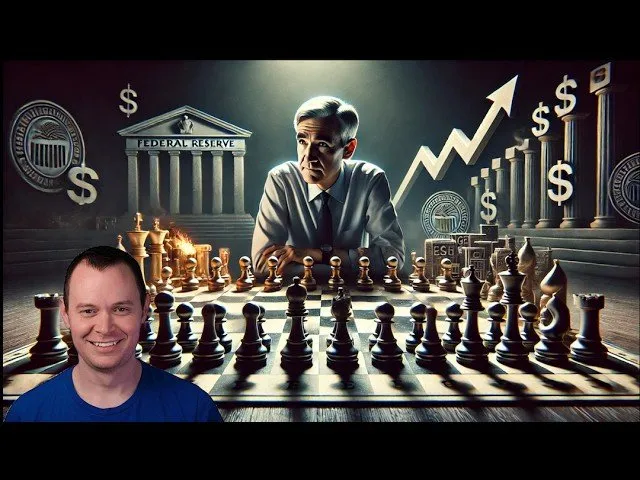
In chess, a single weakness is manageable; a player can shift resources to defend it. However, when an opponent forces a second vulnerability, the defense collapses, leading to checkmate. This dynamic is not limited to the chessboard—it is currently defining the modern business cycle. As the Federal Reserve struggles to balance a cooling labor market against persistent inflation, the economy finds itself in an increasingly precarious position.
Key Takeaways
- The Dual-Weakness Trap: The Fed can manage either high inflation or high unemployment, but it cannot simultaneously fight both without triggering a recessionary breakdown.
- Labor Market Deterioration: With non-farm payrolls showing minimal growth and job openings falling off a cliff, the buffer that kept the economy buoyant is evaporating.
- Energy Price Volatility: Rising oil prices act as a barrier to aggressive rate cuts, forcing the Fed to prioritize price stability over economic stimulus.
- Topping as a Process: Market peaks are rarely instantaneous. Historically, major indices and assets like Bitcoin often exhibit prolonged distribution phases before significant corrections.
The Dilemma of the Federal Reserve
For years, the Federal Reserve has navigated a narrow path to achieve a soft landing. By raising rates to quell inflation while attempting to keep employment stable, policymakers have effectively been flying the plane at a lower altitude. The challenge now is that the plane is still in the air, and the terrain below is becoming increasingly turbulent.
The Unemployment Indicator
Looking at non-farm payrolls through a historical lens reveals a stark reality. When the year-over-year change in the unemployment rate trends toward or below zero, recessions have historically followed. Current data shows the job market has barely added a fraction of the millions of jobs seen in pre-pandemic years. The excess capacity that provided investors with a false sense of security has largely vanished.
The Inflationary Friction
Even if the Fed wanted to pivot toward aggressive rate cuts to save the labor market, they are constrained by the volatility of energy prices. Oil, which represents a significant portion of the Consumer Price Index (CPI), can swing 30% to 50% in a single year.
The Fed can defend one weakness. If inflation is running hot, then they raise rates. If the unemployment rate is running hot, they lower rates. What do you do when they both go up? That is what leads the checkmate.
Distinguishing Business Cycles from Market Cycles
A common point of confusion for investors is the difference between short-term market fluctuations and the broader business cycle. Critics often point to years like 2014 or 2022 to argue that market downturns do not always equate to a business cycle collapse. However, those were smaller cycles occurring within the context of a larger, more structural economic cycle.
Visualizing the Bubble
Analytical tools, such as the ITC business cycle chart, demonstrate that we have been operating within a bubble environment. By comparing the S&P 500 against indicators like the unemployment rate, interest rates, and the money supply, it becomes clear that historical recessions served as the reset mechanism for these metrics. We have not yet hit that zero-point reset, implying the current cycle remains in its late, high-risk stage.
Understanding Market Distribution
Topping in major indices like the S&P 500 is a process, not an event. We often see prolonged periods of stagnation or minor rallies before a significant correction occurs. This is not just a stock market phenomenon; we have witnessed this same behavior in digital assets like Bitcoin during previous mid-term cycle years.
The Search for a Negative Feedback Loop
The economy has not yet entered a non-linear phase of recession. This is primarily because layoff numbers remain low, holding steady at near pre-pandemic levels. However, as job openings continue to crater and hires remain scarce, the likelihood of a negative feedback loop—where rising layoffs lead to decreased demand, causing further layoffs—increases significantly.
The problem is that the Fed is not their only weakness that they're trying to defend. They're also trying to defend price stability.
The Road Ahead: Preparing for Uncertainty
While some market commentators dismiss caution as mere pessimism, evidence suggests that the current environment is one of distribution. Whether the S&P 500 sees a minor 10% dip or a more substantial correction remains to be seen, but the structural indicators are flashing warnings that cannot be ignored indefinitely.
Investors should recognize that being bullish long-term—a strategy that involves consistent buying of index funds—does not preclude the necessity of preparing for cyclical downturns. Markets hate uncertainty, and with geopolitical tensions, rising energy costs, and a weakening labor market, uncertainty is currently the dominant theme. The Fed is essentially in check. Their next moves will determine if they can maneuver out of this position or if the economy is destined for a more painful resolution.