Table of Contents
Many of us navigate life with an internal, constant editor—a voice that filters our emotions and curates our expressions before they ever reach the outside world. This fear of judgment often creates a disconnect between who we truly are and how we show up in our relationships. Breaking that cycle requires more than just intellectual understanding; it demands a willingness to embrace vulnerability, even when it feels terrifying.
Key Takeaways
- Self-validation is foundational: Seeking external approval will never be sufficient if you are simultaneously denying your own worth through self-editing.
- The power of grief: Moving past the habit of self-judgment involves a genuine grieving process as you mourn the version of yourself that felt the need to hide.
- Flow over force: The path to connection isn't about solving an intellectual puzzle, but about allowing your natural, emotional flow to exist without suppression.
- Gratitude as an accelerator: Recognizing and being grateful for small moments of authenticity makes it easier to replicate those experiences in the future.
The Trap of Self-Judgment and Validation
Often, we believe our reluctance to approach others stems from a lack of "readiness" or simple hesitation. In reality, choosing not to connect—or choosing to hide parts of ourselves—is a subtle message we send to our own psyche. We are essentially telling ourselves that we are not worthy of the connection we desire. When you withhold your true self, you are prioritizing the potential for external judgment over your own internal integrity.
Recognizing the Internal Editor
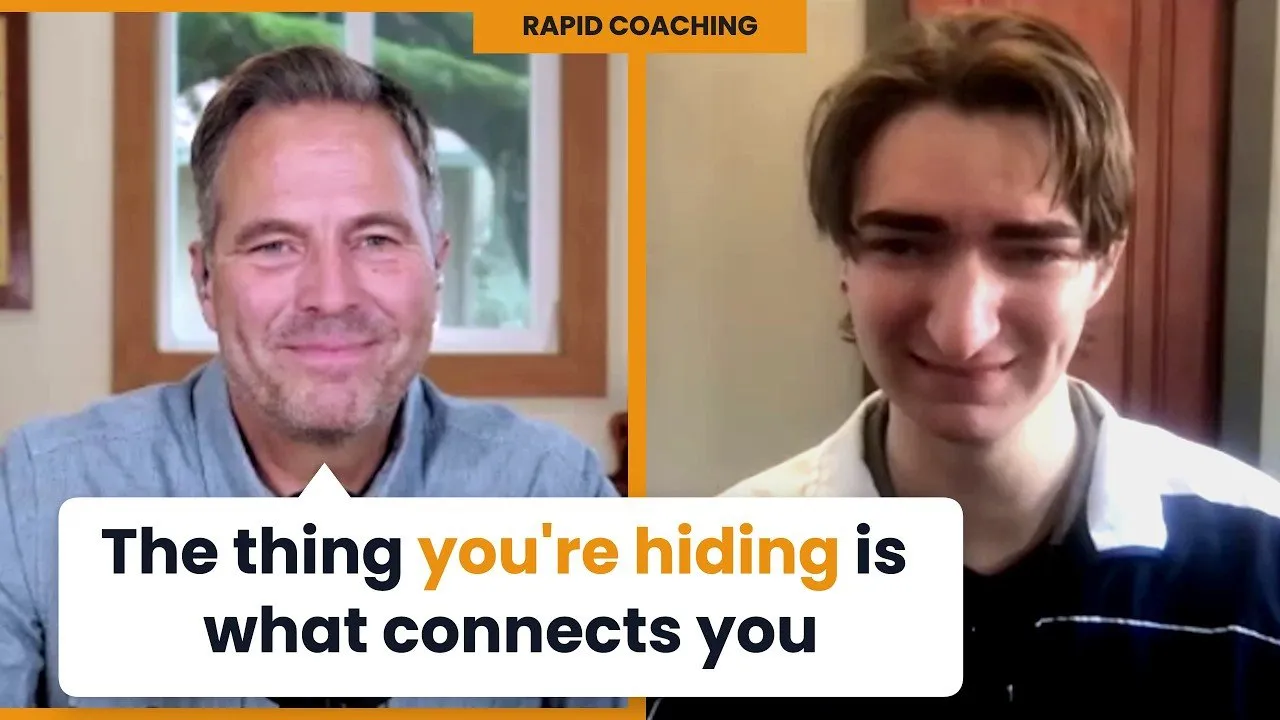
The "constant editor" operates on the assumption that if we show our true colors—whether that is sadness, intensity, or raw desire—we will be rejected. However, the most profound connections occur when we allow our internal state to be visible. As explored in the coaching session, the moments where you feel most "in flow" are the exact moments you are validating your own worth by being present.
"You're standing in yourself and saying, 'I am worthy of this.' And when you don't approach the woman, you're saying, 'I'm not worthy of this.'"
The Grieving Process of Letting Go
Moving away from a life of constant self-editing is not an overnight transformation. It is a process of mourning. You are effectively letting go of a survival mechanism that you likely developed long ago. This transition will involve peaks of intensity and periods of deep emotional release.
Navigating the Emotional Waves
Many people mistake this discomfort for failure. In truth, the emergence of heavy emotions—or the urge to cry when you feel vulnerable—is a sign of progress. It is the beginning of the end for the internal editor. By allowing yourself to feel the grief of having suppressed your true self for so long, you eventually reach a place where you can touch those parts of yourself without feeling the immediate need to hide or judge them.
Living with Pleasure and Intensity
When you stop blocking the natural flow of your emotions, you open the door to experiencing life with greater pleasure and intensity. The struggle often arises because we treat our emotional life as a problem to be solved rather than an experience to be felt. Intellectualizing our feelings—asking, "How do I do this?" or "Why am I like this?"—is often just another way to stay removed from the visceral experience of living.
Accessing Beauty Through Authenticity
There is a profound beauty in human authenticity that becomes obvious the moment you drop the act. When you stop monitoring how you sound or how you are perceived, you allow yourself to be seen. This is the essence of intimacy. It isn't about being perfect for someone else; it is about being fully present for yourself, regardless of the setting.
"The trick is to be grateful every time you recognize one of those moments. As far as efficiency goes, just being grateful for those moments will make the whole thing be more efficient."
Cultivating Sustainable Connection
To cultivate deep, lasting connection, you must learn to rely on your own validation. When you stop "blocking the flow," you stop needing others to provide the safety you should be providing for yourself. This does not mean you will never feel fear again; it means you will stop letting that fear dictate your actions.
Practical Steps for Daily Presence
Start by identifying the small moments during your day where you successfully refrain from self-editing. Perhaps it is a moment where you spoke your truth at work, or allowed yourself to show emotion without apologizing. Acknowledge these moments with gratitude. This simple act of recognizing your own authenticity acts as a feedback loop, reinforcing your ability to be real in even more challenging environments.
Ultimately, the freedom you are looking for is already within reach. It is found in the moments you allow yourself to cry, to smile, and to be present without the need to curate your behavior. By grieving the past habits of judgment and choosing to celebrate the moments of authentic connection, you move toward a life defined by genuine intimacy rather than the fear of being seen. If you want to explore these dynamics further, consider joining our connection course to practice these skills in a safe, real-world environment.
![Warning TRUMP: This Is Very Dangerous [It’s Starting]](/content/images/size/w1304/format/webp/2026/04/trump-middle-east-market-volatility-oil-prices.jpg)