Table of Contents
The intersection of political volatility, corporate media consolidation, and big tech strategy has created a landscape that feels increasingly unstable. From the threat of invoking the Insurrection Act in response to domestic protests to major shifts in how legacy media covers expertise, the current climate suggests a significant testing of democratic norms. At the same time, the business world is seeing massive realignments, with Paramount and Warner Brothers in legal deadlock and Apple conceding the AI capital wars to Google. Below is an analysis of these converging crises and market shifts.
Key Takeaways
- The "Fascist and Feckless" Dynamic: A dangerous political environment is emerging where authoritarian overreach meets ineffective legislative opposition.
- The Crisis of Expertise in Media: Major networks are shifting away from academic expertise toward populist sentiment, while press freedom faces renewed threats from government raids.
- Geopolitical Distractions: Foreign policy chaos, including tensions with Iran and renewed interest in Greenland, may serve as distractions from domestic scandals like the Epstein files.
- The Battle for Media Giants: As the Warner Bros. and Paramount saga devolves into litigation, Disney is predicted to be the next major target for activist investors.
- Big Tech’s AI Realignment: Apple’s partnership with Google signals a strategic pivot, leveraging distribution power over model development.
The Erosion of Democratic Norms and Legislative Responses
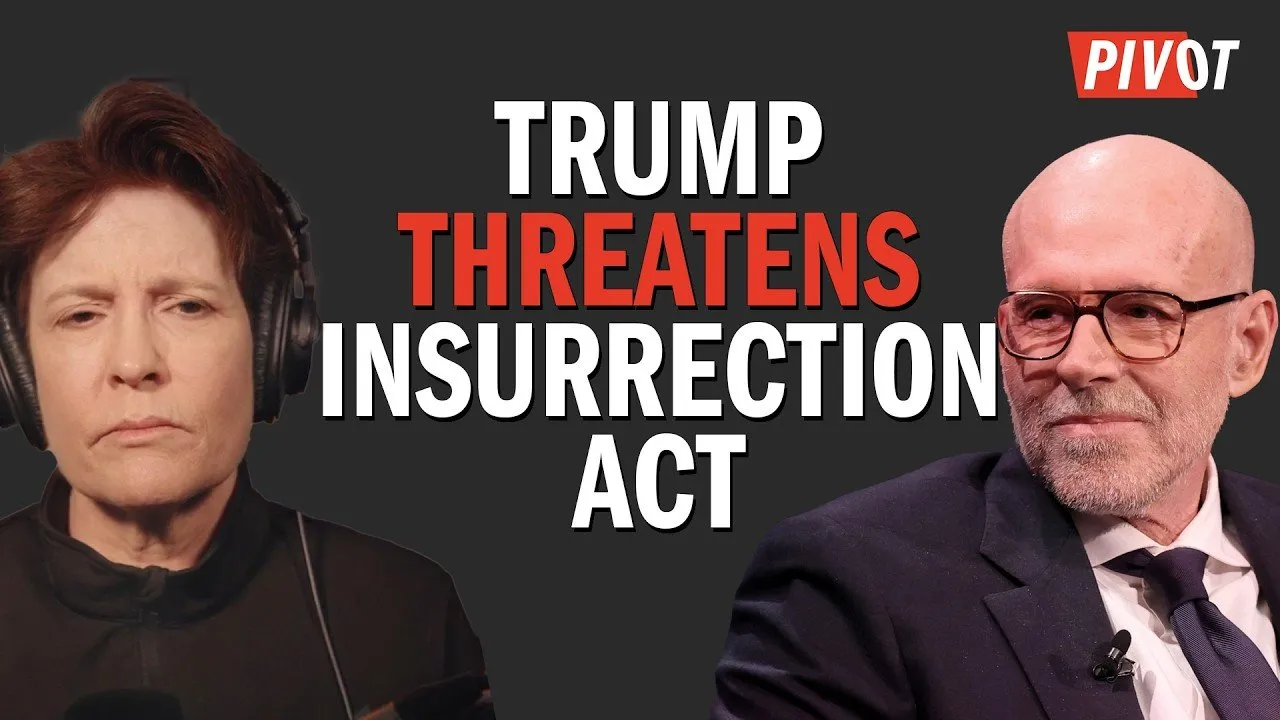
Recent rhetoric regarding the invocation of the Insurrection Act in response to protests in Minneapolis highlights a growing concern regarding the use of federal power. Critics argue that the deployment of militarized tactics against domestic demonstrators mirrors authoritarian regimes rather than democratic governance. The concern is that isolated incidents are being used as pretexts to normalize martial law scenarios ahead of upcoming election cycles.
The "Fascist and Feckless" Cocktail
The current political dynamic is described by observers as the "worst cocktail in the world for democracy." On one side, there is an executive branch willing to trample established norms; on the other, an opposition party that appears unable to mount an effective defense.
While strongly worded letters and moral scolding are common responses, they lack legal teeth. A more robust approach would involve specific legislation designed to hold officials accountable. Proposals include:
- Allocating specific resources to investigate and criminally charge officials who order or execute illegal orders.
- Passing legislation to limit pardon powers, specifically ensuring that crimes involving homicide or gross negligence cannot be wiped away retroactively.
"It’s the worst cocktail in the world for democracy and that is you have a fascist who doesn’t have a credible opposition."
Without a credible threat of legal consequences—a "non-zero probability" of jail time—norms alone are insufficient to restrain the abuse of power.
The Crisis of Credibility in Journalism
The role of the "fourth estate" is currently under siege from two directions: internal editorial shifts toward populism and external government intimidation.
The Shift Away from Expertise
Recent editorial decisions at major networks like CBS suggest a pivot away from relying on "experts and academics" in favor of "what the people think." This move raises alarming questions about the definition of truth in news reporting. In a meritocratic society, expertise—whether in epidemiology or brand strategy—is earned through rigor and peer review.
By equating "man on the street" opinions with expert analysis on complex topics like vaccine safety or constitutional law, news organizations risk validating conspiracy theories and misinformation. This "false equivalence" flattens the hierarchy of knowledge, treating established science and unverified sentiment as equally valid.
Intimidation of the Press
Simultaneously, the press faces direct government pressure. The recent FBI search of a Washington Post reporter’s home, involving the seizure of devices, sets a chilling precedent. This tactic aims to unmask confidential sources inside government agencies, effectively silencing whistleblowers.
In this environment, the silence of media owners is notable. When ownership fails to publicly defend their newsrooms against government overreach, it signals a weakness that can be exploited by an administration seeking to curb press freedom.
Geopolitics as Distraction Strategy
Foreign policy maneuvers are often utilized to shift the domestic narrative. Current tensions with Iran and the re-emergence of the idea to purchase Greenland are viewed by some analysts as calculated distractions.
The Epstein Files
The timing of international chaos often correlates with domestic stories that political figures wish to bury. The unreleased Jeffrey Epstein files remain a significant vulnerability. Despite court orders, the Department of Justice has been slow to release the full cache of documents. The refusal of key political figures, including the Clintons, to testify further complicates the search for transparency, turning a pursuit of justice into political theater.
Strategic Incoherence: Greenland and Iran
The proposition of the U.S. purchasing Greenland, while strategically sound regarding rare earth minerals and military positioning, ignores the post-1945 world order based on alliances and trade rather than conquest. Alienating allies like Denmark and France over territorial disputes serves to isolate the U.S. globally.
Regarding Iran, market signals suggest internal instability. Betting markets and reports of capital flight indicate that the current regime's leadership may be looking for an exit. However, inconsistent U.S. military signaling complicates the situation, creating opportunities for insider trading among those with foreknowledge of military strikes.
Media M&A: The war for Content and Control
The entertainment industry remains in a state of flux, characterized by lawsuits and consolidation attempts that often defy economic logic.
Paramount vs. Warner Bros.
The legal battle between Paramount and Warner Bros. Discovery highlights the friction in the streaming wars. While lawsuits are a standard negotiation tactic in mergers, the delay risks damaging shareholder value. The consensus among analysts is that the deal should proceed based on the superior economic offer, yet board dynamics often prioritize ego and control over pure financial logic.
Prediction: Disney in the Crosshairs
Looking ahead, Disney appears to be the next major target for market disruption. despite possessing unrivaled assets—parks, Marvel, Star Wars, and ESPN—the company’s stock has remained flat over a decade during a bull market. This stagnation suggests a management failure to monetize its intellectual property effectively.
Crucially, Disney’s corporate governance structure makes it vulnerable. Unlike many modern tech companies with dual-class stock or staggered boards, Disney has an annually elected board and modest anti-takeover provisions.
"Disney is breakable in the sense that unlike most media companies it has very modest anti-takeover or poison pill provisions."
This vulnerability invites activist investors to acquire a stake and demand leadership changes or a breakup of the company to unlock value.
Big Tech's Strategic Pivot: AI and Infrastructure
The technology sector is undergoing a massive realignment centered on Artificial Intelligence and the physical infrastructure required to power it.
The Apple-Google Alliance
Apple’s deal to integrate Google’s Gemini AI into the iPhone ecosystem represents a concession in the "capital wars" of model development. Apple has opted not to spend the tens of billions required to build a foundational Large Language Model (LLM) from scratch. Instead, they are leveraging their most valuable asset: distribution.
By controlling access to the world’s most premium consumer base (iPhone users), Apple creates a kingmaker dynamic. For Google, this partnership is essential to maintain search dominance and accelerate Gemini’s market share against OpenAI.
Meta’s Political Maneuvering
Meta’s appointment of former Trump advisor Dina Powell McCormack signals a strategic shift toward securing government backing for AI infrastructure. As the cost of building data centers balloons into the trillions, private capital may be insufficient.
The industry is likely pivoting toward a model where the government subsidizes or backstops the debt required for this build-out, framed as a matter of national economic security. This appointment is less about partisan politics and more about navigating the complex intersection of finance, energy policy, and federal spending.
Conclusion
The converging trends in politics, media, and technology paint a picture of a system under stress. Democratic institutions are being tested by authoritarian impulses and a media ecosystem that is losing its anchor in expertise. Simultaneously, the corporate world is consolidating, with legacy media giants fighting for survival and big tech companies forging alliances that will define the next decade of computing. In this environment, the ability to distinguish between theatrical distraction and structural change is more critical than ever.