Table of Contents
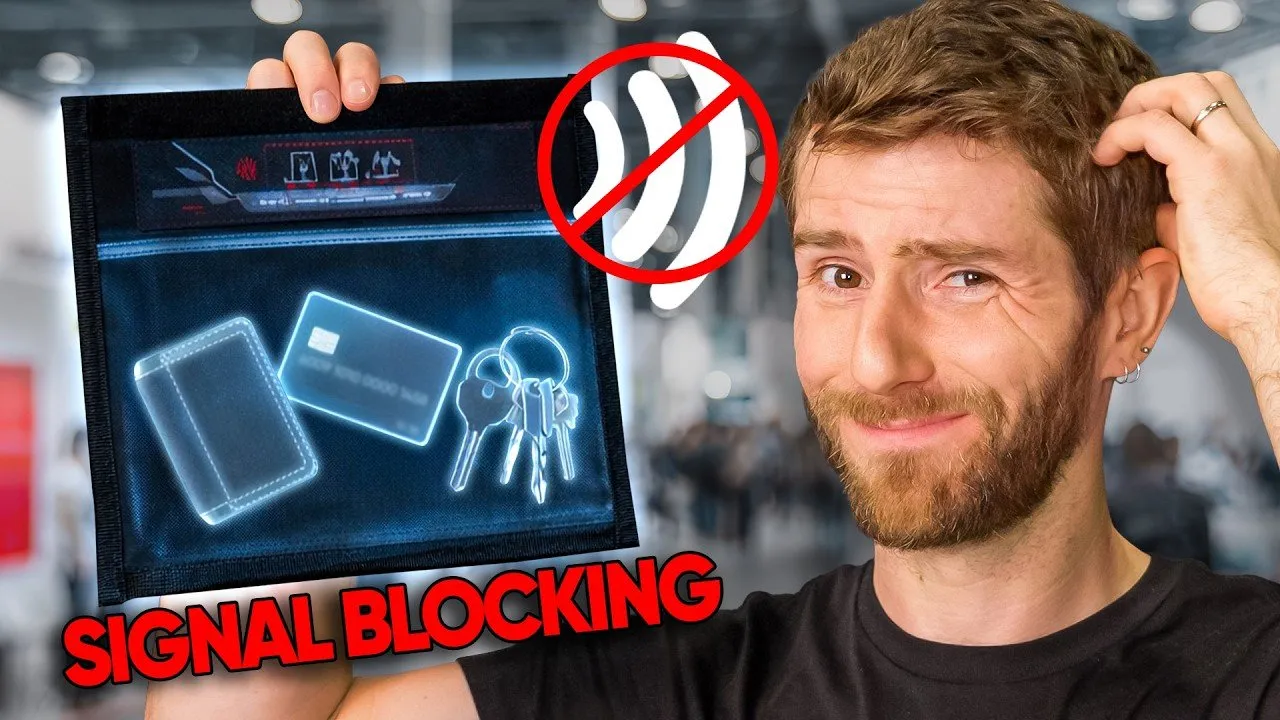
A comprehensive evaluation of consumer-grade Faraday shields has revealed that while budget-friendly and DIY options effectively block radio frequencies (RF), their practical utility for smartphones remains questionable. New testing conducted by Linus Tech Tips within a professional electromagnetic compatibility (EMC) chamber demonstrates that while physical shielding works, simple software settings often provide superior security without the hardware downsides.
Key Takeaways
- High Effectiveness: Budget-friendly Faraday bags and DIY solutions like cookie tins blocked RF signals as effectively as premium products.
- Wallet Security: Minimalist wallets effectively block RFID skimming despite not fully enclosing the cards, due to the physics of passive RFID chips.
- The Battery Trade-off: Placing a smartphone in a Faraday shield causes significant battery drain as the device boosts power to search for a signal.
- Software Alternative: Experts recommend using "Airplane Mode" for smartphones, which offers identical isolation benefits without hardware costs or battery depletion.
Rigorous Testing Methodology
To determine the efficacy of personal privacy shields, the testing team utilized a controlled environment to eliminate variables. Measurements were conducted inside a certified Raymond EMC chamber, a facility designed to reduce ambient radio frequency interference to functionally zero (approximately 17-19 millivolts per meter).
The methodology involved establishing a baseline reading of zero, introducing a transmitting device (such as a smartphone seeking a network), and then enclosing the device in various shielding products. An Xtech EMF meter was used to measure signal leakage. The subjects included Amazon best-sellers, bulk shielding fabric, and improvised household items.
Commercial vs. DIY Performance
The investigation yielded surprising parity between high-end security products and common household items. Commercial options, including a $10 bag from Hadui and a $25 box from Samfolk, successfully reduced RF emissions to baseline levels when sealed correctly. The testing highlighted that the mechanism of closure is critical; even a single fold in a shielding bag can leave gaps for signal leakage.
Notably, the analysis debunked the necessity of expensive, specialized gear for basic shielding. A simple metal cookie tin and a Ziploc bag wrapped in aluminum foil performed on par with dedicated security merchandise. Furthermore, metallic anti-static bags (commonly used for shipping electronics) provided effective shielding, whereas standard pink or clear anti-static bags offered no protection.
RFID and Wallet Security
A specific focus was placed on the Ridge Wallet, which faced scrutiny for not fully enclosing credit cards. However, tests using a "Flipper Zero" device confirmed that the wallet successfully blocks RFID skimming. This is because RFID chips are passive; they require induction from a reader to power up. The wallet's metal plates disrupt this induction process, rendering the cards unreadable to skimmers without requiring a complete seal.
The Smartphone Paradox
While the hardware proved effective at blocking signals, the report questioned the practical logic of using Faraday bags for cellular devices. When a phone is isolated from its network, it does not simply go dormant. Instead, it enters a high-power state, aggressively "pinging" for a tower connection.
"Like people, your phone gets lonely without a connection, and it will just keep swiping desperately for a wireless hookup until finally its social battery is drained and it doesn't want to do anything anymore."
This aggressive searching results in rapid battery depletion and potential overheating. The testing concluded that for users seeking to go "off the grid" or prevent tracking, utilizing the phone's built-in Airplane Mode is the superior strategy. It halts signal transmission immediately without forcing the hardware into a high-consumption search loop.
Implications for Consumer Privacy
The findings suggest that the market for personal Faraday shields is largely driven by misunderstanding rather than technical necessity, particularly regarding smartphones. While these devices are validated for protecting Keyless Entry fobs from relay attacks or preventing credit card skimming, their application for mobile phones is redundant.
Consumers concerned about digital privacy are advised to focus on software hygiene and behavior rather than investing in "weapons-grade" shielding accessories. For those specifically needing to transport evidence or electronics securely without remote wiping risks, however, the data confirms that even an inexpensive foil-lined bag is a scientifically sound solution.