Table of Contents
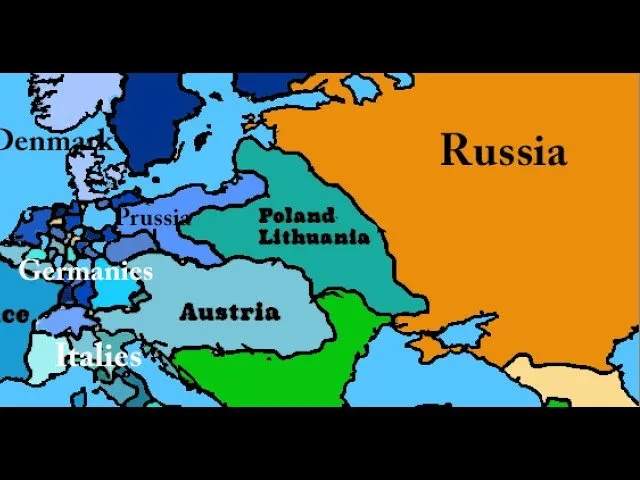
Between the closing of the 17th century and the outbreak of World War I, Eastern Europe underwent a transformation that is often overshadowed by the violence of the 20th century. While historian Timothy Snyder famously characterized this region as the "Bloodlands" due to the atrocities of the Nazi and Soviet regimes, the preceding era tells a radically different story. This was Eastern Europe's "Age of Empires"—a period characterized by the dominance of the Austrian, Russian, Prussian, and Ottoman dynasties. Contrary to modern perceptions of decay, this era represented a golden age of economic integration, scientific advancement, and a unique form of multicultural tolerance sustained by cosmopolitan elites.
To understand the modern geopolitical map, one must examine the friction between these great powers. This era was defined by the rise of the nation-state against the ancient model of multi-ethnic empire, a conflict that ultimately birthed the modern world. From the disciplined militarism of Prussia to the cultural hegemony of Vienna, the dynamics established during this period did not merely precede the World Wars—they engineered them.
Key Takeaways
- The Imperial Golden Age: Before the rise of totalitarian ethno-states, the great empires (Austrian, Russian, Ottoman) fostered a degree of religious and ethnic tolerance that was lost in the 20th century.
- The Rise of Prussia and Russia: The Great Northern War and the decline of Sweden and Poland-Lithuania paved the way for Russia and Prussia to become the dominant aggressive powers in the region.
- The Austrian Idea: While Prussia became the "Sparta" of Germany through militarism, Austria acted as the "Athens"—a center of high culture, bureaucracy, and supranational identity.
- Elite Cosmopolitanism: The region was held together by a nobility that often shared more culturally with each other (speaking French, intermarrying) than with their own peasant populations.
- The Balkan Divergence: Unlike the rest of Eastern Europe, the Ottoman removal of local nobility in the Balkans stunted political development, fostering a clan-based social structure that persisted for centuries.
The Geopolitical Crucible: Three Conflicts That Made the East
The structure of Eastern Europe was forged in the fires of three specific conflicts at the turn of the 18th century. These wars effectively ended the medieval order and established the Great Powers that would dictate European politics until 1918.
The Retreat of the Ottomans
The first turning point was the failure of the Ottoman siege of Vienna in 1683. Historically, the Ottomans had been an aggressive, existential threat to Christendom. However, after their defeat at Vienna, they were forced into a permanent defensive posture. The Austrian Habsburgs capitalized on this, seizing Hungary and Transylvania. This radically altered Austria’s character; they transitioned from being merely the titular heads of the German states to becoming the governors of a vast, multi-ethnic Eastern empire.
The Great Northern War
Simultaneously, the north of Europe witnessed a changing of the guard. The Great Northern War saw the confrontation between a declining Swedish empire and a rising Russia under Peter the Great. Despite the military genius of Sweden's Charles XII, Russia’s victory at the Battle of Poltava signaled the end of Sweden as a great power and the birth of Russia as a major European player.
"The hungry wolf bites the hardest." — Charles XII of Sweden, on invading Russia without sufficient supplies.
This conflict also sealed the fate of the Polish-Lithuanian Commonwealth. Once a massive entity, its weak central government and reliance on nobility allowed it to become a geopolitical doormat, eventually leading to its partition by its stronger neighbors: Russia, Prussia, and Austria.
The Clash of German Identites: Austria vs. Prussia
A central tension of this era was the dualism within the German-speaking world. While they shared a language, Austria and Prussia offered two competing visions for civilization.
Austria: The Multicultural Athens
The Austrian Empire (later Austria-Hungary) is often unfairly characterized as decadent or decaying. In reality, the Habsburgs achieved a remarkable feat: holding together a vast mosaic of Germans, Hungarians, Czechs, Croats, and Poles for centuries. The "Austrian Idea" was one of civilization and cultivation. Vienna became the musical and intellectual capital of the world, home to figures ranging from Mozart to Freud.
Because the empire was multi-ethnic, the ruling German-Austrians could not rely on narrow nationalism. Instead, they relied on a supranational imperial loyalty and a sophisticated bureaucracy. It was a Catholic, hierarchical structure that sought to domesticate its population through culture and administration rather than brute force.
Prussia: The Militaristic Sparta
If Austria was the Athens of the German world, Prussia was its Sparta. Rising from the devastation of the Thirty Years' War, Prussia—specifically the region of Brandenburg—constructed its society around the military. The Prussian "Junker" nobility were a disciplined officer class that dragged their state into modernity.
Under Frederick the Great, Prussia punched well above its weight, utilizing a hyper-efficient military and the introduction of the potato to survive wars against much larger coalitions. Prussia was not interested in the loose, cosmopolitan governance of Austria; they were focused on standardization, drill, and the centralization of power. This drive for efficiency eventually allowed Prussia to unify the German states, displacing Austria as the dominant German power.
The Russian Colossus: An Empire Colonizing Itself
To the east, the Russian Empire functioned differently than its European counterparts. Russia was described during this period as a nation "colonizing itself." The Russian elite, particularly after the reforms of Peter the Great and Catherine the Great, adopted Western European culture aggressively. They spoke French at court, adopted German bureaucracy, and imported Western architecture.
This created a profound disconnect between the ruling class and the peasantry. While the elites were reading Voltaire and engaging in Enlightenment philosophy, the vast majority of the population lived in serfdom. The Russian Empire expanded voraciously, often depicted in contemporary political cartoons as a giant octopus stretching its tentacles across Europe and Asia.
However, Russia’s management of its empire was complex. They utilized a variety of strategies, sometimes employing local elites (like the Baltic Germans or Finnish nobility) to self-govern, while at other times engaging in brutal Russification campaigns. The eventual industrialization of Russia was the great fear of Western Europe; a fully modernized Russia was seen as a force that could dominate the entire continent.
The Ottoman Legacy in the Balkans
While the northern empires were industrializing, the Balkans followed a distinct trajectory under Ottoman rule. When the Turks first conquered the region, they dismantled the local nobility. While this initially garnered favor with the peasantry by removing feudal oppressors, it had long-term disastrous consequences.
In the rest of Eastern Europe, the nobility served as the custodians of high culture, education, and governance. By removing this class, the Ottomans created a vacuum. Social organization in the Balkans devolved into hyper-local clan structures and low-trust societies. Governance was often outsourced to corrupt tax collectors who had no stake in the long-term prosperity of the land.
This stagnation meant that when nationalism finally swept through the Balkans in the 19th and early 20th centuries, these nations lacked the institutional maturity of their neighbors. The result was a fragmented region defined by parochial identities and conflict—a geopolitical "powder keg" that would eventually spark World War I.
Conclusion: The End of Cosmopolitanism
The tragedy of Eastern Europe is that the very forces that promised liberation—nationalism and the nation-state—destroyed the stability of the imperial age. The empires of Austria, Russia, and the Ottomans were flawed, certainly, but they provided a framework where diverse peoples could coexist under a unified legal and economic system.
The nobility of this era, speaking French to one another across borders, maintained a "Concert of Europe" that prevented total war for decades. As the 19th century gave way to the 20th, the shift from the Enlightenment ideals of universal reason to the Romantic ideals of ethnic blood-and-soil nationalism began to tear these empires apart. The collapse of this delicate balance did not lead to a utopia of free nations, but rather paved the way for the totalitarian horrors that would define the modern perception of the East.