Table of Contents
For roughly thirty years—spanning from the fall of the Berlin Wall to the onset of the global pandemic—the world operated under a singular, dominant paradigm. This era, often termed the Age of Neoliberalism, was characterized by the highest degree of global uniformity in human history. It was a time when the "End of History" was not just a book title, but a widely accepted geopolitical truth. However, beneath the surface of this apparent utopia lay deep contradictions, disconnected realities, and a fragile consensus that began to fracture significantly following the 2008 financial crisis.
To understand where we are today, we must peel back the layers of this era. We must examine how a fusion of economic theories and social controls created a global illusion, and why that illusion ultimately failed to sustain itself against the return of history, nationalism, and economic reality.
Key Takeaways
- The Fusion of Ideologies: Neoliberalism acted as a bridge between Anglo-Saxon free-market liberalism and French-style state protectionism, attempting to market capitalist technocracy to welfare-dependent populations.
- The Illusion of Uniformity: The era maintained a "global projector screen" where different nations and demographics projected their own desires onto a single system, ignoring underlying incompatibilities.
- The 2008 Turning Point: The Global Financial Crisis marked the beginning of the end for the neoliberal consensus, exposing the fragility of the European Union and the hollowness of the "end of history" narrative.
- The Bureaucratic Stranglehold: The rise of the managerial class stifled the emergence of "natural elites," replacing organic leadership with regulated conformity and contributing to societal atomization.
- The Return of Geopolitics: The assumption that developing nations (China, Russia, the Global South) would inevitably liberalize proved false, leading to a resurgence of authoritarianism and multipolar conflict.
Defining the Age of Neoliberalism
Neoliberalism is often a watery term, thrown around as a pejorative by both the left and the right. However, historically speaking, it can be defined as the post-Cold War surge in capitalism and democracy that attempted to reconcile two fundamentally different strands of liberal thought: Anglo-Saxon liberalism and French liberalism.
Anglo-Saxon liberalism, historically associated with the American Revolution and the Enlightenment, emphasizes freedom from the government—individual liberty and negative rights. Conversely, French liberalism, the philosophical ancestor of modern progressivism, emphasizes freedom provided by the state—freedom from the consequences of one's actions, often manifested through welfare and bureaucracy.
Neoliberalism was the attempt to take liberal ideology, which had not been popular since World War I, and rehabilitate it so that it could become a global ideology... The compromise they came to was to fuse a technocratic capitalist agenda to these basically psychological manipulations that played into what the public wanted.
This fusion created a unique historical moment. It allowed for the spread of markets (satisfying the right) alongside the expansion of state bureaucracy (satisfying the left). It was a system designed to be a "projector screen," vague enough that different populations could project their own definitions of freedom and success onto it, while a managerial elite handled the machinery of state behind the curtain.
The Mechanisms of the "Grand Illusion"
Maintaining this global order required a staggering amount of denial and social engineering. The system operated by creating a "terrarium" of modern consciousness—a hothouse environment where the harsh realities of Darwinian competition and historical struggle were artificially suppressed.
The Bureaucratic Consensus
One of the primary tools for maintaining this order was the expansion of the managerial bureaucracy. In large organizations, whether corporate or governmental, individuals tend to converge on a single view structure to facilitate cooperation. This leads to profound ideological standardization.
The education system, media, and corporate HR departments became enforcement mechanisms for this consensus. By seizing control of cultural "triage points"—such as schools and mating markets—the architects of this system could direct social change rapidly, bypassing organic cultural evolution. This resulted in an atomized population, increasingly dependent on central authorities and less capable of organic social organization.
The Loss of Natural Elites
A functioning society relies on "natural elites"—individuals who rise through competence, deal with chaos, and earn respect through tangible achievements. However, the regulatory state of the neoliberal era actively suppressed the generation of such elites. Regulations stifled innovation in the physical world (manufacturing, energy, infrastructure), forcing ambition into the unregulated spheres of the "cloud," such as finance and technology.
Consequently, the only sectors that generated dynamic leadership were those detached from material reality. In critical sectors like medicine or heavy industry, bureaucratic compliance became more valued than breakthrough capability, leading to stagnation.
The Cracks in the Foundation: 2008 to COVID-19
If the 1990s were the high water mark of neoliberal optimism, the 2008 Global Financial Crisis was the moment the tide began to recede. It was the shift from "line go up" to "line go down."
The Economic Reality Check
The 2008 crisis exposed the fundamental insolvencies within the system. In Europe, the inherent flaws of the Eurozone became undeniable. The union had bound disparate economies—hyper-efficient Germany and the agrarian-based, credit-hungry southern Mediterranean nations (Greece, Spain, Italy)—into a single currency. When the credit binge ended, the illusion of European unity dissolved into bitter disputes over austerity and debt.
In the United States, the response to the crisis was a massive consolidation of corporate and state power. The "too big to fail" bailouts revealed that the free market was no longer free; it was a protected ecosystem for the politically connected. This sowed the seeds of populism, as the working class realized the progressive bureaucracy was no longer acting in their economic interests.
The Psychological Break
While 2008 broke the economic narrative, the COVID-19 pandemic broke the psychological narrative. It was an overt disruption of biological rhythms and daily life that could not be spun away by media narratives. It forced a confrontation with the reality of state power, supply chain fragility, and the competence (or lack thereof) of the expert class.
The post-2008 era also saw the rise of populist movements, notably Brexit and the election of Donald Trump. These were not merely political shifts; they were rebellions against the managerial class. However, the establishment's reaction—doubling down on censorship and social control—proved that the neoliberal order would not yield power gracefully.
Regional Failures of the Global Order
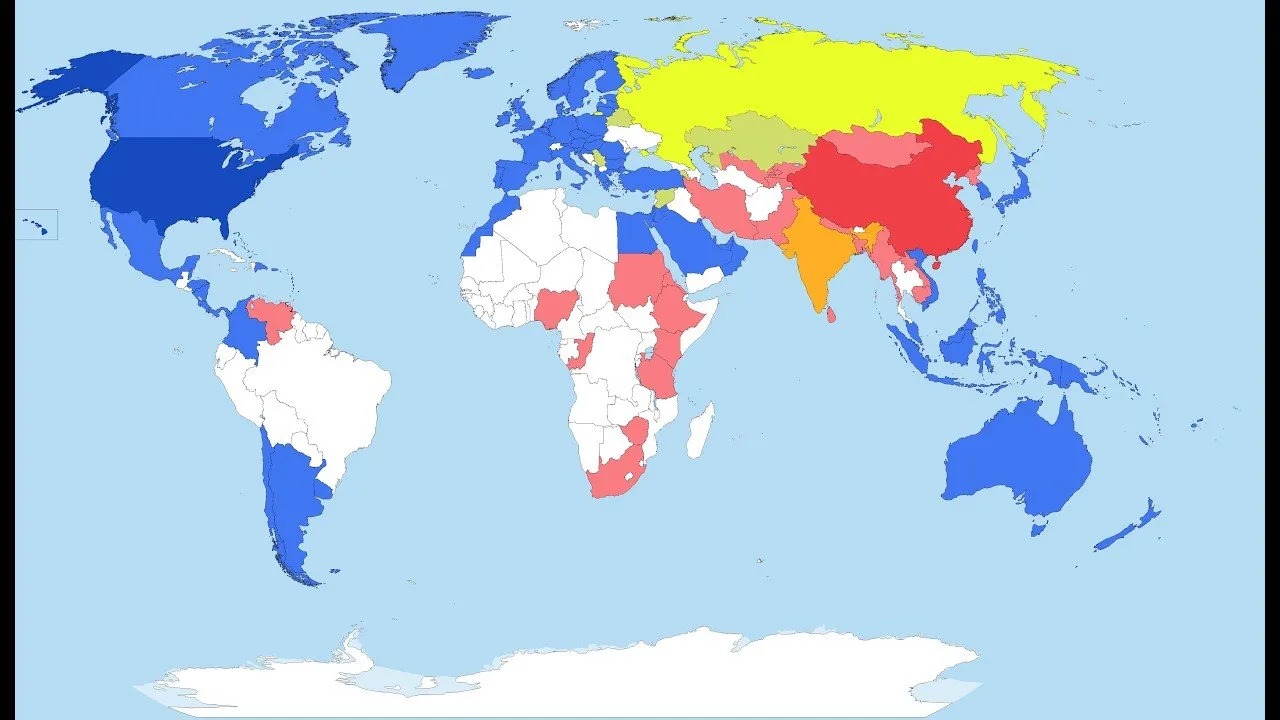
The "End of History" presupposed that all nations would eventually evolve into liberal capitalist democracies. By the 2020s, this assumption had been thoroughly debunked across every major geopolitical theater.
The Post-Soviet Tragedy
Following the collapse of the USSR, the West assumed Russia would integrate into the global fold. Instead, the rapid and chaotic privatization led to the rise of kleptocracy. The failure to establish the rule of law meant that capitalism in Russia became a game of oligarchic looting rather than market creation.
Under Putin, Russia pivoted from a potential western partner to a revisionist power. However, despite its aggression in Ukraine and Georgia, Russia remains a declining power, plagued by demographic collapse and an economy smaller than that of Texas. The West's fixation on Russia often obscures the rise of the true systemic challenger: China.
The Asian Paradox
Asia represents the neoliberal era's greatest success in terms of poverty reduction, but also its starkest warning. China's embrace of markets under Deng Xiaoping ("It doesn't matter if the cat is black or white, so long as it catches mice") led to unprecedented growth. Yet, the assumption that economic liberalization would lead to political liberalization was false.
Furthermore, the rapid modernization of East Asia (China, Japan, South Korea) has resulted in profound social decay. These societies industrialized in a single generation, bypassing the centuries of cultural adaptation the West experienced. The result is a demographic winter, extreme work cultures, and the collapse of family formation. They adopted the Western economic "hardware" but are now suffering from the "software" bugs of modernity—alienation and nihilism—at an accelerated rate.
The European Stagnation
Europe, the cradle of the neoliberal project, has arguably fared the worst in terms of relative power. Since 2008, the European economy has stagnated while the U.S. and Asia have grown. The European Union morphed from a trade federation into a bureaucratic empire, enforcing cultural and regulatory standards that alienated member states and fueled nationalist backlash.
Conclusion: The End of the Projection
The Age of Neoliberalism was akin to a warm, opium-induced haze. It was a period where the developed world believed it had solved the fundamental problems of human existence—war, poverty, and ideological conflict. But as the haze clears, we are left with the withdrawal symptoms.
The institutions built during this era are losing legitimacy. The "narrator class"—journalists, academics, and experts—has lost the trust of the public. We are witnessing the friction between the legacy of the "First American Empire" (rooted in liberty and localism) and the "Second American Empire" (rooted in global bureaucracy).
As we move forward, the challenge will be to discard the illusions of the last thirty years without succumbing to nihilism. The global order is fracturing into regional blocs, history has returned with a vengeance, and the comfortable lies of the neoliberal age are no longer sufficient to navigate the chaotic reality of the 21st century.