Table of Contents
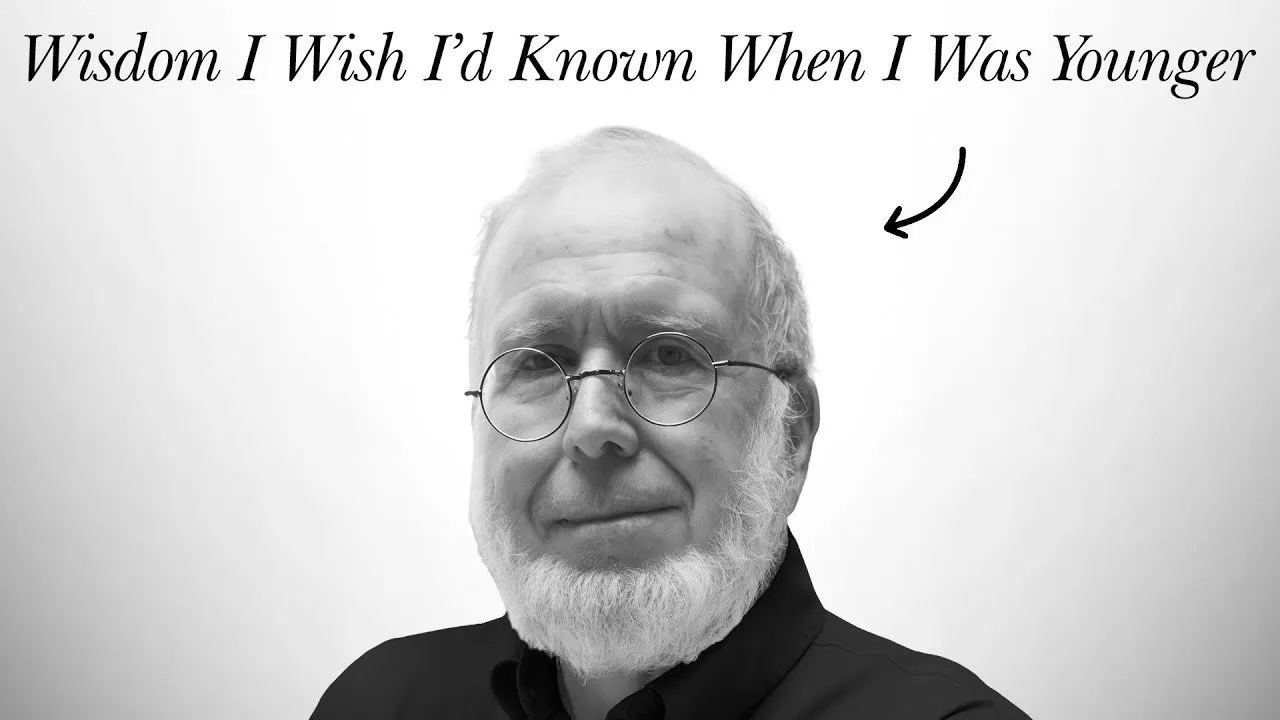
On his 68th birthday, Kevin Kelly—founding executive editor of Wired magazine—decided to gift his young adult children a collection of advice. What began as a modest list of 68 insights quickly expanded over subsequent years, evolving into a compendium of 450 bits of wisdom he wished he had known earlier. These aphorisms are not merely catchy slogans; they are compressed seeds of knowledge, synthesized from the wisdom of the ages, modern experience, and timeless truths. Drawing from a deep dive into Kelly’s book, Excellent Advice for Living, combined with insights from legendary figures like Steve Jobs, Warren Buffett, and Ed Catmull, the following guide explores how these maxims apply to modern work, creativity, and the art of living a meaningful life.
Key Takeaways
- Prioritize habits over inspiration: Reliance on fleeting inspiration is a strategy for amateurs; professionals rely on established routines to drive progress.
- Embrace deadlines as accelerators: Constraints are not creative killers but essential tools that force decision-making and eliminate the extraneous.
- Practice radical listening: asking "is there more?" until a person is empty creates profound connection and understanding.
- Aim for "only," not just "best": In a competitive world, the highest value comes from doing work that only you can do, rather than simply competing on quality.
- Understand the fragility of new ideas: Innovation requires a "maternity ward" approach where early concepts are protected from criticism until they are strong enough to stand alone.
The Mechanics of Mastery and Professional Growth
Achieving excellence in one's career is rarely the result of luck. It is the product of specific mental models and the strategic management of one's time and focus. Kelly’s advice, supplemented by the experiences of successful founders, provides a blueprint for professional distinction.
The Power of Deadlines and Focus
There is a common misconception that creativity requires unbound freedom. However, evidence from creative giants suggests the opposite. A deadline acts as a filter, weeding out the ordinary and forcing creators to make difficult choices. Without a "cut-by" date, projects languish in a perpetual state of refinement that yields diminishing returns.
A deadline prevents you from trying to make it perfect. So you have to make it different. Different is better.
This aligns with the philosophy of Pixar co-founder Ed Catmull, who noted that without deadlines, resources are wasted in the name of perfection. Similarly, filmmaker Christopher Nolan views deadlines as creative accelerators that ramp up the decision-making process exponentially.
Don't Be the Best, Be the Only
One of the most striking maxims in the collection challenges the traditional notion of competition. Rather than striving to be the best in a crowded field, the ultimate goal should be to become the "only"—to find a niche where your unique combination of skills and experiences makes you a category of one. This concept echoes the strategy of high-agency individuals who refuse to measure their lives by someone else's ruler.
Tools and Resource Allocation
When starting a new endeavor, the temptation is often to acquire the highest-end equipment immediately. Kelly offers a pragmatic heuristic for resource management: start with the absolute cheapest tools. Only when a specific tool is used frequently enough to justify the cost should you upgrade to the very best version you can afford. This ensures that capital is invested in actual utility rather than aspirational signaling.
Cultivating Deep Relationships and Empathy
Success is not merely transactional; it is deeply relational. As one matures, the focus inevitably shifts from accumulating achievements to deepening connections. The ability to navigate human dynamics with grace is a skill that pays dividends indefinitely.
The Superpower of Listening
Listening is often treated as a passive activity, but it is an active superpower. True listening involves peeling back layers of conversation. A practical technique is the "Rule of Three" in conversation: ask a person to go deeper three times. The third answer is usually the one closest to the truth. By constantly asking, "Is there more?" until there is no more, you honor the speaker and uncover insights that superficial conversation misses.
Forgiveness and Kindness
Holding onto grievances is often described as drinking poison and expecting the other person to die. Forgiveness is reframed not as a favor to the offender, but as a necessary act of self-healing. Furthermore, in the dichotomy between being right and being kind, the advice is clear: choose kindness without exception. This should not be confused with weakness; it takes immense strength to prioritize the relationship over the ego.
When you forgive others, they may not notice, but you will heal. Forgiveness is not something we do for others. It's a gift to ourselves.
Understanding Incentives and Perspectives
Whether in negotiation or design, the ability to see the world through another’s eyes is the "golden ticket." This empathy allows you to understand what "yes" actually means to a counterparty. Charlie Munger, the late vice chairman of Berkshire Hathaway, famously noted that while he considered himself in the top percentile of understanding incentives, he still underestimated their power every year. Recognizing what drives others is the foundation of effective management and persuasion.
The Creative Process and Innovation
Creativity is often romanticized, but the reality of generating new ideas is messy, fragile, and requires specific protocols to survive.
Protecting Fragile Ideas
New ideas are not born fully formed; they are "tender shoots" that are easily trampled by early criticism. Organizations and individuals must separate the process of creation from the process of improvement. You cannot write and edit simultaneously without the editor stifling the creator. As Henry Ford suggested, new ideas belong in a "maternity ward"—isolated and nurtured until they are robust enough to face the world.
The Necessity of Bad Ideas
To arrive at one good idea, one must be willing to produce hundreds of bad ones. This volume-based approach to creativity relieves the pressure of perfectionism. The secret to making fine things lies in the act of remaking them. "To make something good, just do it. To make something great, just redo it."
Imitation as a Path to Originality
There is no shame in learning through imitation. The advice suggests copying one's heroes shamelessly—like a student—until their methods are out of your system. It is through this rigorous study of masters that one eventually transcends their influence to find a unique voice.
Mindset, Habits, and the Long Game
The most durable success comes from the compounding of small, consistent actions over decades. This requires a shift from seeking short-term intensity to maintaining long-term consistency.
Habit Over Inspiration
Inspiration is unreliable; habits are dependable. The goal is to remove the internal negotiation regarding whether to do the work. By establishing a habit, the decision is made in advance, preserving mental energy for the task itself. This mirrors the "rope" metaphor used by John D. Rockefeller: we spin a thread of habit daily until it becomes an unbreakable cable.
Optimism and Gratitude
Optimism is not a denial of reality or the world's problems; it is a strategic choice to focus on our capacity to solve them. Over the long term, the future is shaped by optimists because they are the ones building it. Similarly, gratitude acts as a gateway virtue. Practicing gratitude daily creates a psychological environment where other virtues—patience, generosity, and resilience—can thrive.
The advantage of a ridiculously ambitious goal is that it sets the bar very high. So even if your effort falls short, it may exceed an ordinary success.
The Infinite Game
Life and business are best approached as "infinite games," a concept popularized by James Carse and embraced by visionary founders. Finite games are played to win or lose; infinite games are played for the purpose of continuing the play. Those who seek out infinite games—in relationships, learning, and business—unlock unlimited rewards because they are not fixated on a terminal point of victory, but on perpetual growth.
Conclusion
The wisdom found in Excellent Advice for Living serves as a reminder that while technology and times change, human nature remains constant. Whether it is the compounding power of small habits, the necessity of kindness, or the strategic advantage of taking the long view, these maxims offer a compass for navigating complexity. Perhaps the most profound takeaway is the importance of agency: believing that the universe is conspiring to help you succeed, and recognizing that life lessons will appear in the order they are needed. As you navigate your own path, remember that you are not merely acquiring things, but working to become the kind of person who leaves a legacy of value for future generations.