
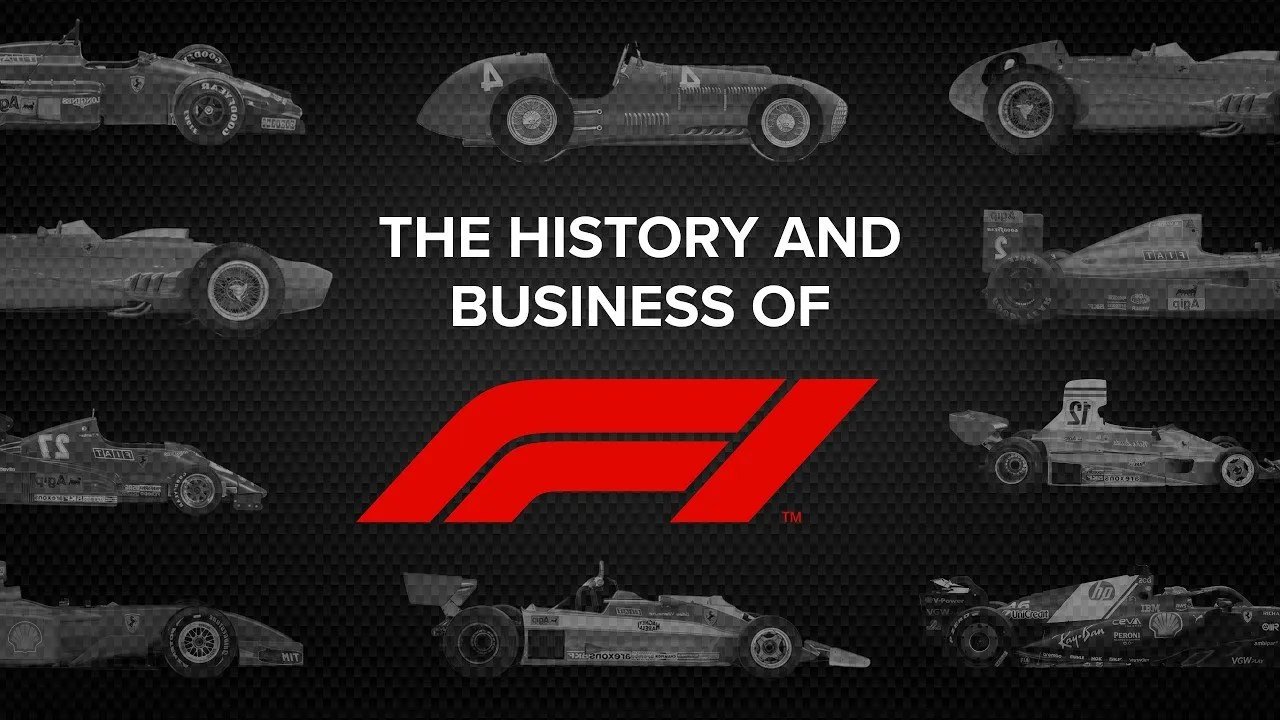
Table of Contents
Key Takeaways
- From Chaos to Commerce: Formula 1 evolved from a dangerous, loose collection of independent races into a highly professional, multibillion-dollar global sport under the stewardship of Bernie Ecclestone and, subsequently, Liberty Media.
- Engineering as a Spectator Sport: F1 is unique among global sports for requiring teams to act as their own constructors, turning the championship into an intense arms race of aerodynamics, material science, and data analytics.
- The Netflix Effect: The success of the docuseries Drive to Survive demonstrated that behind-the-scenes human drama and office politics could engage a massive new demographic, fundamentally shifting the sport's business model toward entertainment and lifestyle.
- A New Economic Playbook: By shifting from Bernie Ecclestone’s opaque, personality-driven model to Liberty Media’s data-driven, expansionist approach, F1 has transitioned into a highly profitable media property with stable, high-valuation teams.
The Evolution of the World’s Premier Motorsport
Formula 1 is far more than just cars racing on a track; it is the ultimate intersection of high-stakes engineering, global luxury, and cutthroat political maneuvering. Born in the post-World War II era, the sport was initially a playground for wealthy enthusiasts and daring pioneers. Today, it stands as a sophisticated global media entity, having successfully navigated a decades-long transformation that turned a collection of bankrupt-prone teams into a multibillion-dollar, publicly traded enterprise.
The sport's history is inextricably linked to its unique structure. Unlike traditional leagues where the organization dictates everything, F1 has always operated as a complex marriage between the FIA (the governing body), the commercial rights holders, the legendary racing circuits, and the constructors who build the machinery. This tension is where the sport's greatest stories—and most significant business breakthroughs—have originated.
The Foundational Pillars
In its early days, Formula 1 relied on three geographic anchors: the UK’s mechanical expertise, Monaco’s glitz and glamour, and Italy’s racing soul, embodied by Ferrari. Following the war, Britain’s abundance of decommissioned airfields and skilled, underemployed fighter pilots and engineers created the perfect crucible for innovation. Figures like Colin Chapman of Lotus fundamentally changed the sport by moving beyond raw horsepower and focusing on the physics of weight and handling.
Adding power makes you faster in the streets. Subtracting weight makes you faster everywhere. — Colin Chapman
Bernie Ecclestone and the Era of the Dealmaker
To understand modern Formula 1, one must understand Bernie Ecclestone. A former used-car dealer with a penchant for high-stakes negotiation, Ecclestone spent 45 years orchestrating the commercialization of the sport. He was an "impresario" who operated without the burden of standard corporate contracts, preferring to look his partners in the eye and shake their hands—a method that arguably built the sport from a chaotic hobby into a global TV product.
Centralizing the Circus
Before Ecclestone, teams negotiated appearance fees on a race-by-race basis, leading to financial instability and erratic attendance. Ecclestone formed the Formula One Constructors Association (FOCA), centralizing negotiations with racetracks and extracting significant value from broadcast rights. While critics argued he was "stealing" the sport from the teams, supporters noted that without his ability to aggregate the sport's value, most teams would have folded under the weight of their own R&D costs.
The Art of the Conflict
Ecclestone was a master of the "gray area." He frequently held multiple roles simultaneously—team owner, race promoter, and commercial rights holder. This deep involvement allowed him to resolve disputes, albeit in ways that raised eyebrows among antitrust regulators. Yet, his legacy remains: he turned a sport that made nothing from television into a global juggernaut that generates billions in annual revenue.
Engineering Dominance and the Cost of Winning
If F1 is the "World Cup of Engineering," it is because the sport allows teams to push physical and digital boundaries—often leading to intense regulatory battles. From the 1960s introduction of aerodynamic wings to the 1990s push into automated electronic driving aids, teams have consistently looked for "daylight" between the rules and the intent of the FIA.
The Cost Cap Revolution
For decades, the sport suffered from an arms race that saw even the most successful manufacturers burning hundreds of millions of dollars to gain a fractional edge. The introduction of a strict cost cap by Liberty Media was a turning point. By limiting the amount teams can spend on car development, Liberty effectively stabilized the financial health of the grid, transforming teams like Mercedes, Red Bull, and McLaren into viable, profit-generating businesses rather than bottomless money pits.
The Modern Era: Liberty Media and Global Expansion
When Liberty Media acquired F1 for $8 billion in 2016, they inherited a sport that was technologically advanced but culturally stagnant. Their strategy was clear: pivot toward the American market, invest heavily in digital storytelling, and open up the paddock to a wider, younger audience. The results have been transformative, with the sport’s valuation soaring and its demographic reach expanding significantly through new events like the Miami and Las Vegas Grand Prix.
The Power of Narrative
Nothing has done more to propel F1 into the mainstream than Drive to Survive. By stripping away the sport's aristocratic pretensions and highlighting the human drama—the rivalry between drivers, the high-pressure stakes for team principals, and the intense office politics—Netflix created a "canonical" version of the sport. It became the ultimate lead magnet, converting casual viewers into loyal fans who now engage with the sport across multiple digital platforms.
Conclusion
Formula 1 is currently in its most stable and prosperous period in history. The transition from an insular, technocratic "old boys' club" to a global sports and entertainment brand has been driven by a shift toward fan engagement and sustainable business practices. While the engineering battles will always be the heart of the sport, the business side has finally matured, proving that the most successful motorsports venture is the one that successfully balances the thrill of the track with the disciplined strategy of a global media enterprise.
![EXPLOSIVE: Time’s Up! [The Next Big Market Move Has Arrived]](/content/images/size/w1304/format/webp/2026/03/market-volatility-geopolitical-tension-oil-prices.jpg)
)