
Table of Contents
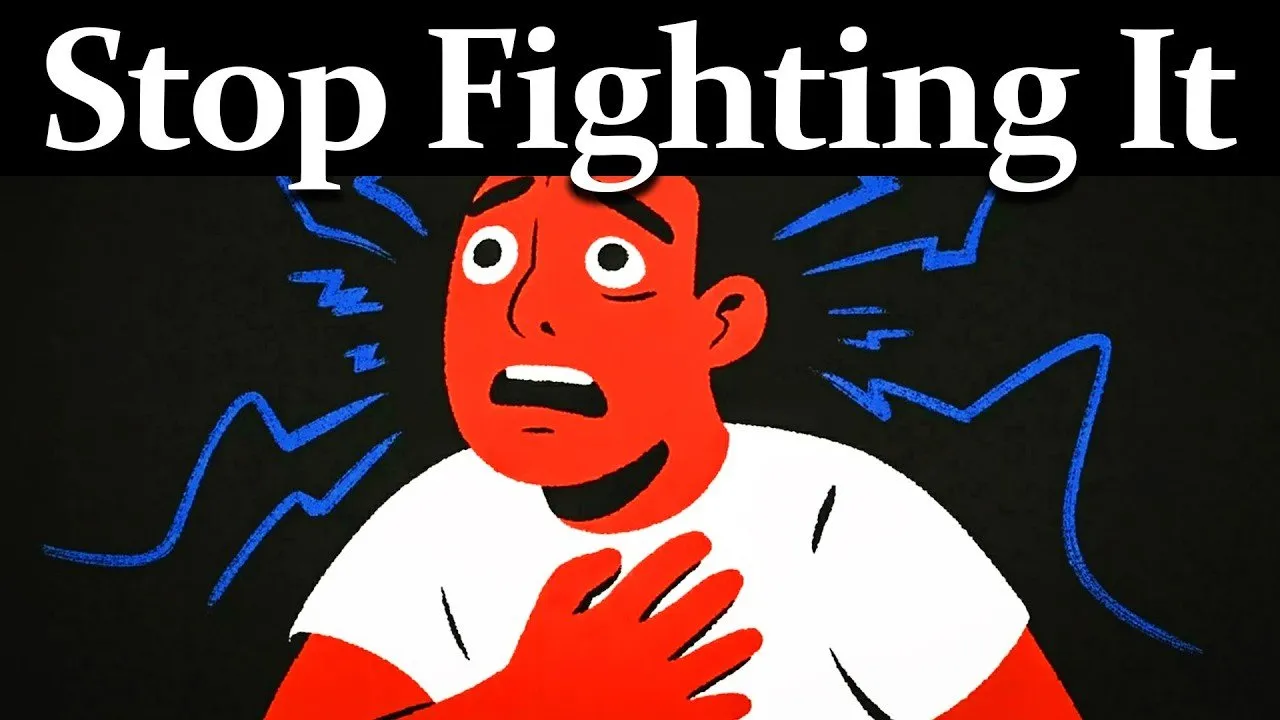
Have you ever felt like you are losing your mind while everyone else sees you as perfectly calm? Your internal world is racing, spinning narratives about catastrophes that haven't happened, while your body feels like it is under imminent attack. The chest tightness, the rapid heartbeat, and the shallow breathing suggest danger, yet there is no visible threat. Worse than the symptoms is the shame that accompanies them—the exhaustion of forcing a smile while you feel like you are crumbling inside. If you have been taught that this experience is a biological flaw, a disorder, or a weakness to be suppressed, you have been operating on outdated information. Anxiety is not a malfunction; it is a survival mechanism that has gone rogue.
This is not a poetic metaphor. It is a clinical reality confirmed by two of the most respected authorities on the subject: Dr. Claire Weekes, who revolutionized anxiety treatment, and Dr. Edmund Bourne, author of the seminal Anxiety and Phobia Workbook. Their independent research led to the same conclusion: you do not defeat anxiety by fighting it. You master it by understanding its mechanics and retraining your nervous system to stop reacting to false alarms.
Key Takeaways
- Anxiety is a sensitization issue: Your nervous system isn't broken; it is stuck in the "on" position, reacting to safe environments as if they are life-threatening.
- Control is the enemy: Attempts to fight, suppress, or avoid anxiety actually reinforce the brain's belief that you are in danger, creating a feedback loop of panic.
- The "Face, Accept, Float" method: Mastery requires turning toward the sensation rather than running from it, allowing time to pass until the nervous system recalibrates.
- Lifestyle is the foundation: Techniques like cognitive restructuring fail if your baseline nervous system is inflamed by poor sleep, caffeine, or lack of movement.
- Recovery is paradoxical: You don't beat panic by becoming stronger and tenser; you beat it by becoming softer and surrendering the struggle.
The Mechanics of a Misfire: Why You Feel Broken
Most people believe anxiety is purely a mental issue, but the reality is deeply physiological. Dr. Claire Weekes described anxiety not as a vague emotional problem, but as a sensitized nervous system. Your internal alarm system, designed to protect you from tigers and burning buildings, has been left on. Whether triggered by past trauma, prolonged stress, or a sudden illness, the switch didn't reset.
Now, innocuous events—a crowded room, a delayed text message, a work presentation—trigger the fight-or-flight response. Your body prepares to escape danger that doesn't exist.
Anxiety is not brokenness. It's a system that has become overly sensitive, like a smoke alarm that goes off every time you make toast. The alarm isn't evil. It's trying to protect you, but it's reacting to the wrong signals.
The tragedy is that we begin to fear the symptoms themselves. Weekes called this the "Second Fear." You aren't afraid of the grocery store; you are afraid of the sensation of panicking in the grocery store. This fear of fear is what locks the cage door.
The Three Cycles That Keep You Stuck
To master anxiety, you must identify where you are trapped. Dr. Edmund Bourne identified three interconnected cycles that sustain anxiety long after the initial trigger is gone.
1. The Physiological Cycle
Your body reacts with symptoms like a racing heart or tight chest. You interpret these biological sensations as dangerous. This interpretation signals the adrenal glands to release more adrenaline, which intensifies the symptoms. It is a self-perpetuating loop: the reaction to the feeling traps you, not the feeling itself.
2. The Cognitive Cycle
Your mind acts as a catastrophe engine. It asks, "What if I pass out? What if I lose control?" These thoughts amplify the fear response. Crucially, every time you survive a panic attack, your brain doesn't learn "I handled it." It learns "That was close; next time I might not be so lucky." Your brain becomes an expert at anticipating disaster.
3. The Behavioral Cycle
This is driven by avoidance. You stop going to places or doing things that trigger discomfort. While this provides instant, short-term relief, it exacts a heavy long-term cost. Avoidance teaches your brain a dangerous lie: "That situation was dangerous, and avoiding it saved me." Your world shrinks, and your anxiety grows.
Why Your Attempts to Control Anxiety Are Failing
If you are like most sufferers, you have tried to fight, distract, or think your way out of anxiety. The brutal truth is that these strategies are fuel for the fire.
When you fight physical sensations—tensing up to stop shaking or gasping for air to fix shortness of breath—you validate the brain's error. You are confirming that this is an emergency. Similarly, toxic positivity fails because it creates cognitive dissonance. Telling yourself "I am perfectly calm" while your body is on fire makes your mind scream "Liar!" forcing the anxiety deeper.
Fighting anxiety is like sinking into quicksand. The harder you struggle, the faster you drown.
Seeking reassurance is another trap. Asking friends "Am I okay?" might soothe you momentarily, but it reinforces the core fear that you cannot trust your own body or mind. You outsource your safety, creating a dependency that weakens your resilience.
The Protocol for Mastery: Retraining the System
Real recovery requires a complete reversal of your instincts. You must stop trying to silence the alarm and start teaching the system that the smoke isn't fire. This involves a multi-pronged approach addressing the body, the mind, and the behavior.
The Body: Face, Accept, Float, Let Time Pass
Claire Weekes developed a four-step protocol that remains the gold standard for breaking the physiological cycle:
- Face: Turn toward the symptoms. Do not run. acknowledge the adrenaline. Treat it as a signal, not an invader.
- Accept: This is not passive resignation; it is active non-resistance. Allow the wave to rise without tensing against it.
- Float: Physical relaxation is key. Drop your shoulders, unclench your jaw, and imagine drifting over the sensation rather than swimming against it.
- Let Time Pass: No panic attack lasts forever. The adrenaline will metabolize. If you do not interrupt the process with fear, you allow your nervous system to experience the decline of anxiety, which proves to your brain that you are safe.
The Mind: Cognitive Restructuring
Dr. Bourne’s approach involves interrogating your thoughts rather than accepting them as facts. When a catastrophic thought arises, demand evidence. Ask yourself:
- What is the actual evidence that this fear will come true?
- Am I mistaking possibility for probability?
- If the worst did happen, could I survive it?
Additionally, implement "Worry Time." Set aside 20 minutes daily to process fears. If a worry arises outside that window, defer it. This trains your mind that it does not have permission to obsess 24/7.
The Behavior: Exposure
You must systematically do the things you fear. This is not about "toughing it out," but about staying in the situation until the anxiety drops while you are still there. If you leave at the peak of panic, you reinforce the danger. If you stay and float until the anxiety fades, your brain learns a new truth: "This situation is safe, and I am capable."
Navigating the Panic Attack
When a full-blown panic attack strikes, logic often flies out the window. In these moments, you must remember one unshakable fact: No one has ever died from a panic attack. It is terror, but it is not danger.
The most critical instruction during panic is to stay where you are. If you flee the supermarket or the car, you tag that location as a danger zone. By staying, you rob the panic of its power.
Breathe, but do not force deep gulps of air. Focus on a slow exhale—4 seconds in, 6 seconds out. This engages the parasympathetic nervous system. Once the attack passes—and it always will—treat it with nonchalance. Do not dwell on the fear of its return. Return to the scene as soon as possible to prove to your brain that you are not afraid.
You don't beat panic by becoming stronger. You beat it by becoming softer.
Lifestyle as Medicine: Building the Baseline
You cannot master anxiety if your lifestyle is actively inflaming your nervous system. You are building a house on sand if you practice cognitive techniques while running on caffeine and sleep deprivation.
- Exercise: Moderate aerobic exercise (walking, swimming, cycling) metabolizes excess adrenaline and cortisol. It burns off the chemical fuel of anxiety.
- Sleep Hygiene: Sleep is when the brain regulates emotion. Protect your sleep schedule fiercely. A tired brain is a reactive brain.
- Dietary Triggers: Caffeine mimics anxiety symptoms (racing heart, jitters) and can trigger panic in a sensitized system. Sugar crashes mimic the dizziness and weakness of anxiety. Cut them out or minimize them significantly.
- Breath Training: Practice diaphragmatic breathing before you are anxious. It stimulates the vagus nerve, your body's internal "calm down" switch.
The Role of Medication
There is often a stigma surrounding medication—either it is viewed as a magic bullet or a sign of failure. The reality lies in the gray area. Medication does not "cure" anxiety; it does not rewire the cognitive loops or change behavioral habits. However, it can lower the volume of the noise.
If your anxiety is so paralyzing that you cannot engage in exposure therapy or function daily, medication can act as a bridge. It provides the stability required to do the hard work of retraining your nervous system. Ideally, it is used in conjunction with the behavioral changes outlined above, not as a standalone solution.
Conclusion
You are not broken, and you are not crazy. You are simply operating a powerful survival system that needs recalibration. The path out of anxiety is counterintuitive: it requires you to move toward the discomfort, to float rather than fight, and to trust that your body can handle the sensations it creates.
By understanding the three cycles, applying the "Face, Accept, Float" protocol, and stabilizing your physical baseline, you move from being a victim of your biology to the master of it. The goal is not to never feel anxiety again; the goal is to no longer fear it.


)