Table of Contents
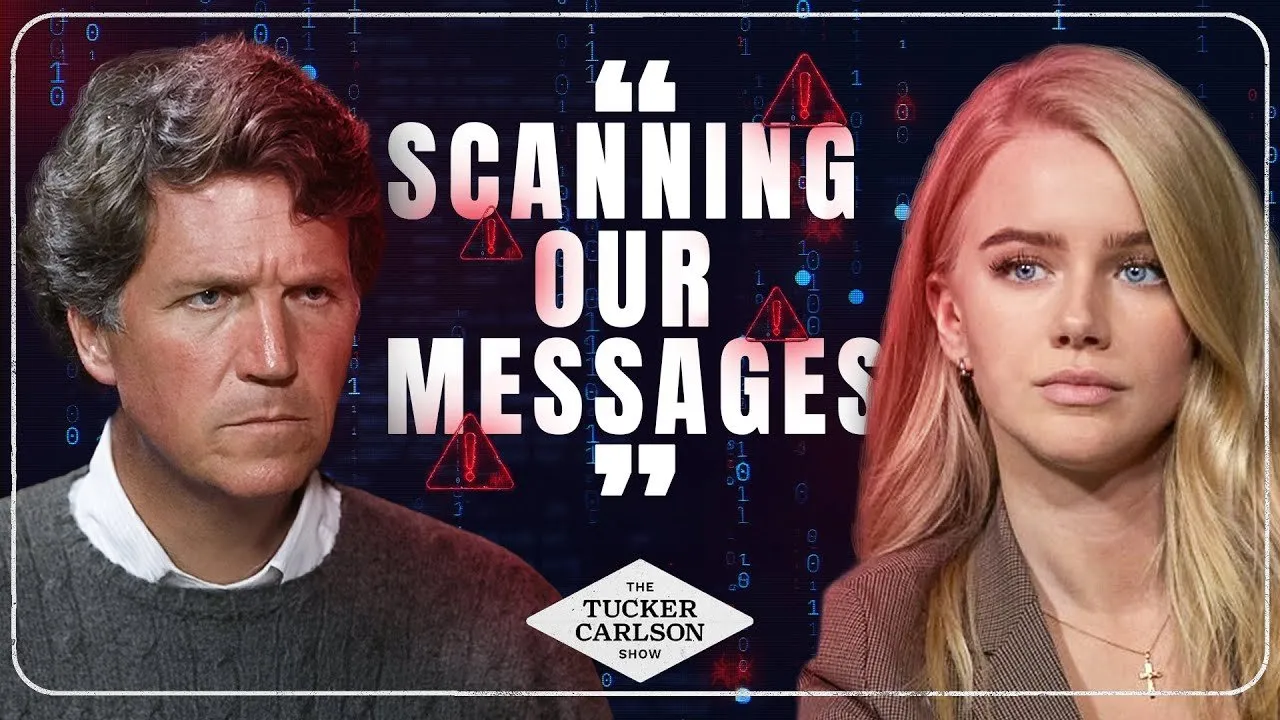
In a startling development that signals a shift in the handling of political dissent across the West, Dutch legal philosopher and commentator Eva Vlaardingerbroek has been effectively banned from entering the United Kingdom. In a recent discussion with Tucker Carlson, Vlaardingerbroek detailed the circumstances surrounding the revocation of her travel authorization, describing it as a symptom of a broader drift toward totalitarianism in Europe. Her case highlights a growing divide between established governments and dissident voices, raising critical questions about free speech, due process, and the future of democratic liberties on the continent.
Key Takeaways
- Political retaliation via travel bans: Vlaardingerbroek’s UK visa was revoked days after she criticized Prime Minister Keir Starmer, citing her presence as not "conducive to the public good."
- The erosion of due process: The decision was delivered via email with no prior warning and, crucially, no right to appeal, mirroring administrative actions usually reserved for severe threats.
- Surveillance and financial control: The discussion highlighted increasing state power in Europe, including the freezing of assets without trial and the deployment of mercenary spyware against journalists.
- The taboo of demographic change: Discussing mass migration and demographic shifts—often termed "replacement"—is increasingly criminalized as hate speech across the EU.
- A spiritual crisis: Vlaardingerbroek attributes the West's inability to combat these authoritarian trends to a profound spiritual void and the ridicule of Christian values in secular Europe.
The Weaponization of Border Control
The controversy began when Vlaardingerbroek received a notification that her Electronic Travel Authorisation (ETA) to the UK had been revoked. Previously approved in September without issue, the sudden cancellation occurred just days after she posted a sharp critique of UK Prime Minister Keir Starmer on the platform X (formerly Twitter). In her post, she condemned Starmer’s handling of migrant rape gangs, referring to him in harsh terms.
According to Vlaardingerbroek, the timing creates an undeniable link between her speech and the state's retaliation.
"I really don't see any other reason as to why they otherwise would have done this right now... I criticized Keir Starmer a couple days earlier on X... just 3 days before they informed me of that decision. So, I mean, it's really hard not to connect the dots there."
The official justification provided was that her presence was not "conducive to the public good." This vague legal standard allows the Home Office significant discretion to exclude individuals. However, the application of this standard to a European journalist with no criminal record—while thousands of undocumented migrants enter the country illegally—exposes a stark double standard in how the rule of law is applied.
A Lack of Due Process
Perhaps most alarming is the administrative finality of the decision. Vlaardingerbroek noted that the notification explicitly stated she had no right to appeal. This absence of legal recourse fundamentally undermines the principles of justice expected in a liberal democracy. It suggests a system where bureaucratic power can be wielded punitively against political opponents without the checks and balances of a court system.
The Rise of the European Surveillance State
The conversation extended beyond the UK borders to the broader condition of civil liberties within the European Union. Vlaardingerbroek and Carlson discussed how the continent is increasingly adopting measures that resemble authoritarian regimes rather than free societies. This includes the freezing of assets and travel bans imposed on EU citizens accused of spreading "disinformation" regarding the Russia-Ukraine conflict—actions taken by the European Council without court orders or fair trials.
Furthermore, digital privacy is under siege. Vlaardingerbroek revealed that she had received notifications from Apple indicating her phone was targeted by mercenary spyware. This personal intrusion aligns with legislative pushes like the EU’s proposed "Chat Control," which seeks to scan private messages under the guise of child protection.
"They want to basically be able to read all of our messages under the guise of preventing child pornography... but it means that these unelected bureaucrats are reading all of your messages, essentially have access to all of your messages."
The impending rollout of Central Bank Digital Currencies (CBDCs), such as the digital euro, represents the final piece of this control grid. If governments can freeze assets of dissidents today, a programmable currency would offer total control over an individual's ability to participate in society, potentially starving opposition into silence.
The Forbidden Debate: Demographics and Speech
A central theme of the dialogue was the severe restriction on speech regarding immigration and demographics. Unlike the United States, which is protected by the First Amendment, European nations have robust hate speech laws that are frequently used to silence discussion about demographic shifts.
Vlaardingerbroek argues that pointing out the statistical reality of native European populations becoming minorities is treated as a criminal offense. This enforced silence prevents honest political discourse about one of the most significant transformations in European history.
Tucker Carlson noted the irony that despite the UK voting for Brexit to regain sovereignty, the country has become even more repressive regarding speech than many EU member states. The coordinated nature of these policies across Western nations—despite changes in leadership—suggests a supranational agenda that transcends the ballot box.
The Spiritual Vacuum of Modern Europe
Underpinning the political and social decay, Vlaardingerbroek argues, is a profound spiritual crisis. She contrasted the political discourse in the United States, where references to God and faith are commonplace, with the highly secularized environment of Northwestern Europe. In countries like the Netherlands, open expressions of Christian faith are often met with ridicule.
This rejection of a metaphysical foundation has consequences. Without a shared understanding of good and evil, or a belief in a higher truth, societies lose the moral vocabulary necessary to identify and resist tyranny. Instead, malevolent policies are dismissed merely as incompetence or bureaucratic overreach.
"If you don't believe that God exists, if you don't believe that good exists and you don't believe that evil exists... you will just always write it off as incompetence at best."
Conclusion: The Necessity of Hope
Despite the grim assessment of Europe's trajectory—toward what Carlson termed an "open-air prison"—Vlaardingerbroek remains committed to staying in her homeland. The ultimate goal of the establishment, she argues, is demoralization. By making the situation appear hopeless, authoritarian regimes encourage dissidents to flee or give up.
Vlaardingerbroek insists that the only way to counter this is to refuse to yield. Recognizing that these are the lands of her ancestors and the future home of her children provides the necessary resolve to continue speaking out, regardless of the bans, bans, and bureaucratic attacks.