Table of Contents
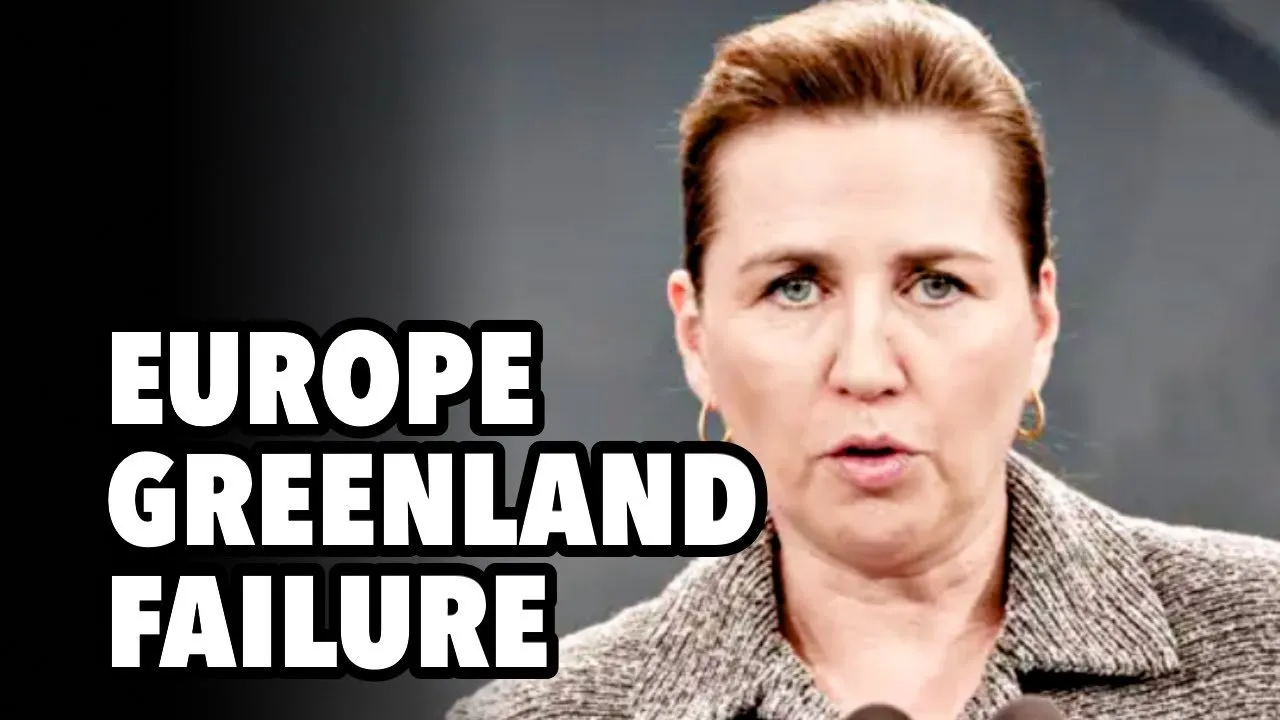
The recent deployment of European military forces to Greenland has sparked a fresh geopolitical debate, signaling rising tensions between European sovereignty and American territorial ambitions. With reports indicating that roughly 25 European troops are being moved into the region, observers are questioning the strategic intent behind this maneuver. Is this a show of solidarity with Denmark, or a desperate signal to the returning Trump administration? While the move appears to be a warning against U.S. encroachment, the reaction from Donald Trump suggests he remains entirely unfazed.
The situation reveals a complex power dynamic within the NATO alliance. As European leaders attempt to draw a line in the Arctic ice, the political reality suggests that the preservation of the transatlantic alliance may ultimately take precedence over Danish territorial integrity. The unfolding narrative involves legacy-building, strategic missteps by European leadership, and the potential for a historic shift in the map of the United States.
Key Takeaways
- Symbolism Over Substance: The deployment of a small contingent of troops (approximately 25) is widely viewed as a symbolic gesture that fails to provide a credible deterrent against U.S. diplomatic pressure.
- Trump’s Expansionist Legacy: Analysts suggest Trump’s primary motivation is not just resource acquisition, but the historical legacy of expanding U.S. territory during his presidency.
- The Rhetorical Trap: Denmark’s own security assessments regarding the Russian threat are being used by the U.S. as justification for why American control of Greenland is necessary for protection.
- NATO Priority: European leadership is expected to prioritize the stability of the NATO alliance over Greenland's sovereignty, likely leading to a negotiated transfer of the territory.
The Symbolic Failure of European Deployments
The deployment of approximately two dozen European troops to Greenland has been characterized by geopolitical analysts as a confusing and ultimately ineffectual message. While ostensibly designed to signal European unity—specifically a message from leaders like Emmanuel Macron to Washington—the scale of the operation undermines its intent. Rather than demonstrating a robust defense capability, the small number suggests that major European powers like Germany, France, and Britain are not genuinely committed to defending Danish sovereignty in the Arctic.
Ambiguity in Intent
The strategic messaging remains muddled. It is unclear whether these forces are intended to defend Greenland against hypothetical Russian aggression or to act as a political tripwire against American diplomatic pressure. Critics argue that if this is an act of defiance, it is too small to be taken seriously; if it is an act of appeasement to show the U.S. that Europe is handling security, it falls short of the massive resources required to secure the Arctic.
The scale of these troop deployments... completely undermines and undercuts the message. I mean it tells anybody that when it comes to Greenland, the rest of Europe basically doesn't care.
This lack of serious commitment signals to Washington that while Denmark cares deeply about its territory, the broader European collective is unlikely to jeopardize the transatlantic relationship over the issue.
Trump’s Ultimatum and the Quest for Legacy
Donald Trump’s interest in Greenland is not merely a passing fancy or a standard resource grab. While the Arctic is undeniably rich in minerals and holds significant strategic value for AI and defense sectors, the driving force appears to be visceral and personal. Trump views the acquisition of Greenland as a capstone to his presidency—a tangible expansion of the United States that secures his place in history alongside presidents who oversaw the Louisiana Purchase or the acquisition of Alaska.
The Deal Structure
Discussions regarding a purchase price of $700 billion have circulated, yet analysts believe this figure is a non-starter for the U.S. administration. Trump is reportedly uninterested in a lease arrangement or a compromise where Denmark retains sovereignty while hosting U.S. bases. The goal is a full transfer of territory.
The timeline suggested by some observers is aggressive, with speculation that Trump desires a finalized deal as early as July 4th. The prevailing view is that if Europe attempts to stall or demand exorbitant sums, the U.S. may bypass negotiations entirely, leveraging its immense economic and military weight to force a concession.
He wants the United States at the end of his time as president to be bigger than it was when he became president. That that's what he basically wants and that is what is driving him.
The Geopolitical Trap: How Europe Checkmated Itself
One of the most ironic elements of this standoff is how European foreign policy rhetoric has strengthened Trump’s hand. For years, European leaders, particularly in Denmark, have produced intelligence papers and security assessments identifying Russia and China as existential threats to the Arctic region. This "Russophobia," intended to rally NATO support, has backfired.
By formally declaring that they are under threat and implying they cannot defend the Arctic alone, Denmark has provided the U.S. with the perfect pretext for acquisition. Trump’s counter-argument is simple and logically consistent with Denmark's own papers: if Russia is a severe threat, only the United States has the military capacity to guarantee Greenland's safety. Therefore, the transfer of territory becomes a security necessity.
A Self-Inflicted Vulnerability
This situation highlights a strategic miscalculation by the European elite. By aligning so closely with the Biden administration’s foreign policy and adopting a stance that relies entirely on U.S. power for protection against Russia, they have eroded their own sovereignty. They maneuvered themselves into a position of vassalage, making it nearly impossible to refuse a demand from the very protector they claimed was indispensable.
The Inevitability of a "Shabby Deal"
When push comes to shove, the consensus among realpolitik observers is that Europe will cave. The "Deep State" architecture in both Washington and Brussels views the preservation of NATO as the ultimate priority. The alliance provides status, jobs, and a projection of power for European nations that they cannot achieve individually.
If the choice is between humiliating a small member state (Denmark) or fracturing the NATO alliance by defying the United States, the alliance will almost certainly choose the former. This mirrors historical moments of appeasement where the interests of smaller nations were sacrificed to maintain a broader, yet fragile, peace.
Comparing 1938 to Today
The situation draws uncomfortable parallels to the appeasement policies of the late 1930s. Just as major powers once colluded to transfer territory to avoid conflict, modern European powers appear ready to pressure Denmark into accepting a deal to placate Washington.
It will be a very, very shabby deal in which the Europeans basically collude in the taking of a large part of its territory by the United States... something which is not that different from what happened in 1938.
The negotiation capability of European leaders, such as Ursula von der Leyen, has proven weak in previous interactions with Trump. The expectation is that despite public grumbling and "agonized articles" in the European press, the deal will move forward. The globalist elite view themselves as partners with the U.S., but the current dynamic exposes the reality of the hierarchy.
Conclusion
The movement of European troops to Greenland serves less as a deterrent and more as a final, symbolic gesture before a significant geopolitical shift. The combination of Trump’s desire for a territorial legacy, Europe’s strategic reliance on the U.S. security umbrella, and the self-defeating rhetoric regarding Russian threats has created a perfect storm. While the Danish government and the people of Greenland may resist, the broader interests of the NATO alliance suggest that the map of North America may soon be redrawn.