Table of Contents
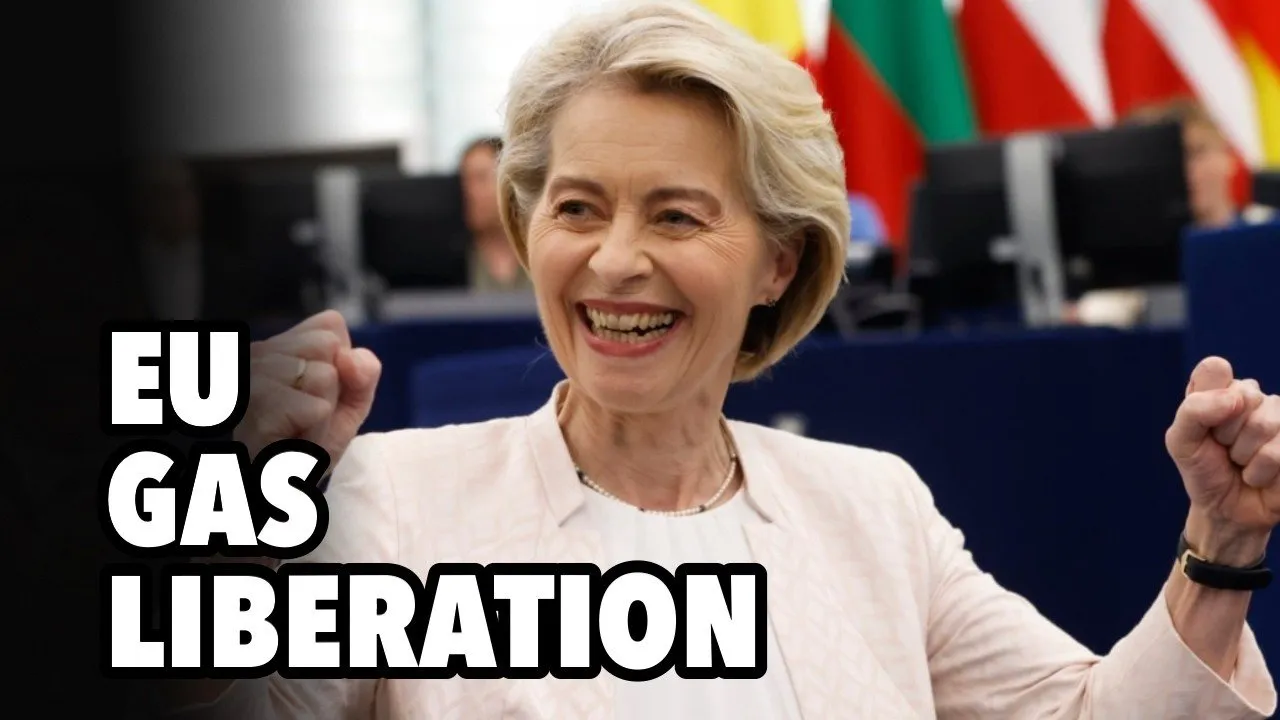
The European Union has officially set the clock ticking on a definitive energy rupture with Russia. With a mandate to phase out Russian pipeline gas by 2026 and Liquefied Natural Gas (LNG) by 2027, Brussels frames this move as the ultimate act of liberation—a breaking of chains from an adversarial supplier. However, energy analysts and geopolitical observers are raising critical questions about the true cost of this "freedom."
By swapping a dependency on cheap, piped Eurasian gas for expensive, shipped American LNG, the EU may not be achieving independence so much as shifting its reliance to a different, more costly hegemon. As industrial giants like Germany face accelerating de-industrialization and internal political tensions rise within the bloc, the decision appears to be driven less by economic pragmatism and more by a rigid geopolitical ideology.
Key Takeaways
- Shift in Dependency: The EU is effectively trading reliance on Russian pipelines for a near-total dependence on more expensive United States LNG, raising questions about genuine energy security.
- Economic Impact: The move creates artificial shortages and price hikes, further fueling the de-industrialization of Europe’s core economies, particularly Germany.
- Legal Maneuvering: To bypass vetoes from Hungary and Slovakia, EU leadership reclassified these energy restrictions as "trade policy" rather than "sanctions," overriding prior exemptions.
- Geopolitical Paradox: New trade deals, such as the one with India, may inadvertently strengthen Russia’s position by creating a secure market for Indian exports fueled by Russian energy.
The Illusion of Liberation: Swapping Pipelines for Tankers
The narrative in Brussels is one of emancipation. The logic suggests that eliminating Russian supply lines equates to sovereignty. However, critics argue that true energy security comes from diversification—having multiple suppliers competing for market share. By effectively locking the continent into a single primary supplier—the United States—Europe is entering a new form of vulnerability.
While minor contributions may come from Qatar or Algeria, the bulk of the replacement energy will be American LNG. This shift creates a vertical dependence on Washington, not just for defense, but for the basic economic lifeblood of the continent.
"When you have one supplier, that means that you are independent and free? Yeah, that one supplier is pretty much the United States... In my reality, that means that you are 100% dependent on the United States for energy."
This reliance is particularly precarious given the volatility of US commodity markets. Following the EU's signal to cut Russian ties, US natural gas prices have seen historic volatility, benefiting American producers while placing a heavy premium on European consumers.
The Looming Supply Cliff
Furthermore, this long-term strategy ignores geological realities. Studies suggest that US natural gas production may be approaching its peak. Some projections indicate that within 13 years, the US might need to restrict exports to satisfy domestic demand. By tethering its industrial future to a finite resource across the Atlantic, the EU is taking a significant gamble on future availability.
Industrial Suicide and Economic Ideology
The decision to sever ties with Russian energy is occurring against a backdrop of economic fragility. European gas reserves are currently low, and while a catastrophic "lights out" scenario is unlikely, significant price spikes are imminent. For energy-intensive industries, this is devastating.
De-industrialization is no longer a theoretical risk; it is a current event, most visibly in Germany. High energy costs render manufacturing uncompetitive globally. Yet, the EU leadership seems willing to sacrifice industrial viability for geopolitical alignment. This phenomenon highlights a shift in the EU’s core function: it is transforming from an economic union designed to bolster the prosperity of its members into a geopolitical project prioritizing foreign policy objectives over domestic stability.
The "Happy Vassal" Syndrome
The willingness of European leaders to absorb economic damage suggests a psychological comfort zone in adhering to the transatlantic alliance. Observers note that hostility toward Russia has become the overriding priority, eclipsing discussions on industrial policy, inflation, or social welfare.
This alignment creates a dynamic where European leaders appear content operating as subordinate partners—or "happy vassals"—rather than autonomous actors on the global stage. Even when US policies directly threaten European interests, such as through trade tariffs or competitive disadvantages, the response from Brussels remains compliant.
Bypassing Democracy: The Trickery of Policy Changes
One of the most contentious aspects of this energy phase-out is the method used to implement it. Under standard EU procedures, sanctions require unanimity. Member states like Hungary and Slovakia, which are landlocked and heavily dependent on Russian pipeline gas via TurkStream, previously negotiated exemptions to protect their economies.
To circumvent these exemptions and the inevitable vetoes from Budapest and Bratislava, EU leadership repackaged the gas phase-out. By labeling it as "trade policy" rather than "sanctions," the Commission could pass the measure via a qualified majority vote, effectively stripping Hungary and Slovakia of their protective veto power.
"We've now seen how worthless those exemptions actually were because the European Union simply overrides both its prior obligations to the Hungarians and the procedures within the European Council by repackaging one thing a sanctions policy and calling it something else."
This creates a dangerous precedent. It signals that Brussels is willing to use procedural loopholes to centralize power and override the vital national interests of member states. For Viktor Orban, this poses an existential political threat. If energy prices in Hungary skyrocket due to supply cuts, his domestic support could erode, potentially facilitating regime change efforts favored by Brussels.
Global Ripples: The India and Mercosur Deals
In an attempt to offset the economic isolation from Russia, the EU is aggressively pursuing trade deals with the Mercosur bloc (South America) and India. However, these deals are fraught with contradictions.
The Mercosur deal has long been opposed by European farmers, who fear being undercut by cheaper South American agricultural imports. Pushing this deal through now, despite widespread protests, further demonstrates the disconnect between EU leadership and its working-class base.
The India Pivot Backfires
The trade deal with India is particularly ironic. Brussels hopes to tap into the Indian market, but the dynamics favor New Delhi. India has become a major importer of Russian oil, which it refines and often re-exports. By opening trade with India, Europe effectively limits its ability to sanction India for trading with Russia.
From Moscow's perspective, this is a strategic win. Increased trade between the EU and India strengthens India's economy, providing them with more hard currency to purchase Russian energy. It creates a circuitous route where the global energy market rebalances, often at a higher cost to Europe, while Russia retains its revenue streams.
Conclusion: A Geopolitical Project at Odds with Reality
The EU’s decision to phase out Russian gas is the culmination of a years-long shift away from economic pragmatism toward ideological rigidity. While framed as a security measure, it leaves the continent exposed to higher prices, supply volatility from the US, and internal political fracturing.
Russia, meanwhile, continues to pivot East, integrating its economy with the BRICS nations and shrugging off European restrictions. As Europe tightens the screws on its own industry, the question remains: is the EU liberating itself, or is it merely dismantling the economic foundations that made it a global power in the first place?